



“Birth should be joyful.”
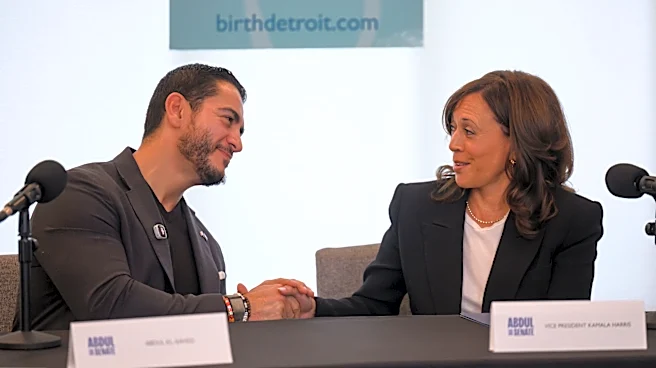
That’s how VP Kamala Harris opened a conversation about Black maternal healthcare at Birth Detroit on Sept. 22
. I had the honor to watch as Mini Timmaraju, president and CEO of Reproductive Freedom for All, moderated a table of Black women, Harris and Dr. Abdul El-Sayed. They talked about the care Black women deserve, the care they actually receive and the work still ahead.In 2024, Black women in this country died from maternal causes at more than three times the rate of white women.
Here in Michigan, Black babies were nearly three times as likely as white babies to die before their first birthday in 2023.Those numbers should stop us in our tracks. Instead, we keep asking Black women to live with a level of risk we would
never accept for everyone else.
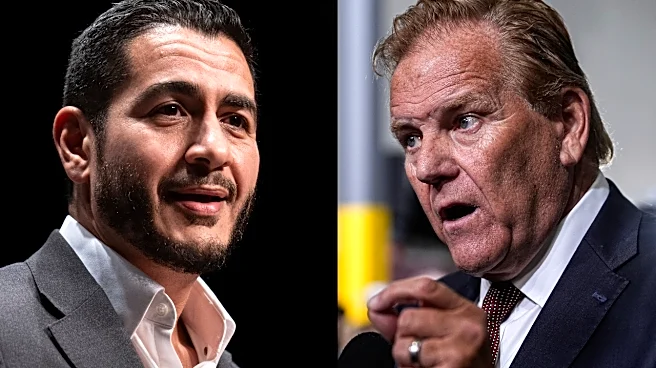
El-Sayed asked a question in his opening remarks that has stayed with me: “What would we build if we treated all of our kids like all of our kids?”

Leseliey Welch, one of the women who co-founded Birth Detroit, talked about her goal of making midwifery care available in every community. She also talked about what her organization calls “beloved birth”: care centered on families, led by midwives working with physicians and rooted in the community. Care that treats patients and providers with dignity.
El-Sayed shared that he has worked alongside Welch for more than a decade. He talked about how amazing it is to grow up, and watch your friends grow up. I loved that. Here was Welch, building the care she wants families to have, sitting alongside Kamala Harris and El-Sayed, who has been rolling up his sleeves in his own work to help communities get better care, too. He knows her work because he has spent years doing this work alongside her.
The presence of so many advocates in the room made the moment feel bigger than one conversation. These women have been pushing for better Black maternal health care for decades. They are building what families need, while still having to confront the failures baked into the system.
But while they’re building better care, Black women are still dying from causes we know how to prevent. Danielle Atkinson of Mothering Justice talked about Amber Nicole Thurman and Candi Miller, two Black women who lost their lives. Two deaths that Georgia’s maternal mortality review committee deemed completely preventable.
That’s when I started crying.
What will prevent the next death?
Because how do we talk about these women and still look around at a country that continues to fail Black women and people giving birth? What is going to prevent the next woman from dying? What have we actually done to improve Black maternal health, specifically?
I’ve worked in ob/gyn care for more than a decade, and I’ve given birth to three children myself. I know how vulnerable it can feel to trust someone with your body and your baby. I also know, as a white woman, that I have not had to carry the same risks as the women at that table.
Paula Thornton Greear, President and CEO of Planned Parenthood of Michigan, said something I haven’t stopped thinking about: While we sit here talking, more Black women will die. And in this country, we’ve allowed that to become normal.
Shanay Watson-Whitaker of Reproductive Freedom for All talked about Planned Parenthood health centers closing across Michigan, from Marquette to Warren. And when a clinic closes, the people who need care don’t disappear.Michiganders voted to protect reproductive rights through Proposal 3 in 2022. But a right on paper doesn’t mean much if you can’t find a provider or get to a clinic. I’ve spent years teaching patients how to advocate for themselves, and I believe in that deeply. You can’t advocate for yourself if there’s nowhere to go for care.
Conversation isn't enough
That’s what I wish people understood about reproductive justice. Yes, I advocate for abortion access, and I get plenty of hateful messages for it. But I advocate for access to all reproductive healthcare. I want people to be able to build their families how they want, when they want and with whom they want. And I want them to have the care and support to make it through pregnancy, birth and everything that comes after.
Harris said conversations like this bring Black maternal health into the consciousness of people who don’t already think about it. That matters. But the women who sat at this table have been thinking about it for years. They have been caring for patients, building services, organizing and begging the rest of us to see what is happening.
El-Sayed said “we have to fight with love.” To me, that means listening to the Black women who have been doing this work for decades, using what I know as a clinician, and calling in other white people who may not yet see this as their fight, too. It means showing up for the hard conversations and staying for the work that follows.
The women at that table are building better care in so many different ways: in clinics, in communities, through advocacy and through policy. They’ve been doing the work. Now the rest of us need to show up alongside them, in every place where we have the power to change what happens next.
Nikki Sapiro Vinckier, PA-C, is a Michigan-based reproductive health advocate, OB-GYN Physician Associate and author of We Deserve More: Why Reproductive Healthcare Is Broken and What You Can Do About It. She is the founder of Take Back Trust, a nonprofit dedicated to helping people navigate reproductive healthcare with greater clarity and confidence. You can find her online @nikkivinck. Submit a letter to the editor at freep.com/letters, and we may publish it in print or online.
This article originally appeared on Detroit Free Press: El-Sayed asked the right question. America hasn't found the answer | Opinion