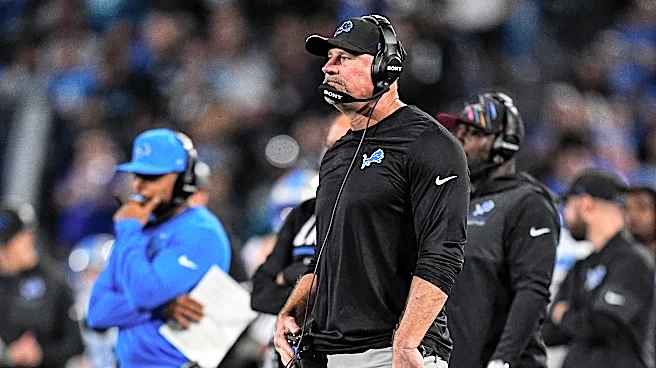


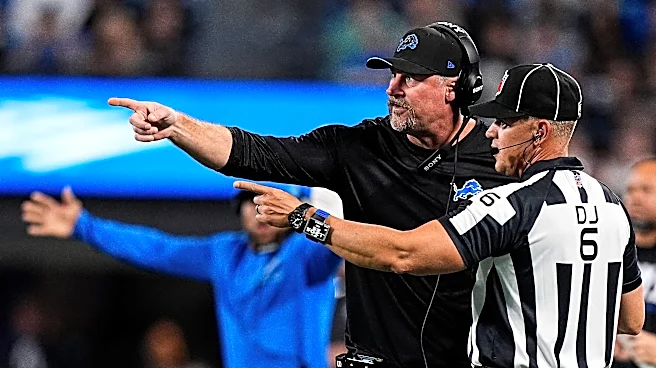
Last season, as the Detroit Lions folded down the stretch and missed the playoffs, the defense was seen as their greatest liability. Over the final seven weeks, when the reigning two-time NFC North champions went 3-4 and tumbled to the bottom of the division, they surrendered the sixth-most points and the third-highest yardage total in the NFL during that span. After the season, Dan Campbell determined changes needed to be made to get the team back on top.
The coach quickly dumped John Morton, the first-year offensive coordinator who had been stripped of play-calling duties last November. He then replaced him with Drew Petzing, who had managed the Arizona Cardinals’ attack. Soon thereafter, he brought aboard Mike Kafka, the former New York Giants’
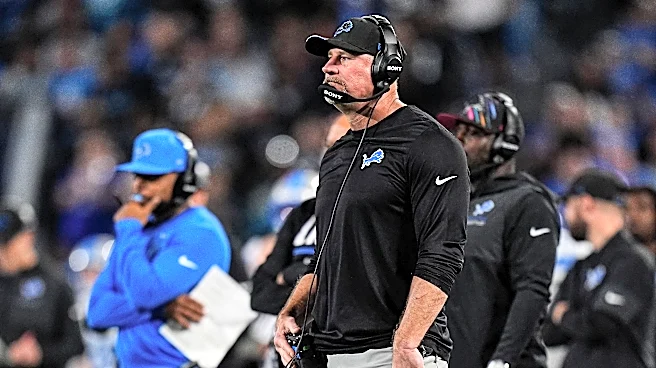
interim coach, to oversee the passing game. The moves indicated that Campbell was dissatisfied with the state of an offense that finished tied for fourth in scoring, averaging 28.3 points per game. But even after it crumbled down the stretch, Campbell didn’t seem as troubled with the defense’s performance. After all, he retained the unit’s entire roster of assistant coaches, including then-rookie coordinator Kelvin Sheppard. By doing so, he gave a tacit endorsement of Sheppard’s scheme.
“Man, we’ve just got to tighten the screws on a few things,” Campbell said at the NFL combine last winter. “But … I love the staff, and I love what we do.”

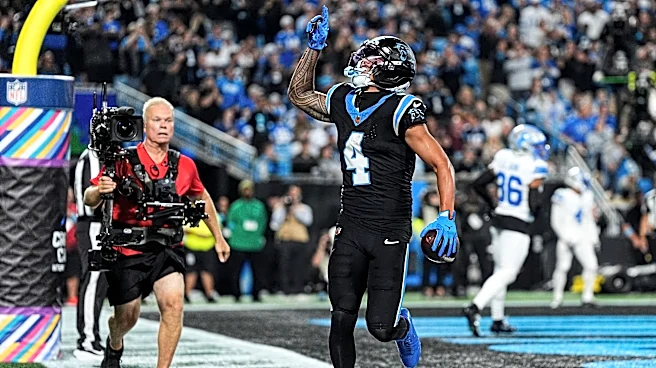
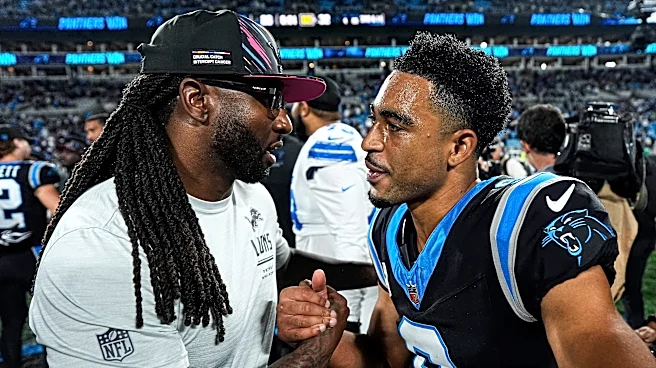
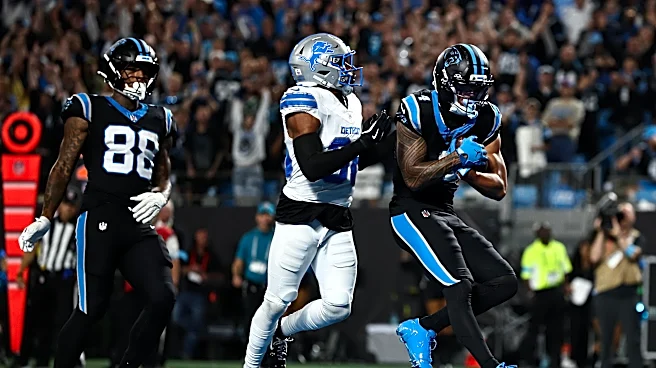
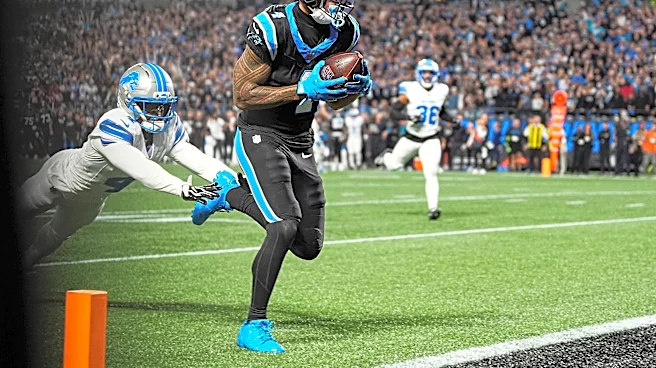
More than seven months later, the Carolina Panthers defeated the Lions, scoring on six of their first seven possessions and accumulating 28 first downs in a 32-26 victory. It was just the latest meltdown during a season Detroit has offered little resistance to its opponents.
The Lions rank at or near the bottom of most major defensive categories: Points, yards, third-down conversion rate, red-zone scoring percentage. You name it, the Lions have probably allowed it. The defense has been a mess and become the subject of relentless scrutiny. But in the days that followed, Campbell yearned to direct the spotlight away from it.
“We’re playing very average football right now,” he said Tuesday, Oct. 6, during a fiery appearance on WXYT-FM (97.1). “And that’s everywhere.”
He then called out the offense, criticizing its execution and failure to maximize opportunities. He doubled down on those comments the following afternoon, telling reporters that the production until now has not been “good enough.” But the Lions still rank fifth in scoring, averaging 29.8 points per game. They have also generated more passing yards than all but two teams. If not for the collective effort of Jared Goff and the talented core of skill players around him, Detroit could be saddled with a losing record. Still, Campbell – a former tight end with an offensive coaching background – expects them to do even more.
“They should want to score 35 points a game at a minimum,” he said during his radio interview. “That’s what greatness is. That’s what they are charged with. … If we want to spit and sputter and be average, that’s one thing. We’re not going to be average. We are going to raise the floor on these guys. We are going to push them. We have too much offensively right now. Our quarterback is too good. Our playmakers are too good.”
Campbell’s strong words, which could be interpreted as both a critique and challenge, reinforced the perception he has higher standards for the offense than the defense.
When a reporter asked Campbell if that was indeed the case, he all but scoffed at the suggestion as a wry smile spread across the face.
But in his ensuing response, he didn’t exactly refute that assumption.

“If we're OK offensively with what we've done, then we're not looking at it the right way because it's not good enough,” he said. “That was a message to the offense is what that was.”
As for the defense, Campbell said,“We just need to get in the right position. Let's get in the right position. Let's be where we're supposed to be.”
Juxtaposed against each other, the comments were revealing and opened a window into Campbell’s mind. As he sees it, one unit must strive to execute at an elite level while the other simply needs to satisfy the most basic, fundamental requirements.
“From the outside looking in, it might look that way,” linebacker Derrick Barnes told the Free Press. “I think he holds everybody to the same expectations. He expects the defense to be dominant. He expects the offense to be dominant.”
The reality is neither one is. But Detroit has shown it is far more capable of reaching its opponent's end zone than keeping said foe out of its own. To wit, the Lions have scored on 50% of their drives and allowed points on half the possessions they’ve defended. The symmetry, in many ways, is remarkable.
After the shootout against Carolina, Campbell said, “I think a lot of our games are going to be this way.”
If that is the case, the offense will have a thin margin for error. Campbell knows how slim it could be. It’s why he has implored the players in that sector to start faster than they have, to convert more of their red-zone opportunities into touchdowns and to do their best to avoid going backwards because of penalties.
“We’ve got to be better,” running back Jahmyr Gibbs said.
They, in essence, must carry the team. Sheppard bristled at that notion, calling it “ultra-disrespectful to my unit.”
Listen to Campbell, though.
A few beats after he told reporters he is resigned to the fact the defense “won’t be perfect,” he said he feels the offense “hasn’t scratched the surface of what we’re capable of for 60 minutes yet.”
Goff agrees.
“We're very, very capable of being great and above that,” the quarterback said.
The bar, Goff knows, is high – much higher than the one Campbell appears to have set for his beleaguered, underperforming defense.
Contact Rainer Sabin at rsabin@freepress.com. Follow him @RainerSabin on X.
This article originally appeared on Detroit Free Press: Dan Campbell has higher standards for Lions offense than defense