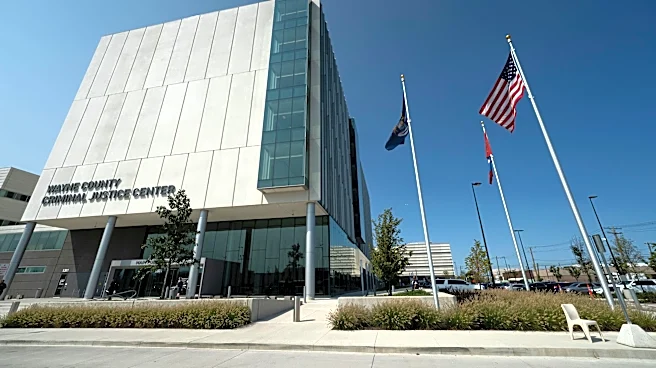









Citizens have a right to a lawyer in a criminal case if they can’t afford one, but a large group of lawyers in Wayne County who serve low-income residents may go on strike come Friday, July 24.
The Neighborhood Defender Service – which handles half of the indigent cases in the county – was expected back at the bargaining table Thursday, July 23, in a fight over health care costs and wages with members of their workers’ union, part of UAW Local 2325 – Association of Legal Advocates and Attorneys.
Should negotiations fail, the strike is set to begin at 8 a.m. Friday and leave supervisors to fill in for dozens of attorneys across the county. The strike would also include lawyers at the organization’s locations in New York and Texas, along with social
workers, administrative professionals and other employees with the service.
Wayne County officials are aware of the situation with their vendor and are monitoring it, said Matt Allen, county communications director, in a statement in the days leading up.
“We are not aware of an immediate problem,” he said. “If necessary, we will look into alternatives.”

The would-be striking lawyers have provided detailed case information to their supervisors, said Ashley Munger, a staff attorney at the Neighborhood Defender Service who is on the union’s bargaining committee.
Munger said there were about 60 lawyers in the office who would strike and about 14 or 16 supervisors who'd fill in. Union members have also consulted outside ethics experts and lawyers ready to represent their members in contempt cases, should a judge take issue with their particular absence, she said.
Both sides say they don’t want it to come to that.
Health care key in union fight
The Neighborhood Defender Service Union is seeking to maintain a current benefit: no-premium, no-deductible health insurance. Workers also have concerns with proposed cost-of-living wage adjustments they say are too small and result in pay cuts, essentially, amid inflation.
Management doesn’t want to have to make changes to health care or give lower wages than what is being sought, said Shannon Anglero, deputy executive director of the organization.
There have been cuts to funding; possible funding is “tightly constrained”; and “the reality is that the cost of health care is not going to go down,” she said.
She and Kristine Longstreet, managing director of the Detroit office, described a push-and-pull in trying to preserve the no-cost health benefit and make up the cost elsewhere.
Munger said the union is getting mixed messages on whether funding is really a problem.
The union, in an earlier news release, said management proposed cost-of-living increases of 1% each year over the three-year contract. It also raised concerns with changes to future health plans upon retirement.
Longstreet and Anglero told the Free Press that management’s proposals included keeping a no-deductible, no-coinsurance health plan for employees. Other cost-sharing options included an employer-funded health savings account.
The issue with the proposed version of a no-deductible, no-coinsurance plan is the premium and the increase over the course of five years, Munger said. Proposals have also shifted to passing on the cost to employees when premiums rise a certain percentage.
Job stress taking 'physical toll'
The stress of the job is a key element in the fight, according to the telling of union member and Detroit-based defense attorney Erin Ruprecht.
“I was hospitalized earlier this year after a quick trip to urgent care for Strep throat revealed my blood pressure was so high that doctors deemed me an immediate stroke risk,” Ruprecht said in a statement in the union news release. “The reality is that the stress of this job takes an immense physical toll on our bodies, and all of us deserve to work for a company who values our sustained well-being above all else.”
There’s a tension as lawyers with clients in need face a possible strike.
“Public defenders don’t come to the job to make a lot of money … so it’s really painful and hard to have to walk away, to walk from our clients for a day or a couple of days,” said Munger. “(But we) can’t stay in the work without proper health care and pay. This is what we need to do.”
Clients come first for lawyers who do this work, Longstreet said.
“One thing we really don’t want to see is harm to the community at large,” said Longstreet. “We’ll do what we need to do to make sure all the clients are served.”
This article originally appeared on Detroit Free Press: Can’t afford a lawyer? These Wayne County public defenders could strike tomorrow