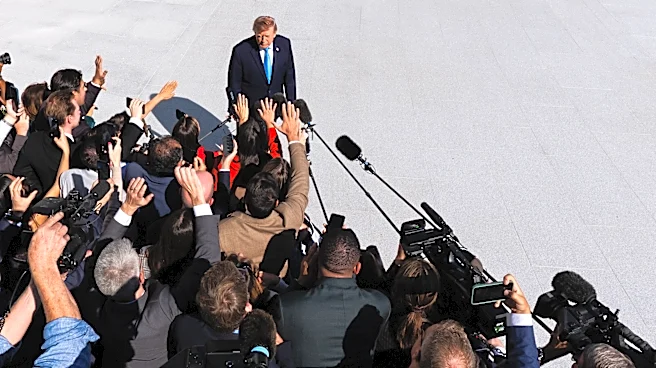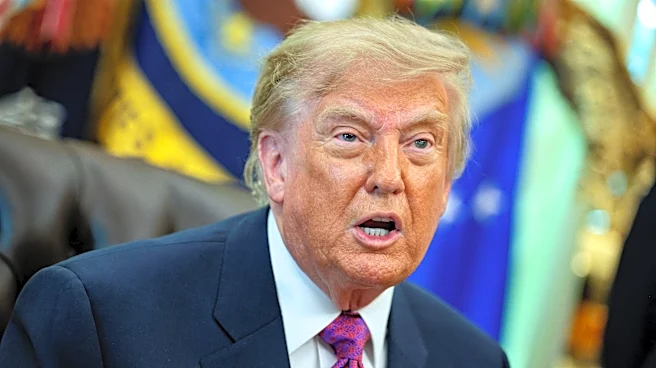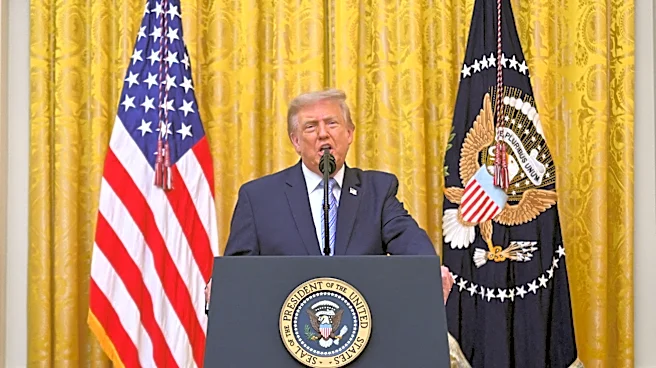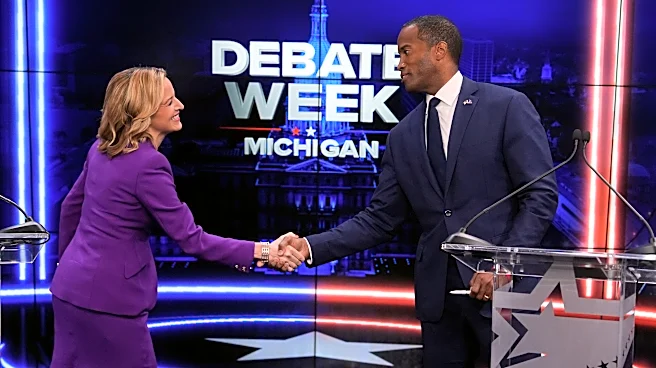


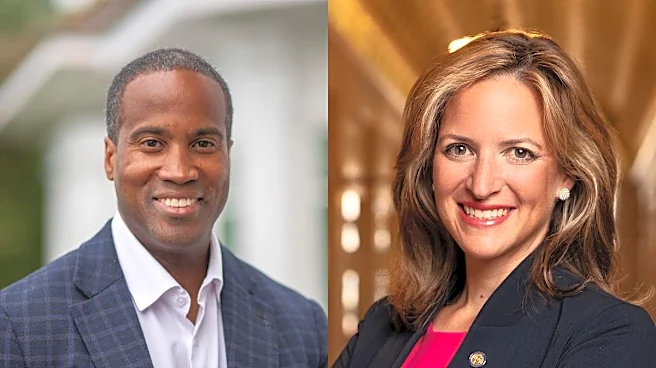
Don't feel bad if you watched the Michigan gubernatorial debate and thought Secretary of State Jocelyn Benson was running against Donald Trump.
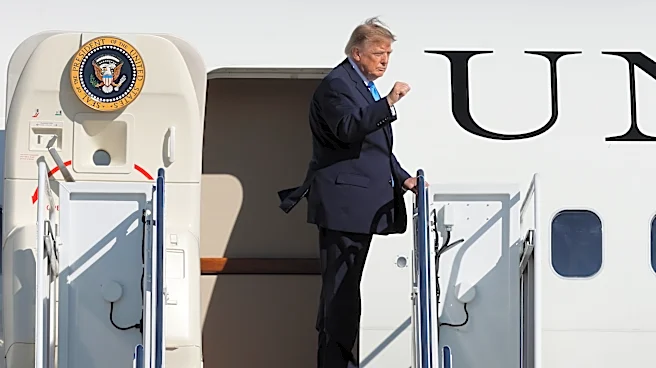
President Trump has urged Republicans to act as if he's on the Nov. 3 general election ballot but, of course, Congressman John James is the GOP nominee in the race to replace term-limited Gov. Gretchen Whitmer.
James at times tried to cast Benson as a Whitmer stooge who should be held responsible for Michigan's perceived failures over the past eight years. His effort paled in comparison to Benson's repeated accusations that James was a puppet of Trump, whose name Benson said so many times that if Trump was Beetlejuice he would have appeared on the set at WOOD-TV (Channel 8) minutes after the Grand Rapids
station started the hour-long debate on Tuesday, Oct. 6.

It was an obvious strategy, as Trump's popularity and approval ratings have hit record lows in recent polls. It also required little subtlety: If you don’t like the president, or feel betrayed by his failure to keep promises like lowering prices or staying out of foreign wars, Benson asserted, you won’t like James, either — and you shouldn’t trust him to keep his promises to make Michigan great again.
James tried to shift the bullseye in his opening statement, telling viewers: "Many people want to blame Trump, but ... Lansing is failing us."
It was a savvy attempt by the two-term congressman from Shelby Township to inoculate himself. But like a measles outbreak in Pennsylvania, the two-term Secretary of State from Detroit was undeterred.
As the topics shifted from tariffs, to suspending the state's gas tax, to whether Michigan officials should cooperate with federal immigration officers, to Medicaid, to affordable housing, Benson faulted James for failing to oppose Trump policies that she said have harmed Michigan.
"You, as a congressman, have never once — not once — stood up to the president and said: 'Not on our watch,'" Benson said.
While Trump won Michigan in 2016 and 2024, his decision to impose tariffs — especially on Canada, Michigan's largest trading partner— and to start a war on Iran have eroded his support here as the cost of fuel and many every day items have skyrocketed.
The debate highlighted the dilemma James has faced since Trump endorsed him for governor: Without Trump's support, James may not have won the GOP gubernatorial nomination. But being so closely-aligned with Trump could cost James the support of independent voters he needs to win the job.
It's too late to walk away from Trump, who keeps track of slights — and evens scores.
With the president is expected to return to Michigan in the next week or two, the last thing James needs is Trump calling him out. After having won barely half of the votes in the GOP primary, James may already be on shaky ground with some Republicans. Picking a fight with the president could cost him more GOP votes than the independent voters he might attract with such a stunt.
James nevertheless tried to establish a little distance between his polices and those of the president.
Without saying definitely whether he opposed Trump's 50% tariff on some Canadian goods, James said he differed with Trump on tariffs and the war on Iran, which he said "needs to end quickly, as in yesterday."
"I've stood up to the president many times," James said. "I've said I can agree with the president without worshipping him, I can disagree without attacking him, and I'll always put Michigan first."
Predictably, Benson pressed her point.
"The choice in this race is simple," she said. "Who do you want the next governor to work for? I will work for you, and my opponent has already showed us that he won't. Because as governor, he'll do exactly what he did in Congress; raise prices, get rich and do everything Donald Trump asks him to do."
When they weren't debating who was more like Whitmer or Trump, or calling each other a liar, the joint appearance gave us some insights into how they perform under pressure.
James is a cool customer, quick on his feet and able to identify and jab a weak spot.
When Benson said her financial disclosure reports were available on the Secretary of State's website, James shot back: "Does it work now?" It was a dig political insiders recognized as a reference to problems the Secretary of State's office encountered after it tried to upgrade Michigan's campaign finance disclosure website.
Benson is ready to rumble, keeping a grim smile on her face most of the night while waiting for her chance to counter-punch. She showed a tendency to talk fast, which may be a combination of trying to get her answers in before time ran out and trying to get her mouth to move as fast as her mind.
When James faulted her for not opposing Whitmer's COVID-19 policies, Benson shot back: "Where were you on 2020?" a reference to James' contradictory positions on whether Trump lost the 2020 election to Joe Biden. (Truth Squad Bulletin: Despite dozens of claims of fraud, Trump and his supporters have failed to substantiate any of them. Also, the earth is round.)
As James and Benson prepared to derail the tightly-managed debate by pivoting to that topic, moderator Rick Albin, a living legend for his equanimity and decades covering Michigan politics, reined them in.
Each candidate accused the other of enriching themselves from their interactions with data centers, but neither made a clean kill after Albin challenged them to back up their claims.
Both said they supported a moratorium on data centers, which have become controversial for replacing vast swaths of land — often in rural areas — with noisy industrial buildings filled with computer equipment that consumes vast amounts of water and electricity and annoy neighbors.
They both also are against Flock cameras, which operate in public spaces and have become ensnared in a debate over whether they violate our privacy.
And they both support suspending the state's gas tax to save drivers money.
Neither specified which taxes they would cut, though James identified $3 billion in budget cuts he would make, and Benson said she would provide tax credits for families who care for their children and elderly relatives.
They disagreed on whether Michigan should continue to mandate a transition to clean energy, with James saying it raises rates and Benson saying it creates jobs and protects the environment.
And neither committed to cutting Michigan's tax on marijuana, which Whitmer and legislative leaders jacked up to help fund road repairs.
But the thread that ran through the debate was Trump, a polarizing figure who voters are more likely to form a strong opinion about than how Michigan's next governor should address gaps in Medicaid coverage or whether we should adopt some or all of Mississippi's education reforms.
Benson clearly thought tying James to Trump is a winning strategy, but we'll all know in less than a month whether the lodestone that attracted voters to James in the primary election was also the millstone that sunk him in the general election.
M.L. Elrick is a Pulitzer Prize- and Emmy Award-winning investigative reporter, director of student investigative reporting program Eye On Michigan, and host of the ML's Soul of Detroit podcast. Contact him at mlelrick@freepress.com or follow him on Facebook at ML Elrick and Instagram at ml_elrick
This article originally appeared on Detroit Free Press: Trump isn't on the ballot, but he dominated the gubernatorial debate