







Last week, an investigation revealed something that should disturb every Michigander.
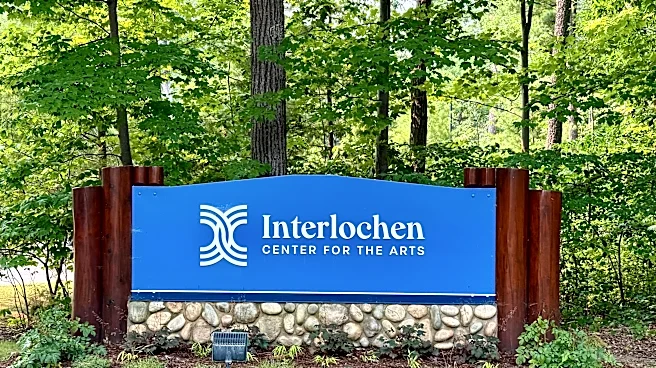
For more than six decades, adults at Interlochen Center for the Arts ‒ the storied arts camp that has shaped generations of young artists ‒ sexually abused the children entrusted to their care. Nearly 50 adults. Seventy firsthand accounts of abuse. Faculty. Counselors. Visiting artists. Even board members. Jeffrey Epstein himself passed through as a camper and later a donor, his name once affixed to a campus building.
But perhaps the most disturbing revelation is this: For most of these survivors, Michigan law offers no path to hold anyone accountable.
Not because their stories aren't credible. Not because the harm wasn’t real. But because Michigan’s civil statute
of limitations expires long before most survivors are psychologically able to disclose childhood sexual abuse. Research consistently shows that many survivors do not disclose their abuse until decades later.
Michigan has confronted this reality before, and we know how to fix it.
Michigan understood that the Nassar case was different
When hundreds of women and girls came forward to accuse former USA Gymnastics and Michigan State team doctor Larry Nassar, the Michigan Legislature acted ‒ extending filing deadlines and opening a 90-day retroactive window so survivors could sue, no matter how long ago the abuse occurred. This did not happen by accident. It happened because I ‒ and many other survivors ‒ made it happen.
I grew up in Michigan, and am the first known victim of Larry Nassar. I had many friends that attended camp and participated in programs at Interlochen. I visited many summers, and was captivated by the beauty and prestige of it, never imagining that some of the kids were experiencing the same kind of life-altering sexual abuse that I had suffered.

As a young adult, I became an attorney. I help secure justice for survivors. I am the mother of two little girls.
In the Nassar case, our state government recognized a truth that survivors have been telling us for decades: most survivors can take years, sometimes a lifetime, to even name what happened to them as abuse, let alone find the strength to hold a powerful institution accountable. A three-year clock that starts ticking after a survivor turns 28 is not justice. It's a technicality that protects institutions, not children.
So why should Interlochen survivors be treated differently?
They aren’t asking for something new, or for special treatment. They are asking for equal treatment. They're asking for the same lookback window this Legislature granted in the Nassar case. A defined period ‒ one, two, three years ‒ during which any survivor of abuse at Interlochen, regardless of when it happened, could bring their claim to court.
That's it. Nothing more.
Not a permanent elimination of the statute of limitations, not retroactive liability without limit. Just a fair, time-bound chance to be heard, identical in structure to what Nassar survivors received.
Interlochen survivors deserve a chance for justice
The stakes of waiting are real. Roughly one-third of the adults named in the Interlochen report are already dead. Evidence fades. Memories that survivors have carried in silence for fifty years don't get easier to prove with each passing year, they get harder. Every year the Legislature doesn't act is a year some survivors lose the chance entirely, simply because the person who hurt them died first.
There's also a broader failure hiding inside this story. Michigan lawmakers have had a solution sitting in front of them for years ‒ a package of bills that would extend the general civil statute of limitations for sexual abuse claims and narrow the immunity that shields institutions which knew about abuse and failed to stop it. Pieces of that package passed the House in 2024. The rest has languished. If it had passed in full, we might not need a separate carve-out for every new institution that turns out to have failed its children.
So unfortunately, here we are again.
Michigan should not have to relearn this lesson case by case, scandal by scandal. But at minimum, it owes Interlochen survivors what it has already given others: a real chance, however brief, to seek justice in a court of law. Lawmakers found the will to do this for Nassar survivors. There is no good reason not to do it again.
Sarah Klein is an attorney and advocate for survivors of sexual abuse. Submit a letter to the editor at freep.com/letters, and we may run it in print or online.
This article originally appeared on Detroit Free Press: Interlochen survivors deserve Michigan's Nassar legislative fix | Opinion