



Michigan is welcoming the start of fall Tuesday, Sept. 22, but if you're wondering whether it's time to set your clocks back — that'll wait until later this season.
The autumnal, or fall, equinox occurs at 8:04 p.m. on Tuesday, Sept. 22, marking the official start to the season, beginning astronomical fall, according to the Old Farmer's Almanac.
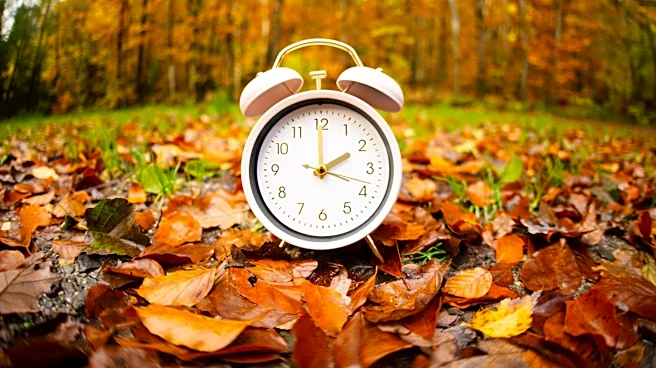
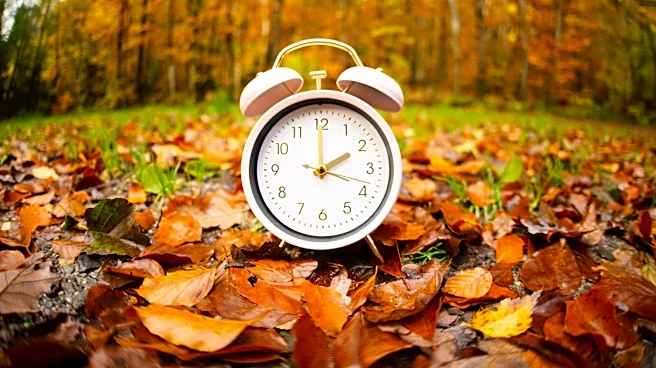
Daylight Saving Time, however, doesn't end until 2 a.m. on Nov. 1, 2026, the first Sunday in November in the early morning after Halloween, pushing sunset and sunrise one hour earlier. Many clocks on digital devices will automatically switch with the time change, though you may need to manually change some household and car clocks.
Need an alarm clock? Shop here
Meteorological fall, based on weather conditions,
began on Sept. 1 and will last until Nov. 30, according to AccuWeather. Astronomical fall, on the other hand, will end with the winter solstice on Dec. 21.
Here's what to know about DST in Michigan this fall.
Is fall here yet in Michigan?
The fall equinox takes place at 8:04 p.m. Sept. 22, marking the start of astronomical fall in Michigan. The time points to the moment when the Earth tilts equally toward and away from the Sun and brings nearlyequal amounts of daylight to all latitudes.
How much longer until DST ends for 2026?
Daylight Saving Time ends at 2 a.m. on Nov. 1, 2026, the first Sunday in November. Clocks will be set back one hour, leading to sunrise and sunset coming an hour earlier.
While many digital devices like smartphones, televisions, tablets and computers automatically adjust to the time difference, you'll still need to manually change analog clocks and you may need to on digital alarm clocks or household appliance or vehicle clocks as well, per the University of Colorado Boulder.
When did meteorological fall begin?
Meteorological fall began on Sept. 1, 2026.
Are there two beginnings to fall?
The autumnal equinox represents the astronomical start of fall, according to AccuWeather.
Meanwhile, meteorological seasons are broken into groups of three months. Meteorological fall lasts for 91 days every year. The season ends Nov. 30 while astronomical fall ends with the winter solstice in December.
- Meteorological spring is March, April and May.
- Meteorological summer is June, July and August.
- Meteorological fall is September, October and November.
- Meteorological winter is December, January and February.
Time change is coming up. What does 'fall back, spring forward' mean?
According to dictionary.com, daylight saving, commonly referred to as daylight savings, "is begun in the spring by setting clocks one hour ahead. They are then set one hour back in the fall. ... People often use the simple mnemonic spring forward, fall back to remember to set clocks forward one hour (e.g., from 2 a.m. to 3 a.m.) in the spring and backward one hour (e.g., from 2 a.m. to 1 a.m.) in the fall."
What is Daylight Saving Time?
Daylight Saving Time, often called daylight savings time, is when "daylight" begins an hour later in the morning and lasts an hour longer in the evening, according to the National Institute of Standards and Technology.
The clock change allows the hour of daylight to stay coordinated with the time most people are active outside. Daylight saving time is supposed to save energy, since during the warmer months the majority of people will be outside and not home, which saves energy.
Is it daylight saving or daylight savings?
While it is often referred to as Daylight Savings Time, Daylight Saving Time without the "s" at the end is the correct term.
Do all states observe daylight saving time?
No. Hawaii and most of Arizona, for instance, do not observe daylight saving time, though most states in the U.S. do.
Arizona doesn’t observe it because of the state’s desert climate. The Navajo Nation, which spans parts of Arizona, Utah and New Mexico, does participate in daylight saving time.
U.S. territories American Samoa, Guam, Northern Mariana Islands, Puerto Rico, and the U.S. Virgin Islands also do not participate in daylight saving time.
When will DST begin in 2027?
We'll spring forward at 2 a.m. on March 14, 2027, with clocks to be set one hour forward, marking the return of DST for 2027. This will make sunrise and sunset one hour later.
USA TODAY and The Palm Beach Post contributed.
Contact Jenna Prestininzi: jprestininzi@freepress.com.
This article originally appeared on Detroit Free Press: Fall is finally here. Does Daylight Saving Time end now?
Our editors independently choose our recommendations. Some content is produced with paid support from a third party, however our editorial decisions remain independent. If you buy through our links, the USA TODAY Network may earn a commission. Prices and availability may change.