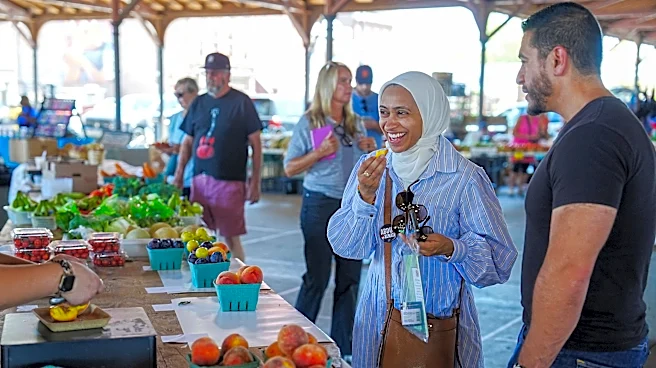


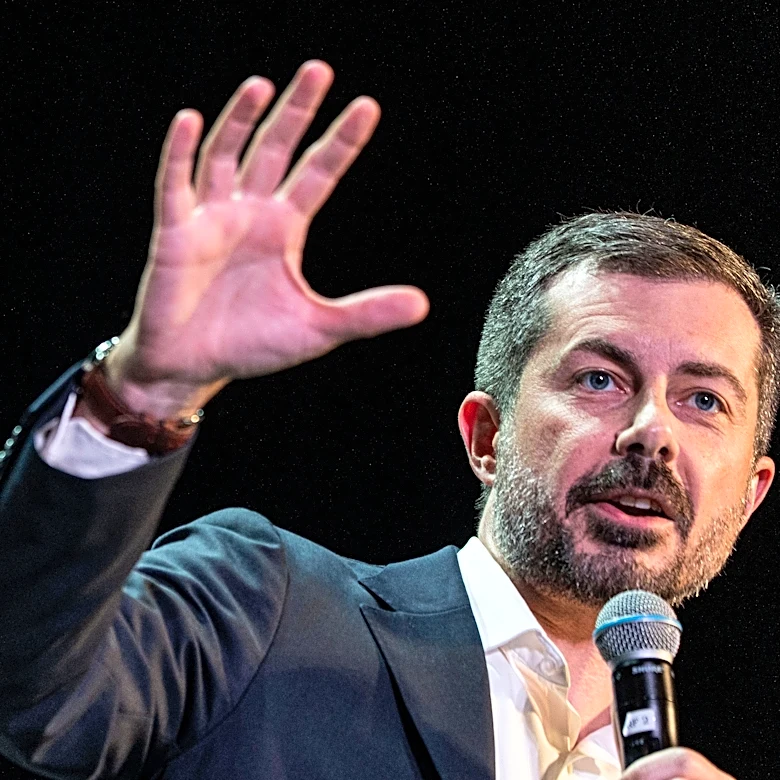
Abdul El-Sayed — or Abdulrahman (roll the “r” and breathe out the “h") as Muslims who grew up in southeast Michigan know him — is a 41-year-old Rhodes Scholar with an Ivy League medical degree, former athlete, past leader of health departments in Detroit and Wayne County, podcast host and author.
Now he's taking on just about every critic, cynic, racist and even President Donald Trump to convince voters he needs to be their next U.S. senator, the first Muslim who would ever hold that seat.
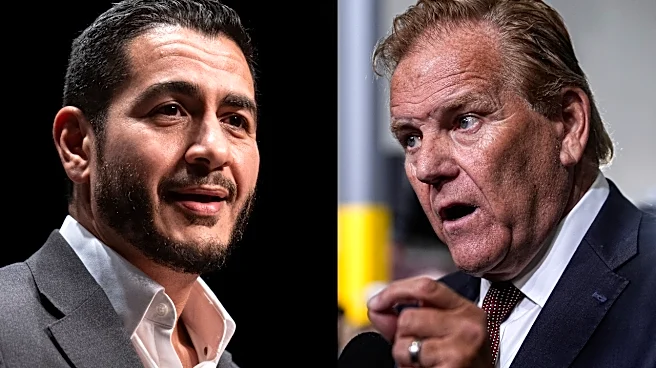
How that will play out in politics, 25 years after post-9/11 Islamophobia continues to rear up in this race, will become clear in November when Michigan voters decide who will represent them in Washington D.C. El-Sayed is running against Republican opponent
Mike Rogers.
The Democratic candidate has strong support among younger voters under 45 years old but his faith "may be an issue for many voters, with 37% saying they are less likely to support a candidate who is Muslim," according to a news release on the State of the State Survey released Sept. 1 by The Institute for Public Policy and Social Research at Michigan State University.
"Forget my ethnic or faith background, just my identity as a doctor and a public health official, like, we need that representation in the U.S. Senate, and I'm not going to step back and say, ‘Well, I can't provide it because of my name or my faith,’ especially when America needs to be a place where it doesn't matter the name, doesn't matter the faith, doesn't matter your ethnicity, doesn't matter the color of your skin, doesn't matter who you love or how you identify, that you can be a part of building a more just, more embracing, more inclusive America," El-Sayed said.
El-Sayed is a Michigander, son of Egyptian immigrants, husband, father, coffee connoisseur, and, as many have heard, trying to get “money out of politics." He has taken strong stances on issues that counter GOP beliefs, as well as some Democratic voter preferences, including banning corporate political spending, stopping aggressive deportation tactics (calling for abolishing Immigration and Customs Enforcement), and no longer sending "blank-check" tax dollars to foreign militaries. He is also campaigning on expanding access to healthcare, housing, education and ensuring federal guidelines are in place before developers build data center.
He faces critics from the Jewish community who have urged him to distance himself from Twitch streamer Hasan Piker — who has been accused of antisemitism though has said his critics misrepresent his remarks — and also called for him to apologize for issuing the statement "hurt people hurt people" in response to the March 12 attack on Temple Israel in West Bloomfield. El-Sayed also has to overcome a lack of trust from Black voters in the state who want their officials to consistently show up in their communities and come up with actual solutions for issues, including rising costs and affordability.
A diverse upbringing
Days after the primary, when he beat U.S. Rep. Haley Stevens to win a place in the November general election, El-Sayed powered through a full schedule of media interviews and campaign events, guzzling a small iced latte — his fourth coffee of the day — that he picked up from Capitol One Cafe in downtown Detroit Aug. 11 before answering messages at his Detroit campaign office on East Grand Boulevard, feeling “tired, but grateful,” he told the Free Press.
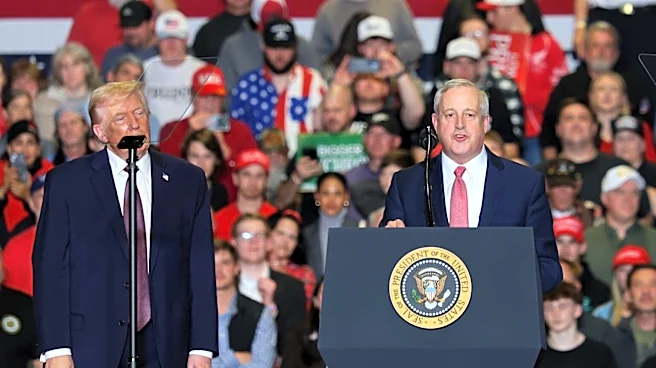
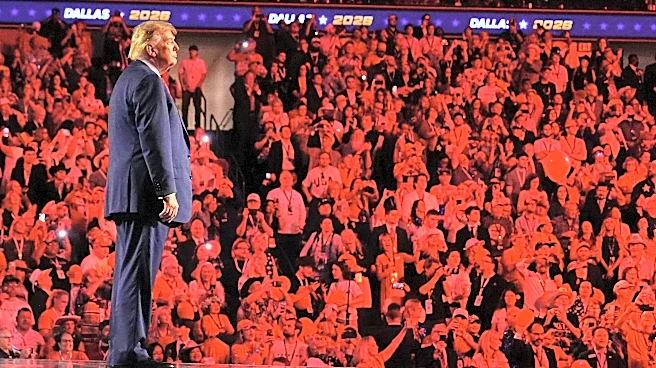
He could have chosen a stable career and income in healthcare — as he says his father Mohamed El-Sayed, a professor of engineering, constantly reminds him — and lived a less volatile and more private lifestyle. He could have avoided the inevitable Islamophobia that surrounds Muslim politicians — President Trump just last week attacked El-Sayed's roots, mother and half-sister with misinformation at the GOP midterm convention. But healthcare is where the problem-solving began, El-Sayed said, sparking his desire to pursue a career where he can affect systemic policy changes.
El-Sayed grew up in Bloomfield Township, though he started school in Missouri. His Egyptian parents divorced when he was a toddler and both remarried shortly after. His father married Jacqueline, who is white and from Gratiot County and raised El-Sayed for most of his life. As he was entering kindergarten in August 1989, his step-mom recognized his name had been too difficult for preschool teachers to pronounce and wanted to make it easier for him.
"At that point, Paula Abdul was topping the charts … and (LA Lakers basketball player) Kareem Abdul-Jabbar had just retired, so those were two popular people with a name that was part of mine in pop culture, and I’ve been Abdul ever since ... It's not a thing I changed later on. It’s sort of who I've been," El-Sayed said. "I love my name. They think I'm afraid of my name. It has a beautiful meaning and it has a beautiful sound, and I'm so grateful for it. But a lot of people can't say it."
El-Sayed went to Andover High School — now Bloomfield Hills High School — pursued a Bachelor's degree in biology and political science from the University of Michigan, a Doctor of Philosophy in public health at the University of Oxford, and a medical degree from Columbia University. While he was studying at U-M, he crossed paths with Sarah Jukaku, an Indian-American Muslim student working one of the tables at Festifall, a U-M student organization fair. He was a junior, she was a freshman, but he did not hesitate to propose that year. They got marriedthe following year. Jukaku is a psychiatrist and they live in Ann Arbor with their two daughters.

El-Sayed told The Michigan Daily in 2006 that Islam taught them to avoid letting their desires play too big of a role in their lives and their marriage is a byproduct of self-control.
"See, faith, to me, isn’t just about an identity," El-Sayed said in a campaign email in July. "It’s about the choices that I make every single day about how I live my life. I wake up, usually between 5:30 and 6:00. I wash up in preparation for my morning fajr prayer ... That’s the first of five times every day I pray. It’s a spiritual practice that reminds me that I am accountable. I am accountable to my belief, to the people I love, to the people I serve, and to a future I hope to be a part of building."
He started his career in public health in hopes of unifying and helping those around him, "only to realize that a lot of that is a function of what happens via government decisions that get made, where we spend our money, what we value, and those decisions get made by legislators in halls of power and you see the consequences of that failure right now."
The question is, will voters support him and, if they don't, will the wave of Islamophobic and targeted attacks on his identity be to blame?

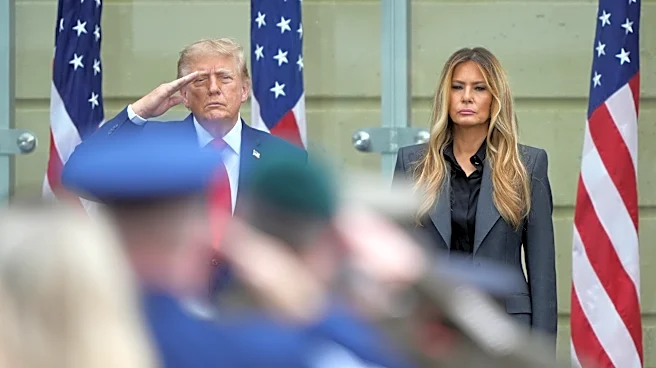
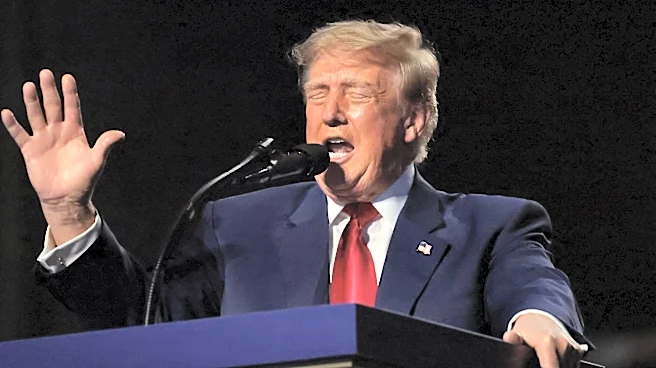
During a speech in Dallas on Sept. 9, President Trump made several false and misleading claims about El-Sayed, and called El-Sayed part of a group of Democratic nominees he characterized as "the most extreme and dangerous group of candidates for the House and Senate ever to seek office." Last month, Trump shared a side-by-side image on Truth Social of him and First Lady Melania Trump, next to El-Sayed and his wife, with his full name, Abdulrahman Mohamed El-Sayed, captioning it, “Two VERY DIFFERENT America’s.” In a CNN clip on Aug. 10, Trump also alluded to “jihadists” being elected, though did not mention El-Sayed by name. At a Las Vegas event in August, he called him a “man of hate."
U.S. Rep. Nancy Mace, a Republican lawmaker from South Carolina, called Muslims holding public office a “threat” to national security in an Aug. 7 post on X, posting "Every single Muslim holding public office in America is a trojan horse, and a threat to both national security and our republic. We refuse to be silent."
GOP ads also targeted El-Sayed, attempting to weaponize his full name. After the primary, Rogers labeled El-Sayed as an “extremist” in a statement on Aug. 5 and stated he “spent years hunting terrorists and bringing Osama bin Laden to justice. Never in a million years did I think that I would be running against someone who believes America deserved 9/11,” although El-Sayed did not make those remarks. (A past remark by Twitch streamer Piker from a 2019 video stream showed that Piker said "America deserved 9/11," which he later said was inappropriate.)
After the Free Press sought clarification on Rogers' remarks, his campaign Communications Director Alyssa Brouillet responded with questions about Piker. “Abdul was asked point blank if he’d disavow ... Hasan Piker and refused. Everyone else has — Haley Stevens, Mallory McMorrow, Hillary Scholten ... you name it. What’s the holdup, Abdul? Are you afraid of Hasan?” she said in an emailed statement.
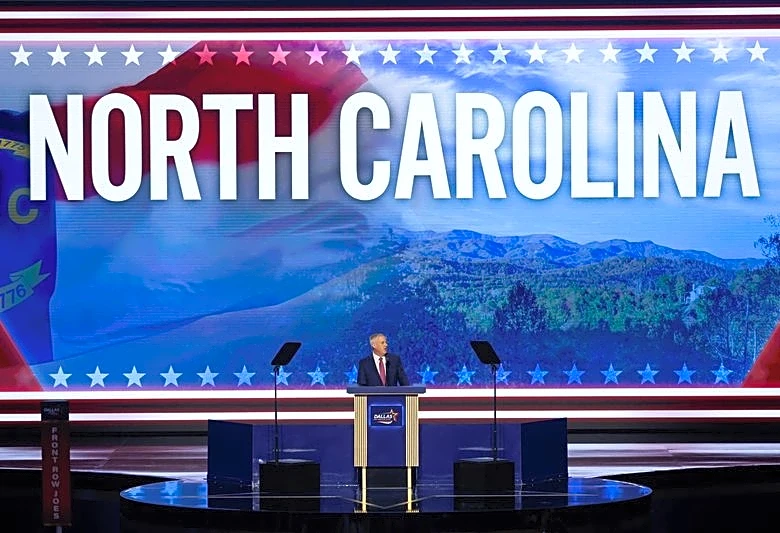
Rogers released another ad on Sept. 8 with a similar sentiment and blasted him as sympathetic to terrorists on Sept. 10 at the Republican Midterm Convention in Dallas. And an attendee shouted he “should be shot” when U.S. Sen. Ted Cruz spoke at the event about El-Sayed’s past comments on Sharia Law practices. (El-Sayed was quoted in a 2009 New York Times story about an “obligation” toward Sharia-compliant banking practices.) Rogers' campaign spokeswoman responded immediately, saying Rogers denounced the comment the attendee made against El-Sayed and any political violence.
El-Sayed has said he is not bothered by the backlash and agrees with Trump on having two different visions of the nation.
“At the end of the day, my name is not the reason people can't afford their groceries. It's not the reason that people can't pay their rents, not the reason that people don't have healthcare. It's not the reason why we're at war. So you know they're going to use it to try to distract people and I'm just going to remind people that it's a distraction, and they're trying to distract from the terrible job they are doing governing this country,” El-Sayed said.

But Muslim residents and El-Sayed supporters like Najoie Zahr of Dearborn, who has lived there most of her life, is feeling the tension toward her community from these attacks, too. Zahr, 26, who has family in Lebanon and worries about their safety due to Israel’s strikes on the southern part of the country, said she and her family and friends have seen numerous Islamophobic ads online recently.
“My friends and I could not open a YouTube video, scroll through anything, without seeing some ad that was horrible, and you know, some of the tropes,” Zahr said, adding the ads she saw would claim “he's sexist, he's misogynistic." However, she said, "He’s a father of two girls, he's a loving husband. (They) were just painting and smearing him in this way and he really wouldn't have gotten that treatment if he was any other identity, in my opinion … in general, though, right now, the atmosphere is so tense.”
There are not many who can better explain the feeling of being Muslim in a post-9/11 America than another Muslim, Zahr said. She questions how to expect someone to create policies with her and other Muslims and Arabs in mind if that person does not understand what it’s like to be a Muslim or Arab, or “grow up with people treating you differently because of your name or because of your ethnicity,” Zahr said.

“The process of democracy is you want to be represented by a representative who you feel you know represents you best,” Zahr said.
U.S. Rep. Rashida Tlaib, D-Detroit, is no stranger to attacks on her identity as a Palestinian-American Muslim. When she was a state representative, Tlaib said she was interrupted in a committee session at the time by a colleague asking to see her birth certificate and was met with silence from her other colleagues. She was elected to Congress in 2018 and has faced a censure for remarks related to the Israel-Hamas war, and a barrage of attacks toward her and her family. Tlaib has also been depicted next to a pager exploding in a political cartoon shortly after devices blew up across Lebanon.
“I just thought in 2026 … that we would be unified as a country to fight against this kind of racism. I think the normalization of it is still incredibly painful because I’m raising two Muslim boys in our country and it’s so exciting for them to see Abdul run and win but also face this kind of hate, and a lot of our children are watching,” said Tlaib.
The congresswoman said she does not want individuals of different faiths and backgrounds to fear running for office, adding that less representation “allows the normalized type of hate,” but she also urges her own colleagues to “be more unapologetic about defending Muslims in our country.”

Dr. Iltefat Hamzavi, board chair of Emgage, a Muslim civic organization based in Washington D.C. with a Detroit office, said while Muslims have been provided good opportunities in the U.S. and found communities they want to visit or live in, they have long felt suppressed and inferior politically and on a societal level, especially when policies “bombed their home countries.”
"For Muslims, we didn’t have the right to have anybody that looked or prayed like us," in politics, Hamzavi said. "And Michigan has led the charge and now we have multiple people throughout the country that are of Muslim faith. But they are one tiny voice.”
University of Michigan political science professor Vincent Hutchings said running to be the first Muslim in the U.S. Senate may draw parallels to eras when the nation had other firsts, such as the first Black or Jewish politicians, marking a moment of political significance because they are "groups that are societally discriminated against and disadvantaged."
Hutchings added that having a Muslim candidate on the ballot can be symbolically important, with deep resonance in the community "regarding a sense of efficacy, a sense of empowerment and it can, of course, lead to mobilization efforts." Unlike the Black or Jewish voting communities, the data on the smaller Muslim voting population is less developed so it's not clear how often the community votes as a bloc, which can influence the outcome of elections.
"It's worth pointing out that in addition to people being attracted to his candidacy because of his background, a number of people will be repelled for the same reason," Hutchings said.

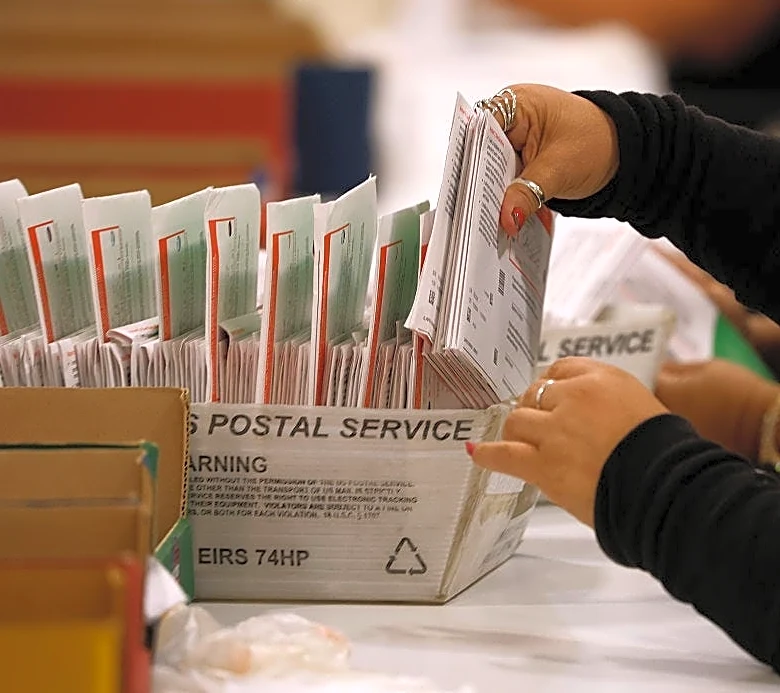
Official vote tallies in Michigan show El-Sayed received 744,952 votes in the August primary, while Stevens received 731,160 votes.
Healthcare, a turbulent economy and environmental issues are some factors that experts say helped increase voter turnout in the state to 2.5 million, though what has galvanized communities, other than Muslims, is Trump’s policies in the Middle East, particularly regarding Israel’s aggressive military campaign on Gaza, an issue elected officials need to address for Muslim and Jewish communities, Hamzavi said.
Hamas invaded Israel on Oct. 7, 2023, killing more than 1,000 people and kidnapping 251 people, according to Israel's government, prompting attacks on Gaza.
“This is metro Detroit; we have some of the closest Jewish ties. The Jewish community is also our community. And we don’t want anything to happen to them and most of us are very clear that antisemitism rising is also going to cause more Islamophobia … but that harm is going to affect both of us and we are very clear that we are tied together. But this narrative that it’s either or is such a false dichotomy and most Muslims get that," Hamzavi said.
Michigan is home to more than 240,000 Muslims but Ghida Dagher, chief executive officer and president of New American Leaders, which trains first- and second-generation candidates to run for office, said turnout goes beyond those voters.
El-Sayed "wouldn't have been able to win just on an Arab or a Muslim vote but he built really important coalitions, organized, spoken up in the language that brought people's lived experiences and the challenges that they're having to the forefront in this time," Dagher said, adding that Arabs and Muslims were decisive votes in some cities. “People didn't just show up for identity's sake. They showed up because there was substance, representation, which both go hand in hand for this win, in particular.”
In Dearborn El-Sayed received 77.59% of the vote and Stevens 20.3%, while 82.29% of voters in Hamtramck, also a predominately Muslim city, backed El-Sayed and 15.12% backed Stevens, election results show.
The question Dagher often hears is whether “new Americans” can lead or if a state is ready for a leader of a specific background to represent their communities.
“Elections across the country (are) proving exactly that. There is an appetite for new leaders (and) fresh voices,” Dagher said. “It shows that representation is finally catching up with reality in Michigan.”
'Facing the hurdles'
Still, El-Sayed faces challenges in areas with greater Black and Jewish voter populations, including Oakland and Wayne counties.
El-Sayed said no group of voters will agree on everything but he touted his history serving the Black community since 2015 in rebuilding Detroit’s “health department that didn’t exist” as a way to help Black voters understand his candidacy.
“I've been serving predominantly Black communities my whole public service career. I've got a story to tell about what we've actually done, not just what I want to do, and I'm looking forward to continuing to tell that story,” El-Sayed said.

Brandon Jessup, a civic engagement data systems expert in Michigan, said El-Sayed will have to meet Black voters directly and will not overcome challenges or a lack of trust toward him with television advertisements. He's noticed a trend among Black voters under 55 years old supporting El-Sayed, more than older voters.
"Abdul is facing the hurdles of trying to convince a community that’s been told time and time again that incremental change is the only change that’s possible. Abdul is giving a big picture vision to a community that’s like ‘I’m tired of it’," Jessup said.
Other issues stem from "very conservative people who say, 'I don’t really know about this guy who I’m afraid of with a name that’s kind of hard to pronounce'," Jessup said.
Though Jessup said he does think El-Sayed is moving intentionally with Black voters to form a relationship, as opposed to trying to simply win votes, he added that El-Sayed "is fighting a lot of things within the African American community. The elder population that’s economically conservative, very economically conservative, and is highly distrustful about government reform and change actually impacting their lives."
On an Aug. 31 episode of The Breakfast Club podcast, El-Sayed said too often when people in communities, like Detroit, interact with "people who look like me," it's "behind bulletproof glass in a liquor store or at a gas station where, if you're a woman, you're getting catcalled. If you're a kid, you're being sold a loosie out the back. If someone wants to use the bathroom, you're being told there's no bathroom there. And that's a problem. It's a big problem," El-Sayed said in the episode. "Arabs and Muslims face a level of discrimination from folks who want to tear us apart but is nowhere near the discrimination that Black folks face and have faced, and has been compounded ..."
"And I think there's a conversation that has to bring us together to say, actually, our communities, these communities need to be thinking about what it looks like to invest in the communities in which you are a business owner. And, we need to be thinking together about what it looks like to go arm in arm to fight against the folks that want to take away from all of us."
Lifelong Detroit resident Janae Wilson, who converted to Islam as a college student, seeks representation from two communities: the Black and Muslim communities. However, the concept of being the first does not always move her, she said.
“It's more about the hard work and the achievements and the reason why we value the first so much is because it's getting into a white institution," she said.

Muslims have been civically engaged and are rooted in valuing justice and human rights, she said, and it is still important to her to have that level of representation and someone who values people and not solely corporations.
“He wouldn't say he was anti-capitalist, right? But I would also say a lot of Muslims in America generally are not anti-capitalist. But I do think that he sees the value in pushing money out of politics, and to me, that's what I value deeply,” Wilson said. “I think Muslims do have these progressive thoughts or progressive beliefs. We're not just super conservative or we don't just look this one way. You know, a lot of times, people think that when they see Muslims, they’re like, ‘Oh, they're just this boxed-in thing,’ and he represents more than that.”
Wilson said she wants to see his campaign make more local efforts to tap into Black Detroiters, as well, pointing to online dialogue about how Detroit and Wayne County voters did not turn out in big numbers for him. El-Sayed garnered nearly 45.5% of the vote in Wayne County to Stevens' 51.2%, and in Detroit, he received 34.1% while 62.2% supported Stevens.
“We have seen so many people make false promises or not build true relationships in the city come to us when they want us to vote for them, and never there again. But I’ve seen that from Black politicians, frankly. I’ve seen that from a lot of different audiences and I think we have to talk. This is dialogue, it’s actually just talking to people,” Wilson said.
As El-Sayed seeks to gain the support and trust of Michigan’s Jewish voters, many of whom backed his Democratic primary election opponent, he emphasizes his commitment to their safety is the same commitment he shares with his own two daughters.
“I believe that the safety of all of our kids requires that our money is not spent to kill anybody's kids and that we spend our money to invest in all of our kids here in Michigan. And insofar as that renders a disagreement about our continued funding to Israel, we may agree to disagree, but that doesn't mean that the things that unify us are not bigger than the things that divide us," El-Sayed said.
El-Sayed supports an arms embargo on Israel — which receives $3.8 billion in annual military aid amid the ongoing violence in Gaza —calling for taxpayer dollars to, instead, be spent on domestic issues.
Rabbi Asher Lopatin of Kehillat Etz Chayim in Oak Park identifies as a Democrat, though he is supporting Rogers in the Senate race. He said the Jewish community's concerns are safety and having a sense of peoplehood.

Lopatin said El-Sayed's comments after the Temple Israel attack were wrong, called on the candidate to distance himself from Piker and to recognize the legitimacy of Israel and "he has to say that 'I will protect all Jews,'" whether or not they support Israel.
Although El-Sayed condemned the Temple Israel attack, in which a Lebanese man from Dearborn Heights drove a pickup intothe building with schoolchildren inside — and antisemitism — he said at the time that the attacker's family was killed in an Israeli air strike on Lebanon and in an act of "displaced rage," the man attempted to "take it out on innocent children" who had nothing to do with his loss, adding, "hurt people hurt people," multiple times.
During the Michigan Democratic Convention on Aug. 29, El-Sayed did apologize for his remarks and told reporters his intention was not to hurt anyone, according to The Washington Post. El-Sayed also shared his remarks on Aug. 30 during the Michigan Democratic Jewish Caucus Summer Simcha. El-Sayed said he grew up attending bar and bat mitzvahs at Temple Israel and that when he learned of the attack, his team immediately condemned it. However, days later, he said he wanted to offer context, according to an audio recording the campaign provided to the Free Press of the event.
"But here’s the problem with context. Context, at the right time, seems to also offer an asterisk on a moment of pain and a moment of trauma, a moment of frustration, a moment of sadness, a moment of anger that is more than justified. And that wasn’t my intention. So I’m asking for forgiveness and a moment of grace. I made a mistake," El-Sayed said, adding that there is room for context later on, but it was not the right time. "And folks didn’t need to hear it, didn’t want to hear it. It was not the right thing to say. And in politics, so much of what we do is about what we say. So for folks who felt like my comments were justifying of an act of domestic terrorism, I did not intend it that way, I hope that you’ll forgive me, and I’m sorry."

Lopatin said El-Sayed "has to say 'this is never acceptable.'"
"I think his apology was a non-apology. Whenever you say, ‘If you were hurt by what I said, I apologize’... that’s not an apology," Lopatin said Sept. 2. "He said it might not have been an appropriate time to say what he said. Perhaps the biggest problem with what he’s clarified with his, what I would say non-apology apology, is that he doubled down this idea that context is important. What does he mean by context? Israel’s war against Hezbollah is what led someone to blast into a synagogue and try to kill over 100 children."
Lopatin said he feels the Democratic Party has become an anti-Israel and anti-Jewish party and has concerns about its future. But he added that it is important to work with whoever is elected.
El-Sayed said multiple times that he aims to lead by bringing communities together: “Look, the inscription on the sword of the Prophet (peace be upon him) was ‘Speak the truth, even it be against yourself.’ That is a call to principle and I think when we hold up principle, we lead well. And so, my job is to lead by principle and to lead for justice for all communities and my hope is that our leadership can bring communities together around the principles that we fight for: peace, justice, equity, opportunity against hate, against greed, against injustice..."
Dana Afana is the Detroit City Hall reporter for the Free Press. Contact: dafana@freepress.com. Follow her: @DanaAfana.
This article originally appeared on Detroit Free Press: Abdul El-Sayed battles politics, Islamophobia in run for U.S. Senate