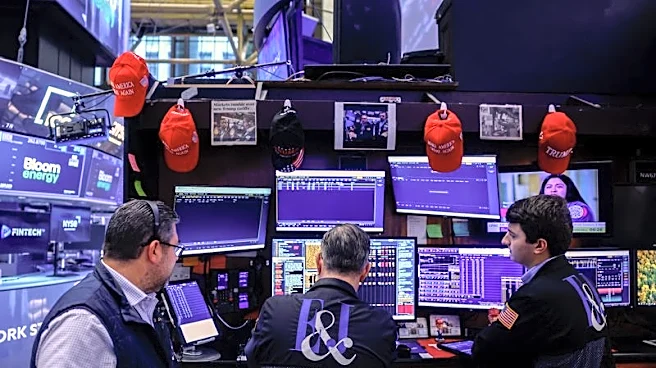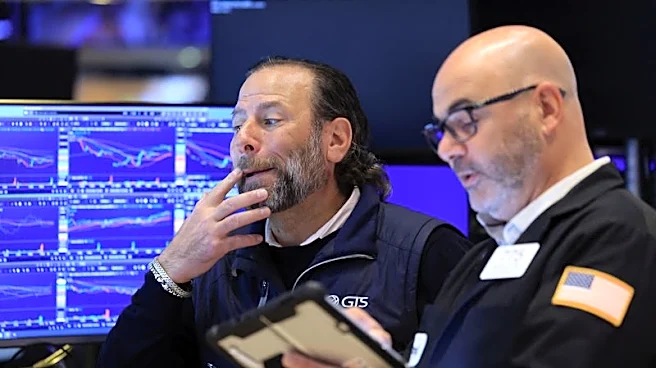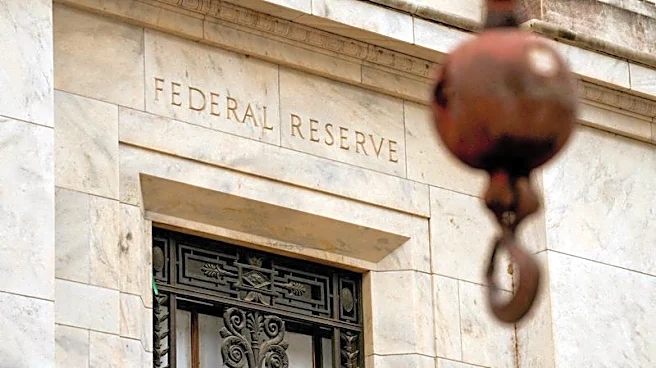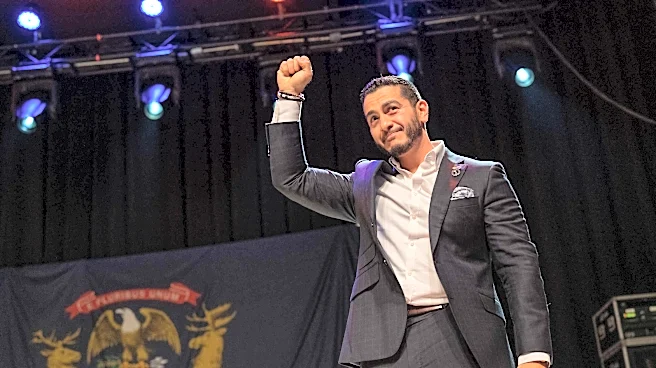

Federal Reserve Gov. Michael S. Barr reiterated in Detroit that "further policy adjustments are likely needed" to bring down inflation.
Translating to everyday terminology: Do not dream that the Fed is
one and done when it comes to raising short-term interest rates.
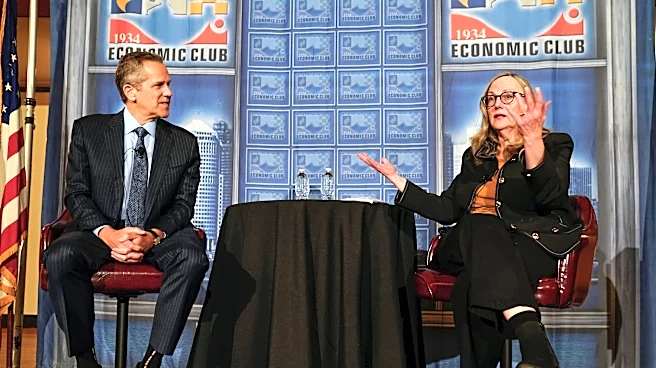
Barr spoke to the Detroit Economic Club on Tuesday, Sept. 29, on a wide range of issues — interest rates, Michigan's auto industry and jobs picture, the unknowns that could be triggered by the expansion of artificial intelligence on the job and more.
What's ahead for interest rates?
On Sept. 16, the Federal Reserve raised short-term interest rates by a quarter of a percentage point.It was the first rate hike since July 2023. Barr voted in favor of the rate hike; the overall vote was unanimous.
The next Federal Open Market Committee Meeting is Oct. 27 and Oct. 28. Currently, financial markets are betting on a second quarter-point hike in October. And Barr's words in Detroit didn't contradict current expectations.
In a speech given in Chicago on Sept. 23, Barr made a similar statement about "further policy adjustments" being needed. He called the Fed's Sept. 16 rate hike "an adjustment in the right direction."
While monthly inflation reports released each month have been highly volatile, Barr indicated in Detroit that the inflationary trend over the long run is telling.
"I count only two months of data consistent with 2% core PCE inflation over the past 20 months. And I don't yet see a clear trend toward a timely return to 2%," said Barr, in a prepared speech before the Detroit Economic Club on Tuesday, Sept. 29.

The Federal Reserve monitors the personal consumer expenditures price index, or PCE, when deciding where to set the short-term federal funds rate, which directly influences credit card rates and some other consumer loans.
The Fed's inflation target is 2% as measured by the PCE. But inflation has run consistently higher than that 2% target, according to Barr, over the past 20 months, which in his mind indicates that the Fed needs to take more action to fight inflation.
The FOMC agreed in September, Barr said, to "raise short-term policy interest rates to support achieving our dual mandate of maximum employment and stable prices."
All eyes are on mortgage rates
Many people couldn't tell you what the federal funds rate is at this point; it is now at a target range of 3.75% to 4%.
More people could easily tell you that mortgage rates are in the unpleasant range of 7% or higher.
The 30-year fixed-rate mortgage averaged 7.03% as of Sept. 24, 2026, up from 6.95% the week before and 6.30% a year ago, according to data from Freddie Mac, the Federal Home Loan Mortgage Corp.
The average 30-year fixed-rate mortgage rate hit 7.58% on Tuesday, Sept. 29, according to Mortgage News Daily.
The Federal Reserve's rate hikes do not directly send mortgages or car loan rates soaring. But longer-term rates tend to respond to the Fed's actions, as well as overall expectations for inflation and higher rates ahead.
The Fed's short-term policy rates indirectly impact longer-term borrowing rates. Barr maintains that in the long run mortgage rates are generally lower when inflation is lower.
Even so, economists note that a trend toward higher interest rates threatens Michigan more than other parts of the country because of the dominance of the auto and mortgage industries particularly in the metro Detroit area.
What Barr had to say about autos and Detroit
In his prepared remarks, Barr noted that the automobile industry remains critical for Detroit and Michigan.
He said 12% of U.S. auto assembly and auto parts jobs are in the Detroit metro area.
"National sales have grown strongly recently, hitting an annualized rate of 16.8 million in August, a solid pace," Barr said.
"Automakers are investing in battery technology and in electric vehicle design and production, which is creating engineering and other high-tech jobs in this region."
He outlined many of the challenges that Detroit faces. "For example, unemployment in the Detroit area is estimated to be around 11% — much higher than Michigan's rate of 5% and the U.S. rate of 4.1%."
He also praised the city's entrepreneurship as "an engine for job creation."
"As it did in other places around the country, new business formation in Detroit rose after the pandemic, to an average of about 6,000 firms each year, adding 30,000 jobs a year to the city's economy. In Detroit, the share of all businesses that are new has outpaced the share in Michigan overall," said Barr, who is on leave from the University of Michigan. He is the former dean of U-M’s Gerald R. Ford School of Public Policy.
Barr said economic activity in the United States has grown at a solid pace in 2026 and has recently gained momentum.
Real gross domestic product grew at "roughly a 2% rate in the first half of the year," Barr said, "and I expect it will pick up a bit in the second."
He noted that the economy has shown "remarkable resilience given the series of significant shocks we have faced."
Why AI could make it harder to judge shifts in the labor market
The artificial intelligence buildout — which will boost economic growth in the next year or so — could create more uncertainty for monetary policy down the road in the next two years to five years, Barr said.
"Monetary policy is not well suited to dealing with structural changes in the economy, and it could be difficult for policymakers to assess in real time whether changes to the labor market are structural or cyclical," Barr said.
Historically, he noted, it has taken years for new technologies to transform the way people work. But AI adoption so far, he said, indicates that the new technology could spread more quickly.
How all this will play out in the labor market remains unknown.
"If labor market changes happen quickly, it will be hard for workers to adjust and dislocations might be large," Barr said.
A more gradual adoption, though, could allow for more orderly adjustments, he added.
Barr warned that the country needs to prepare for the possibility that there might be "serious short-term disruptions in the labor market that need to be managed effectively to ensure the benefits of AI are realized over the long term."
I moderated a one-on-one discussion with Barr and asked him about the risks of a recession. Barr offered reassuring words and said he personally did not see a recession on the horizon in the months ahead.
But again, I would say he seemed to once again strongly hint that interest rates are likely to edge up in the future as the Fed does its best to fight persistent inflation.
No doubt, all eyes will be on the Fed for at least a few months to come.
Contact personal finance columnist Susan Tompor: stompor@freepress.com. Follow her on X @tompor.
This article originally appeared on Detroit Free Press: Why Fed's Barr thinks we might not be done raising interest rates yet