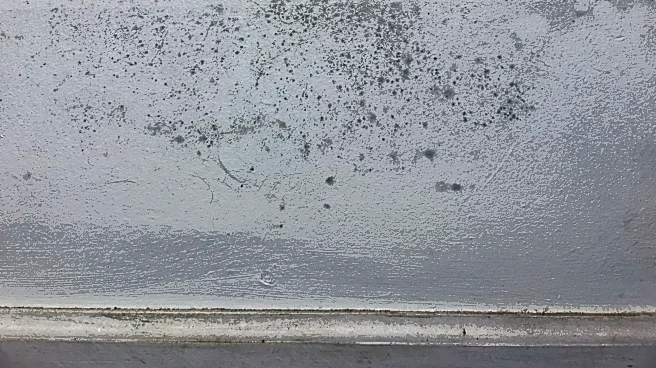









As thousands of Michigan college students moved into campus housing or rentals in recent weeks, some made an unpleasant and unwanted discovery: mold.
Students living in Michigan college towns have reported mold in both university residence halls and off-campus rentals to their universities, county health departments and school newspapers, and have documented the mold on social media.
The problem can be particularly difficult for students to navigate because there is no state standard establishing how much mold is acceptable in a home or university residence hall.
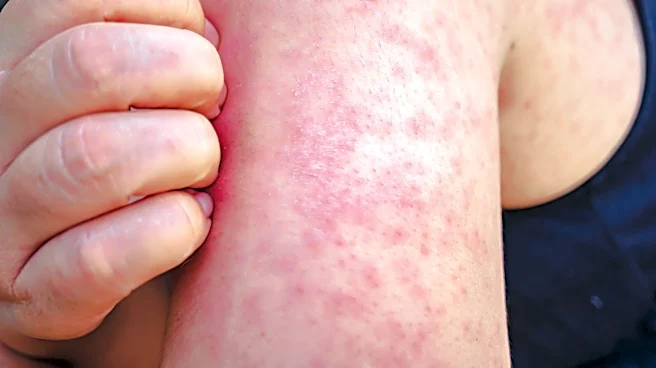
Exposure to mold spores (the tiny cells released by mold that float through the air), though, can cause health problems such as allergic reactions; eye and lung irritation; sore throat;
a stuffy or runny nose; coughing, sneezing or wheezing, and skin rash in people who are sensitive to it, according to the U.S. Centers for Disease Control and Prevention.
What happens after a student reports mold can depend on where they live — and how their university, landlord or property manager responds.
Mold complaints rise around move in
The Washtenaw County Health Department, which handles housing complaints in the county that includes Ann Arbor, sees a significant share of its housing complaints involving mold.
Susan Ringler Cerniglia, a spokesperson for the department, said the county health department typically receives a bump in complaints around the time students move in but that the complaints are generally from parents. Cerniglia said most of the complaints about on-campus housing are likely reported directly to the university and not the health department.
The department has received 50 mold-related complaints this year through August, a number that is fairly consistent over the past four years, she said. Mold-related complaints represent about 16% of all housing complaints the department receives each year.
The health department does not inspect apartments or residence halls specifically for mold, nor does it test for mold. She said there are no established regulatory limits for mold in residential living spaces. Health inspectors with the Washtenaw County Health Department told her, "Our motto is if you can see it, smell it, or know it’s there — fix the source of the water/moisture, and then get rid of the mold."
When Kate Drayer, who is now a senior at the University of Michigan studying psychology, was getting ready to move back into a house she rented the year prior with friends on Packard Street in Ann Arbor, a friend stayed in her room for a night in the home's basement and became sick.

The friend, who she believes has an allergy to mold, moved out, and maintenance came over and tore out part of the wall where there was visible mold. When Drayer moved in ahead of the school year, the wall was still partially torn out, so she slept on the couch for two weeks before the landlord moved her to an apartment.
The walls and flooring in her room were torn out and replaced but she wanted a mold test completed before she moved back in, which her landlord refused to do. Drayer's father hired someone to complete a mold test. The results indicated that fungal spores were above acceptable levels in both the basement bedroom and the main floor.
"It was just frustrating," Drayer said. "I was basically living out of my car for over a month before we moved to the Airbnb."
Drayer and several of her roommates moved out of the house and into an Airbnb for about a month. Almost everything was removed from the home, and anything that could go in the washer did, she said.
"I wouldn't say that any of us felt especially safe moving back in," she said. "We didn't really have another option."


What happens at a U-M residence hall
Mold-related complaints are infrequent at the University of Michigan, according to an emailed statement from U-M spokesperson Paul Corliss. He said the university has not seen an increase in reports of mold in recent years.
When a concern is raised, U-M's Student Life Facilities and Environment, Health and Safety teams work together to evaluate the space and address any issues promptly, he said.
He said residence hall rooms are inspected and cleaned before students move in each fall, and communal bathrooms are cleaned daily.
"In many cases, concerns reported as possible mold are evaluated and no mold is found," Corliss said. "When mold is confirmed, the university works to identify and address the source of moisture and complete any necessary remediation as quickly as possible."
He said most cases are minor and can be resolved without disrupting the student’s living arrangements.
"When more extensive work is required, the university considers the scope of the issue, the remediation needed and any documented health considerations in determining whether temporary relocation is appropriate," Corliss said. "Cases requiring relocation are rare, but our priority in every instance is to ensure students have a safe and healthy living environment."
MSU's approach
Students are encouraged at Michigan State University to report suspected cases of mold to its Residence Education and Housing Services, according to an informational page on MSU's website about mold.
Buildings and residence hall rooms are inspected multiple times per year, MSU says. When a student submits a maintenance request about mold, staff conduct a visual inspection and check surfaces for moisture.
If mold or moisture is found, staff clean or remediate the affected area and may bring in an outside water-cleanup and restoration contractor. Students may be temporarily moved while remediation is completed.
MSU says it generally does not recommend mold testing because there are no federal or state regulations establishing acceptable indoor concentrations of mold or mold spores.
Michigan has no mold-specific laws
There are also no state laws for mold in Michigan homes. However, building codes and statutes, including the Housing Law of Michigan, help to promote safe and healthy housing, Lynn Sutfin, a spokesperson for the Michigan Department of Health and Human Services, said in an email. Landlords or property management companies are required to ensure all parts of the home, including plumbing, heating, ventilation and electrical wiring, are kept in good repair.
Sutfin said based on these laws, the landlord or property manager should address problems in a home causing dampness that may lead to mold growth, including bathroom or kitchen ventilation fans that don't work properly; leaks from pipes or roofing, and flooding.
It's not just a Michigan problem
Universities around the country have faced more extensive mold problems in student housing.
At Ohio State University, dozens of students and their families sued the university after students were evacuated from a residence hall when mold was discovered. The lawsuit, filed in 2025, said that Ohio State knew the building had mold and asbestos and was unsafe for students to live in.
Hampton University in Virginia, meanwhile, implemented a 48-hour response system for mold in 2018 after student protests and social media backlash over mold in campus housing.
What students should know
The Cleveland Clinic warns that mold can be difficult to remove from inside a home or other building. If the cleanup isn’t handled properly, it is possible to aerosolize the mold spores, allowing them to spread through the air and grow in other parts of the building.
To prevent mold from growing indoors, the CDC recommends:
- Keeping the humidity level in your home low — no higher than 50% by using an air conditioner or dehumidifier.
- Using exhaust fans in the kitchen and bathroom that vent to the outdoors. Ensure your clothes dryer also vents outside.
- Immediately repairing leaks in windows, walls, plumbing or your roof.
- If there’s a flood, fully drying out your home within 24-48 hours.
- Adding mold inhibitors to paints before painting.
- Cleaning bathrooms with mold-killing products.
Sutfin said tenants should notify the landlord or property management company by submitting a maintenance request and requesting that they fix the issue. Follow up in writing if needed.
If the mold issue is not being addressed after several requests, consider the following:
- Contact a legal aid organization, such as Michigan Legal Help, or a housing attorney.
- Learn about renter’s rights at the MDHHS Renter’s Rights Resource Webpage.
- Contact the local health department to learn about available resources.
- File a complaint with the Michigan Department of Attorney General-Consumer Protection Team. To file a complaint, call (877) 765-8388 or email miag@michigan.gov.
Contact Adrienne Roberts: amroberts@freepress.com
This article originally appeared on Detroit Free Press: Mold in college housing is a problem. Here's what students should know