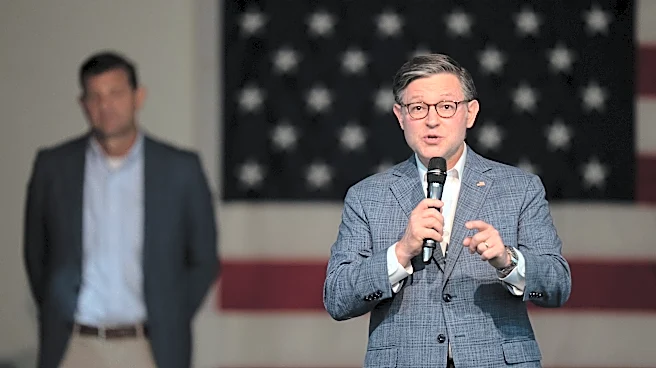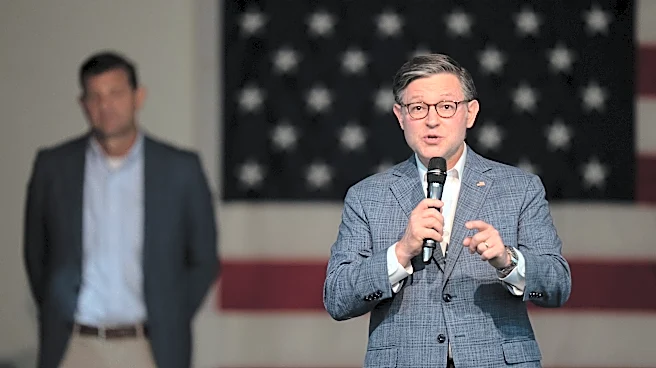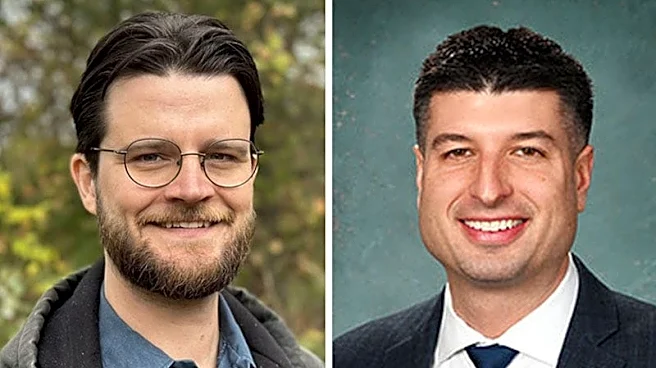

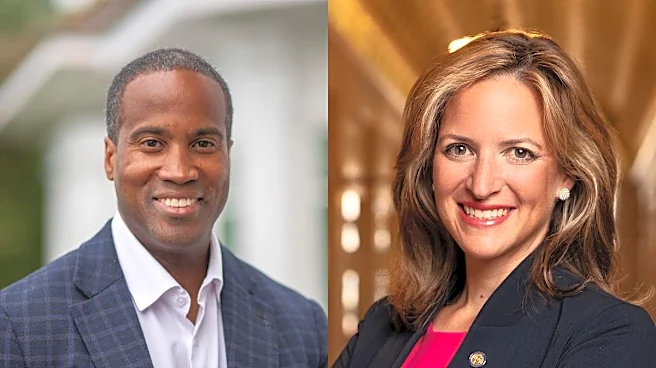
With four weeks to go until the Nov. 3 election, Republican U.S. Rep. Tom Barrett and Democratic nominee and civil activist Will Lawrence gamely debated − and occasionally talked over − each other for an hour on Tuesday, Oct. 6 over which would make the better congressman for a hotly contested, tossup mid-Michigan district.
Throughout the debate over who should represent Michigan's 7th Congressional District, Barrett, a 45-year-old first-term congressman from Charlotte, touted his votes to end or limit the war in Iran and tried to paint his opponent as a radical leftist. Lawrence, a 36-year-old first-time candidate from Lansing, in turn blasted Barrett for supporting the Trump administration over the last two years and blamed him for the current
levels of inflation and gas prices while calling comments made years ago about open borders and amnesty for immigrants "hypothetical."
Considered the most-evenly divided U.S. House district in Michigan, the outcome in the 7th District could play a role in determining which party controls Congress in January and political handicappers still consider it a tossup despite Democrats' recent gains in polling nationwide. Here's a rundown of some of the highlights of the midday debate, which was hosted by WILX-TV 10/WSYM-TV FOX 47, and WKAR-TV PBS 23 in Lansing.
Lawrence challenged Barrett's independence from Trump
Barrett, a former Army helicopter pilot who has President Donald Trump's endorsement, on several occasions said that while he supports some of the president's priorities, continuing the war with Iran isn't one of them, noting that it's pushed up fuel prices and other goods with it. "We all know that fuel costs will come down and the rest of the economy will recover, as well" once the war ends, he said. Barrett also accurately noted that he has, for many months, pushed to limit Trump's authority to wage war without congressional authorization. "I’ve been an independent voice for my district," Barrett said.
But Lawrence wasn't having it, calling the war "stupid." He noted Barrett initially sounded a note of support for Trump's decision to start the fighting with Iran and had voted for military funding that has helped pay for it. Lawrence also argued that Barrett voted against legislation to limit Trump's ability to raise tariffs unilaterally which, in turn, has increased prices in the state and in some cases hurt farmers and small businesses. "He's voted in lockstep with this president every time it's mattered," he said.
Barrett blasts Lawrence for calling past comments 'hypothetical'
Throughout the debate, Barrett worked to remind viewers of past comments made on social media and other platforms by Lawrence, many of them several years ago, in which the Democratic nominee expressed support for defunding police and abolishing prisons. Lawrence, who has rescinded those remarks − many of which he deleted from social media earlier − said they came at a time when American society was engaged in "a wide-ranging conversation at the beginning of this decade" about public safety, violence and policing. "And the result of that conversation was clear... We want to fund the police, along with community violence intervention, mental health programs," he said.
Barrett continued to press his attack on the comments, however, saying that Lawrence − who chastised Barrett for supporting what he framed as inhumane Trump administration efforts to remove immigrants that led to fatal shootings in Minneapolis − had previously made remarks calling for open borders and granting amnesty to people in the country illegally. When Lawrence fired back those comments were "hypothetical," Barrett clamored back, "You’re running for Congress, it’s not a hypothetical statement."
A clear split over the future of health care
They sparred over health care and where it's headed: Responding to a question from one of the moderators, Lawrence, a progressive in the mold of U.S. Sen. Bernie Sanders of Vermont, touted a single government-run health insurance plan that would cover all Americans, arguing it's the fairest and best way to ensure that everyone has coverage. "I believe we should all be covered for life, we can do it with a single-payer plan," Lawrence said. He added later, "Everybody will pay less under my plan with the exception of the billionaires and the wealthiest in the country, who are currently not paying their fair share."
Barrett rejected that notion, arguing the math simply doesn't add up and that a plan like the one Lawrence proposes would cost $35 to $40 trillion. "He's going to tell you that he thinks we need to tax the billionaires and trillionaires," Barrett said. "The fiscal analysis of Medicare for All, his flagship program, is $35 or $40 trillion. "There aren't enough billionaires in America to pay for that. Everybody would have to have their income tax doubled," he said. Lawrence fired back at Barrett over measures which have allowed premiums to rise significantly for people getting insurance under the Affordable Care Act, which has caused millions to drop coverage, and new work requirements − which Barrett called "modest" − that will limit Medicaid benefits.
AI and data centers remain a central topic
Lawrence, who has made opposition to (and called for a moratorium on) proposed data centers required by the race to develop artificial intelligence, a central part of his campaign, said Barrett's efforts to also limit data centers represent "a complete 180 (or turnaround) on the issue. As proof, he noted that that U.S. House, and Barrett, initially voted for a version of Trump's so-called One Big Beautiful Bill that included a 10-year ban on any state or local restrictions on AI development. (The ban was later stripped out by the Senate and it was a small title in a sweeping bill that covered dozens of tax and spending provisions pushed by Trump.) Lawrence also has criticized Barrett's vote on that bill as giving development breaks to data centers, though the breaks included in that bill are not specific to that industry.
Barrett, however, noted that he had a well-publicized history of opposing corporate handouts as a member of the state Legislature and that he had taken an active and bipartisan approach to the question of data centers and AI, including sponsoring legislation that would protect local authority in determining whether communities accept or reject data centers. He also said Lawrence was a supporter of legislation passed under then-President Joe Biden that aided data center developments in some cases, as well. "His attempt to try and deflect from his own record is obviously not accurate," Barrett said. "I've been on the side of locals before, and I'm on the side of local residents for this."
Contact Todd Spangler: tspangler@freepress.com. Follow him on Twitter @tsspangler.
This article originally appeared on Detroit Free Press: Barrett, Lawrence face down each other in U.S. House race debate