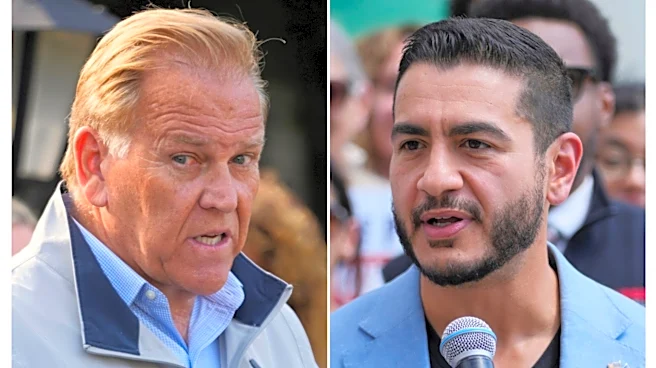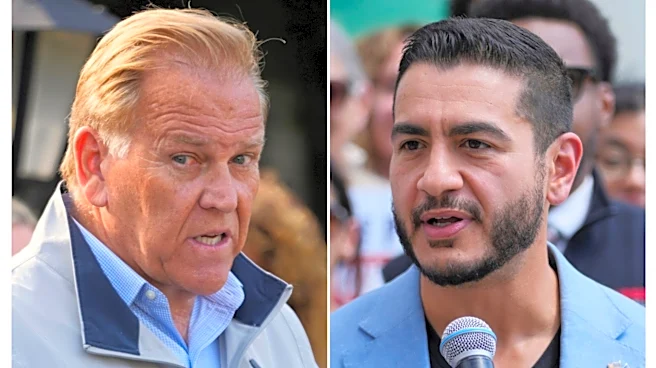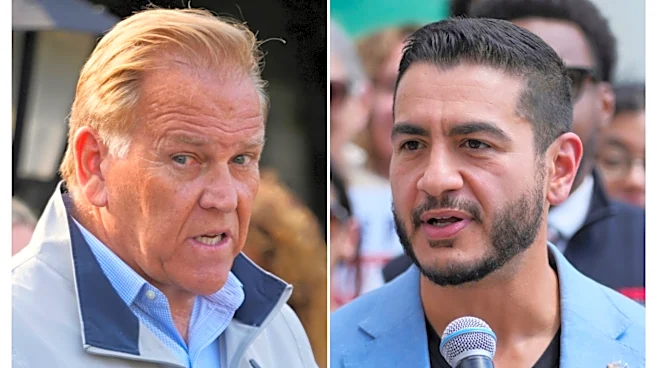

I may be the only person in Michigan who is friends with both candidates for the U.S. Senate seat in Michigan.
When Mike Rogers first ran for U.S. Congress in 2000, I served as Republican State Party Chairman.
In a year when then-Congresswoman Debbie Stabenow, a Democrat, won a race for the U.S. Senate, Mike Rogers was able to narrowly win Stabenow’s former congressional seat by a mere 111 votes. I got to know Mike as a hard-working and skilled campaigner, a patriot who served in the Army and the FBI, someone with a great sense of humor and an easygoing manner.
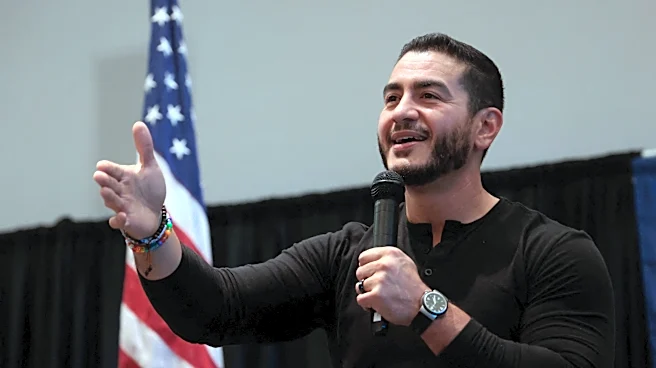
My initial interactions with Dr. Abdul El-Sayed came when he ran statewide for the first time in 2018, the same year my former boss, then-Attorney General Bill Schuette, also ran for governor. I got to know El-Sayed better when he lectured at the school at which I teach, the Gerald R. Ford School of Public Policy at the University of Michigan. We served on numerous panels, shared coffees together, and over time, became friends. Abdul El-Sayed is intelligent, a talented debater and someone who is passionate about health care.
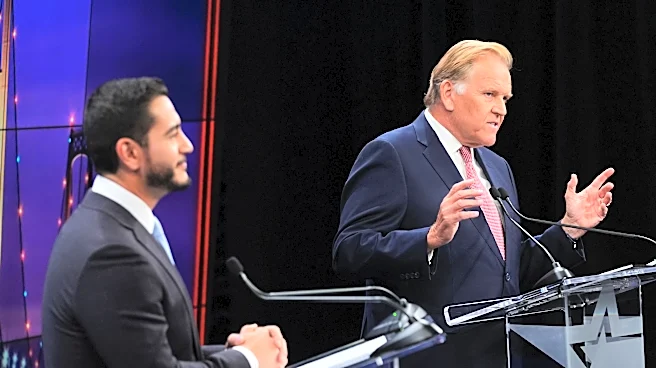
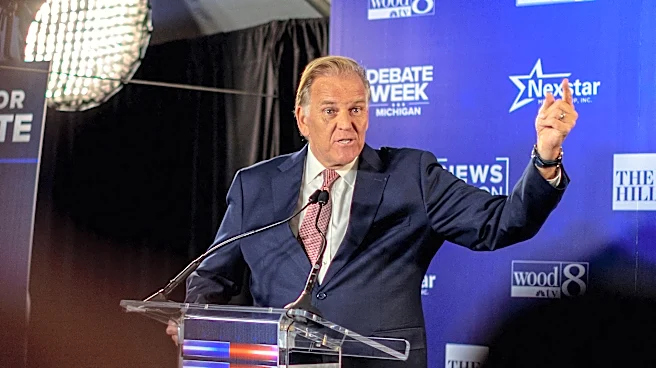
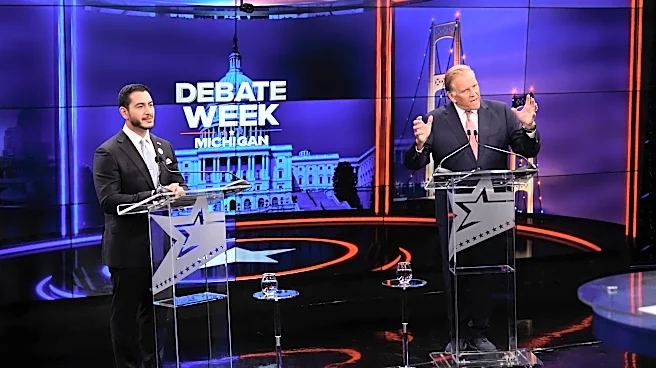
On Oct. 8, Mike Rogers and Abdul El-Sayed engaged in their first debate. Most of the reporting focused on the clashes and attacks between the two candidates. But I noticed something else in the midst of all the bickering.
Heartfelt conversion, or opportunistic flailing?
Mike Rogers won his first race as a moderate Republican, very much in the style of then-presidential candidate George W. Bush’s compassionate conservatism. His first race for U.S. Congress was a nail-biter, but following that, Mike’s friendly and easygoing demeanor endeared himself to the voters, and he coasted to re-elections after that.
But that era of Republicanism, embodied best by the optimistic and positive Ronald Reagan, has long since gone out of style. Instead, it has been replaced by Trumpism, a mix of the president’s personal whims, idiosyncratic ideas and constant attacks on Democrats, the media and other assorted opponents. Thus, we get tariffs against our allies, a war of choice in the Middle East, ham-handed immigration efforts and lots and lots of new construction in Washington D.C.
To earn Trump’s endorsement, Rogers has had to trim his sails and accommodate much of the president’s agenda. But as polls show Trump to be increasingly unpopular, as well as the president's policies on tariffs, inflation and the war on Iran, Rogers has sought to extricate himself from Trump’s grip. Thus, in the Senate debate, Rogers made it clear he has moved away from the president on the war in Iran and on Canadian tariffs.
Voters now need to decide if these latest positions are the real Mike Rogers. Are his changes on so many important issues the result of a heartfelt conversion based on changing facts and circumstances on the ground? Or, are they the opportunistic flailings of a candidate stuck with an unpopular president and falling poll numbers?
A false equivalency
El-Sayed faces his own challenge. When debate moderate Rick Albin asked El-Sayed whether he considers Iran or Israel the bigger threat to the United States, El-Sayed replied: “That’s a silly hypothetical,” later adding, “… both of them have proven dangerous in their own way.”
To be kind, this is simply false. In no world is there an equivalency between the terrorist state of Iran and the democracy of Israel. Period. Full stop.
Good people can and do debate the actions taken by Israel’s prime minister, Benjamin Netanyahu. But even if you have strong feelings regarding Netanyahu and his ongoing conflicts in Gaza and Lebanon, Israel has been a steady ally of the United States throughout its existence, especially in the rough neighborhood of the Middle East.
Saying there is no difference between Iran and Israel is like saying there is no difference between, say, Great Britain and Russia, or between Canada and China when it comes to their relations with the United States. That is both silly and wrong. Because the fact is that all countries are not equal in our eyes. Some are more friendly than others, and Israel is firmly in the category of friend to the United States.
Ironically, El-Sayed’s "a pox on all their houses" approach to America’s relations with other countries is reminiscent of the "America First" policy Donald Trump championed when he first ran for the presidency in 2016. But if America cannot distinguish between countries that wish us well and countries that wish us harm, how long will America remain "first"?
Character matters
In addition to candidacy for the U.S. Senate, El-Sayed and Mike Rogers share one other thing in common. Both have won nail-biting elections. El-Sayed defeated Congresswoman Haley Stevens by 14,893 votes, and Mike Rogers won his first race for congress by 111 votes. This Senate race between the two of them could very well be just as close.
So here is my advice to voters – tune out all the insults and personal attacks in this Senate race. I know both of these candidates, and both Mike Rogers and Abdul El-Sayed are good men.
Instead, look at Mike Rogers and how he has changed positions on fundamental issues in the last months of campaigning. Then look at Abdul El-Sayed and his unwillingness to distinguish between friend and foe, between ally and adversary to the U.S. on the world stage.
Which of these are more consequential, more important to you? And what do they say about the character of the candidates?
These are the weighty questions that should determine your vote on Nov. 3.
Contributing columnist Rusty Hills is a past chair of the Michigan Republican Party, and is a lecturer at the Gerald R. Ford School of Public Policy at the University of Michigan. Submit a letter to the editor at freep.com/letters, and we may publish it online and in print.
This article originally appeared on Detroit Free Press: I've known Rogers and El-Sayed for years. What voters should weigh. | Opinion