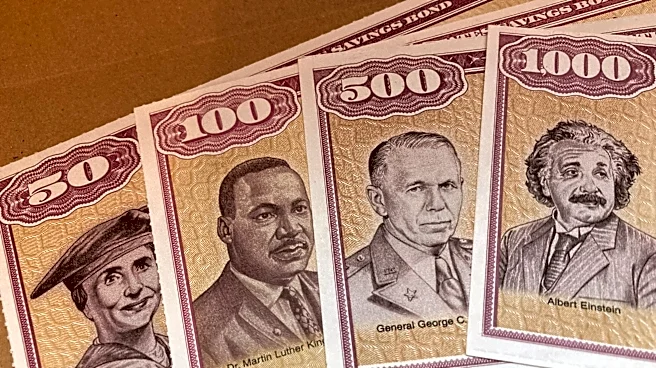





I Bonds are once again about to be buzzworthy.
It's possible, depending on how things play out, that savers who buy inflation-indexed U.S. savings bonds beginning Nov. 1 through early next year could snag a composite rate of 4.9% — yes, nearly 5%.
The composite rate is good for six months and will adjust every six months based on inflation trends after you buy the I Bond. Buy an I Bond in December, for example, and the inflation-base rate will adjust in June.
We won't know the exact rates for I Bonds until Nov. 1 when the U.S. Department of Treasury announces both the rates for newly issued I Bonds and the inflation-driven rate that also applies to I Bonds bought earlier.
We'll have an even better clue about new I Bond rates when the U.S. Bureau
of Labor Statistics releases its report for the September consumer price index on Wednesday, Oct. 14.
Fall is a key time of the year for figuring out where interest rates on savings bonds will be heading. This year, the I Bond scene is particularly compelling after inflation heated up in 2026.
And there's another big twist: A major change is taking place with how savers will be able to access their TreasuryDirect accounts online to buy and redeem digital savings bonds. More on that later.
Where the I Bond rates could be heading in November
David Enna, founder of the Tipswatch.comwebsite, lives and breathes crunching these kinds of forecasts for I Bonds. The way he sees it the new rates will be up significantly from the current composite rate of 4.26% — which applies to Series I Savings Bonds bought from May 1 through Oct. 31.
I Bonds have two components: a fixed rate that remains with the 30-year life of the savings bond and a variable rate that reflects inflation and adjusts each six months after you buy the I Bond.
The current fixed rate is 0.9% for I Bonds bought in 2026 from May 1 through Oct. 31.
Enna expects that the U.S. Treasury could announce that fixed rate will be 1.3%, or possibly even 1.4%, for new I Bonds issued from Nov. 1 through April 30. That's quite a boost.
"I think 1.3% is the most likely result," Enna told the Detroit Free Press.
On top of that fixed rate, all I Bond savers — no matter when you bought the bond — will see an uptick in the variable rate that reflects inflation trends.
The new variable rate could end up in the range 3.58%, Enna said, which is higher than the current 3.34%. Again, he notes that's simply his estimate.
Let's assume that Enna is on to something with his forecasts.
If the fixed rate ends up at 1.3% and the inflation-based variable rate ends up at 3.58% beginning Nov. 1, the resulting composite rate would be 4.9% for I Bonds issued Nov. 1 through April 30, Enna says. Again, that would be much higher than the current 4.26%.
Enna says his formula for calculating the upcoming fixed rate takes the average five-year real yield over the preceding six months for Treasury Inflation-Protected Securities and applies a ratio of 0.65.
That formula has worked in the past decade or so, Enna said.
"There is nearly zero chance that the fixed rate will fall below 1.30%, if the Treasury follows its traditional rate-setting methods," Enna wrote in an article on Tipswatch.com.
But he also warns that it's always possible that the Treasury could vary how it decides to set the fixed rate.
Fixed rates vary on I Bonds, based on when you bought the bond
Remember, all I Bond savers ultimately end up seeing the variable rate added on top of the fixed rate that applies to their individual I Bonds, depending on when the I Bond was issued.
For some I Bonds, the fixed rate is as low as 0%, such as for I Bonds issued from Nov. 1, 2020, all the way through Oct. 31, 2022.
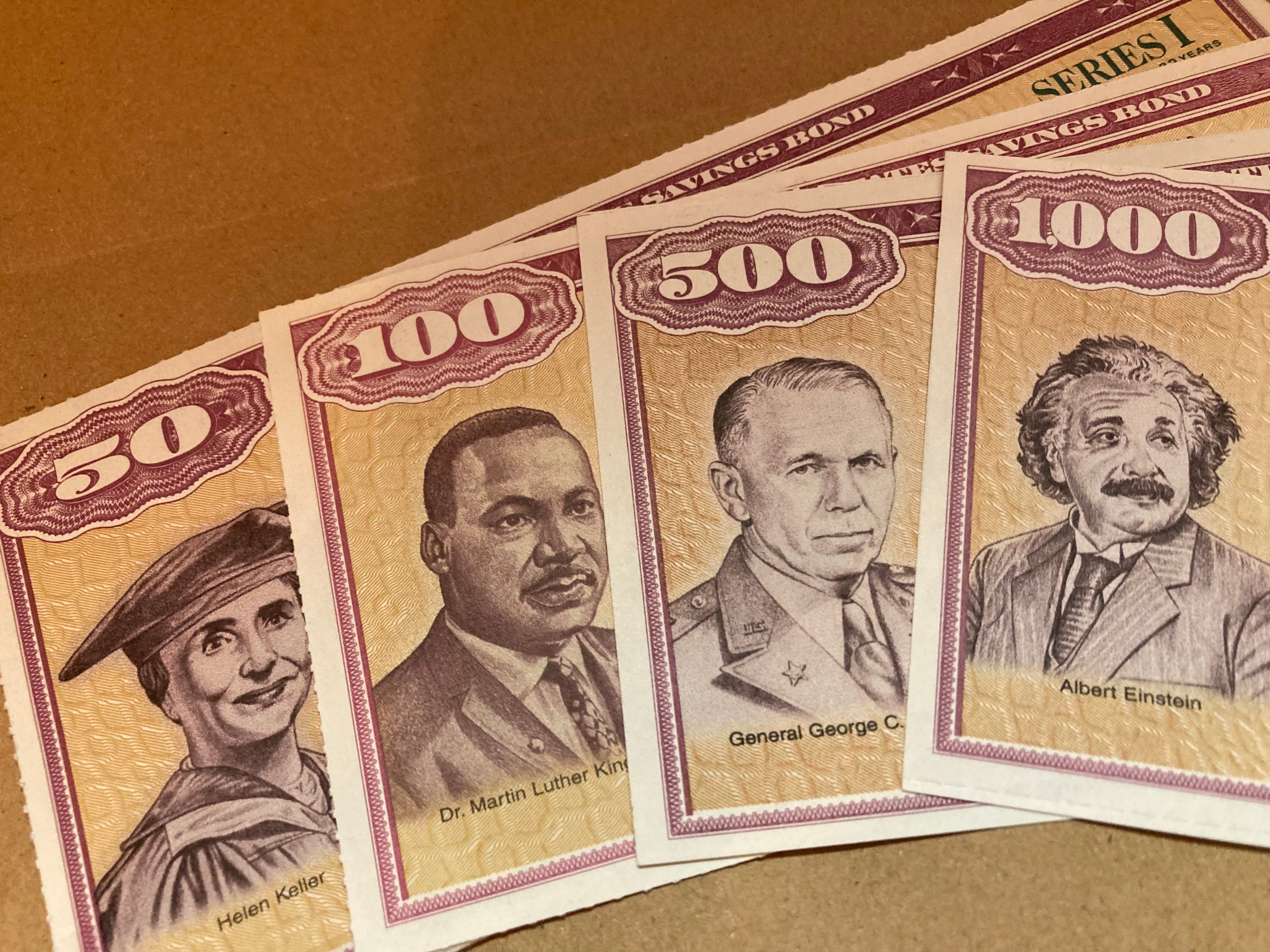
The fixed rate was as high as 3.6% for I Bonds issued from May 1, 2000, through Oct. 31, 2000. Those bonds would stop paying interest when they reach full maturity in 2030.
Fixed rates are all over the map, though, making it essential for long-term savers to review the fixed rate on particular batches of I Bonds before simply cashing one to cover extra expenses or splurges. If you're getting a fixed rate of 2% or 3% paid decades ago on some I Bonds, you don't want to casually give up on those bonds.
A mind-blowing annualized rate of 9.62% led to an onslaught of I Bond sales from May 2022 through October 2022. Those buyers began seeing new, lower inflation-based rates six months after the purchase of those I Bonds.
Savers must deal with a $10,000 limit for buying I Bonds each calendar year, based on individual Social Security numbers
Savings bonds are now bought at TreasuryDirect.govand held in online accounts. A of Jan. 1, 2025, I bonds are only sold electronically at Treasury.Direct.gov.
Someone who hasn't bought any I Bonds in 2026 likely would want to wait to lock in a new higher fixed rate that would be available in November and December.
In 2027, you're looking at a new $10,000 limit for the calendar year.
I Bonds rules and limits
The 12-month rule: You can only cash or redeem newly issued I Bonds after you have owned the bonds for 12 months. If you need the money in three months after the I Bond was issued, you're out of luck.
The five-year rule: If you sell an I Bond before you've held it for five years, you are looking at a slight penalty.
You lose the last three months of interest if you cash an I Bond in less than five years after buying the bond. The TreasuryDirect.gov site gives an example: "If you cash in the bond after 18 months, you get the first 15 months of interest."
The 30-year limit: I Bonds will earn interest over a 30 year period. But you can cash an I Bond before it reaches final maturity. The first I Bond was issued in September 1998 — so we're just two years away from those bonds reaching final maturity if you hung onto them.
Big changes when it comes to accessing TreasuryDirect accounts
Ah, but nothing is ever simple is it, really?
TreasuryDirect is changing over to ID.me for logins as of Oct. 28. An e-mail was sent to those with TreasuryDirect accounts from subscriptions@subscriptions.treas.gov about the new login process.
TreasuryDirect notes in its online FAQ that ID.me "uses a government-trusted method to verify your identity, which protects your sensitive personal and financial information from identity theft and unauthorized access."
The goal is to offer a "highly secure digital credential that allows you to safely access multiple government services without needing separate accounts," according to TreasuryDirect.
The FAQ notes that savers could begin setting up ID.me through TreasuryDirect as early as Sept. 13, 2026. Starting on this date, you’ll be prompted to use ID.me to log in to access your TreasuryDirect accounts, the FAQ notes.
But the FAQ notes that your traditional TreasuryDirect login can continue to be used until Oct. 28.
"After Oct. 28, 2026, ID.me will be the only login method and you will be required to sign up to continue to access your TreasuryDirect account(s) online," the FAQ states.
Enna warns that shift could complicate things for many investors.
For one thing, you're not going to be able to buy new I Bonds electronically Nov. 1 or after without setting up that ID.me Wallet.
After Oct. 28, savers will be required to use ID.me to log in to their existing TreasuryDirect account online and will not be able to use their traditional TreasuryDirect login. TreasuryDirect notes that those who don't sign up for ID.me will not have access to their accounts until they sign up, but "funds will not be permanently frozen or seized after the deadline."
Yes, I can already sense that plenty of people will be confused in the coming weeks and, maybe even years as some do not regularly log into their accounts.
"People who don't adopt the ID.me login won't be able to log into TreasuryDirect, but their accounts will remain active," Enna told the Detroit Free Press.
Another important point to consider: ID.me is the simplest way to access TreasuryDirect for online retrieval of tax documents for the current tax year.
But TreasuryDirect notes savers may request that 1099 tax forms for the current tax year be mailed to them by contacting TreasuryDirect customer support at 844-284-2676 after TreasuryDirect makes those forms available in January.
Enna noted that the shift to ID.me is somewhat controversial for some savers because ID.me is a private company that uses biometric data for verification. Some investors are even going so far as to swear off TreasuryDirect and I Bonds because of new ID.me requirements, Enna said.
ID.me does offer options to verify identity without using automated facial recognition.
Many savers may already have an ID.me account for other reasons, such as using online tools offered by the Internal Revenue Service.
Contact personal finance columnist Susan Tompor: stompor@freepress.com. Follow her on X @tompor.
This article originally appeared on Detroit Free Press: How to take advantage of I Bond savings rates that are likely to go up