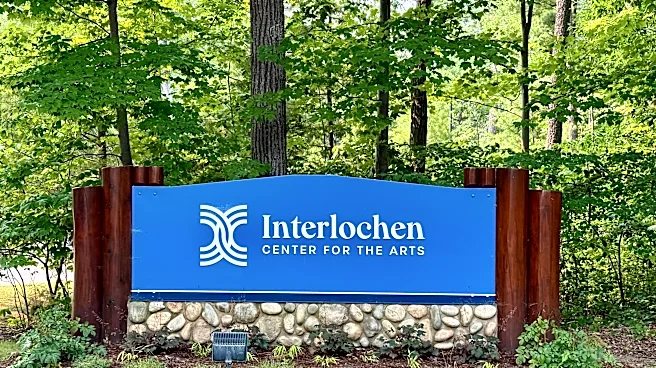






The release of an independent investigation detailing decades of alleged sexual abuse at Interlochen Center for the Arts is renewing calls to change Michigan law and leave some former students and campers with legal options, according to an attorney at a law firm representing a former student.
In a news release on Wednesday, July 29, State Sen. Kevin Hertel, D-St. Clair Shores, pointed to the investigation as he urged the Michigan House to pass his "Justice for Survivors" package, legislation that would expand the time survivors of childhood sexual abuse have to file civil lawsuits.
What does Hertel's package include?
The bills, which passed the Senate with bipartisan support in May 2025, would extend the civil statute of limitations for criminal sexual conduct claims, create a one-year
revival window for lawsuits that are currently time-barred and eliminate the civil statute of limitations when a criminal case results in a conviction.
Under current Michigan law, survivors generally have until age 28 or three years after discovering they were the victim of criminal sexual conduct to file a civil lawsuit.
"Scores of survivors of sexual assault are being denied their day in court, but we can fix that with this legislation," Hertel said in a statement. "These bills passed in the Senate with bipartisan support more than a year ago, but have languished in the House ever since. There's no excuse — let's fix the law to ensure the Interlochen survivors and all others in Michigan have fair access to the justice system."
The renewed push comes after Interlochen released a 97-page independent investigation this week documenting allegations from about 70 former students and campers who accused nearly 50 adults in leadership roles of sexual abuse or exploitation dating from the 1950s through the 2010s. Two accounts are tied to sex offender Jeffrey Epstein.
Interlochen hired Sanghavi Law Office in 2024 to investigate after alumni raised concerns. Investigators said their role was not to determine whether the alleged misconduct occurred.
"Rather, the purpose of this investigation was to seek and document historical reports of abuse in a candid and comprehensive manner, to give voice to the experiences of alums, and to learn from those past experiences," the report states.
Attorney says survivors can still take legal action
Baylor Bell, an attorney with Fierberg National Law Group who represents a former Interlochen student and is consulting with others, said current law may still allow some former students and campers to pursue civil claims. For others, that could depend on whether or not Hertel's legislation passes.
Bell said the proposed legislation is "certainly one avenue" for survivors "to the extent that it is ultimately passed by the Legislature and signed into law."
He also pointed to Michigan's discovery rule for certain childhood sexual abuse claims, which can allow survivors to file suit within three years of recognizing the connection between the abuse and the harm they later experienced.
Bell said it could be argued that the rule applies to people who experienced abuse as children but did not recognize its lasting effects until years later, including after the release of the Interlochen report.
"From our standpoint and other civil attorneys' standpoint, it's bringing a civil claim to seek accountability and justice and compensation on behalf of these students and campers. ... who were harmed significantly at this center for the arts over the years," he said.
The institution did announce several steps in response to the investigation, including creating a counseling support fund for alumni, expanding employee training, strengthening reporting systems, reviewing naming recognitions tied to individuals whose conduct does not reflect the school's values and commissioning an art installation honoring survivors, Interlochen President Trey Devey wrote in a letter accompanying the investigation report.
He said Interlochen has also strengthened student safety in recent years through enhanced background checks, professional boundary standards, expanded reporting pathways and additional oversight.
Devery called the findings "absolutely heartbreaking" and said, "Interlochen today is fundamentally different from the institution described in this report."
Authorities respond to investigation report
The Michigan Attorney General's Office said it has offered to assist local authorities as they review Interlochen Center for the Arts' independent investigation into decades of alleged sexual abuse.
"It has been reported that Interlochen intends to provide information from the report to their local law enforcement and prosecutor’s office in Grand Traverse County. Our office has reached out to the Grand Traverse County Prosecutor’s Office and offered to assist in any way useful to their efforts," Nessel spokesman Danny Wimmer told the Free Press Thursday, July 30.
Grand Traverse County Sheriff Michael Shea told the Detroit Free Press on Wednesday, July 29, that his office currently has the same redacted report released publicly but could not investigate unless additional information identifies potential victims or alleged perpetrators, or if a victim were to make a report to the sheriff's office directly.
"If we can find a victim and the victim wants to file a complaint, we will investigate it," Shea said.
Survivors do not have to report allegations to law enforcement before pursuing civil litigation, Bell said. Although criminal charges may still be possible in some cases depending on when the alleged abuse occurred.
"We certainly hope that with the investigation report's release, victims will feel empowered and supported to come forward to whomever just to seek some sort of accountability," Bell told the Free Press.
Free Press reporters Dave Boucher and Natalie Davies contributed to this report.
This article originally appeared on Detroit Free Press: Interlochen report renews push to expand statute of limitations