


TORONTO − It’s absolutely wild when you think about it.
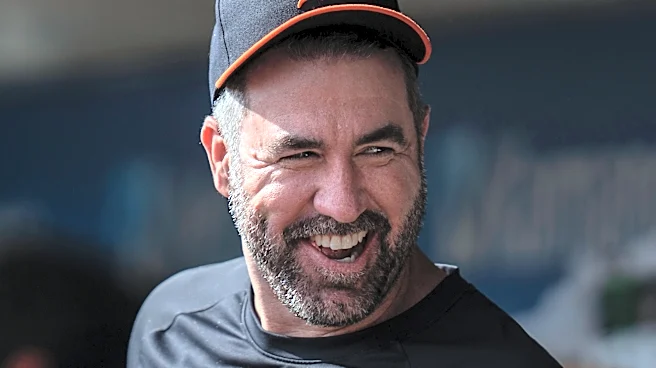
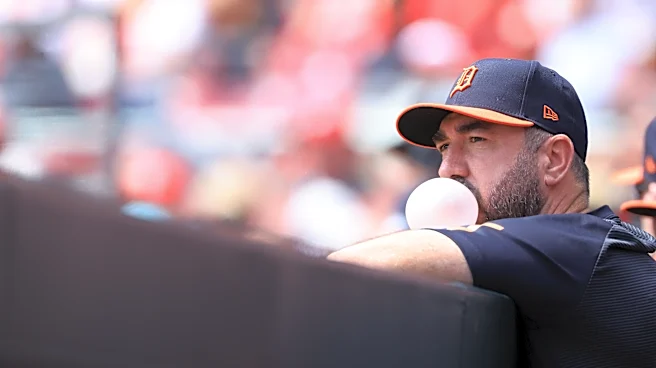
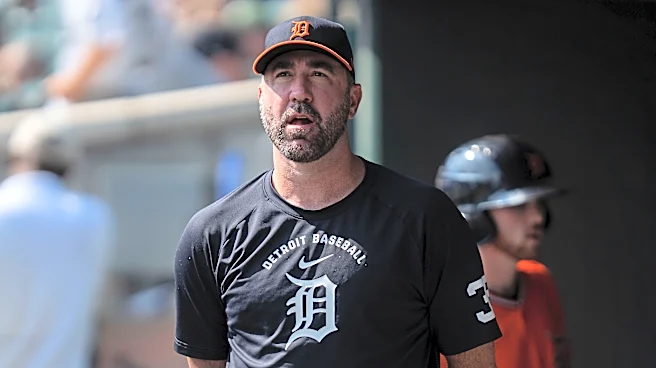
Justin Verlander was drafted No. 2 overall by the Detroit Tigers on June 7, 2004.
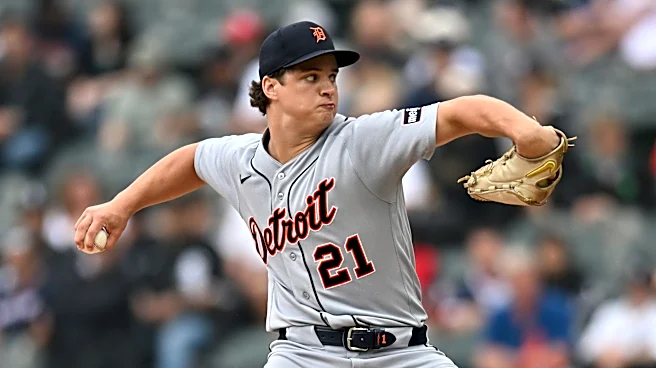
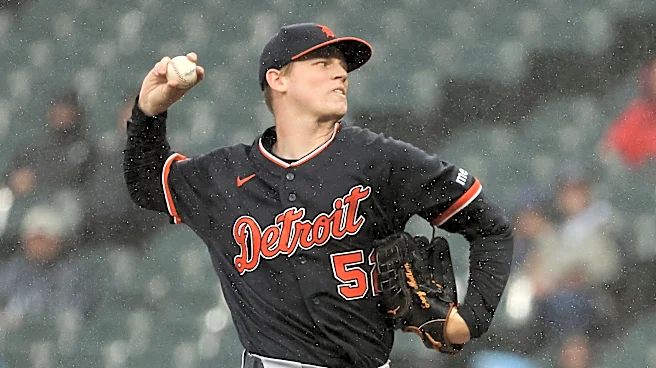
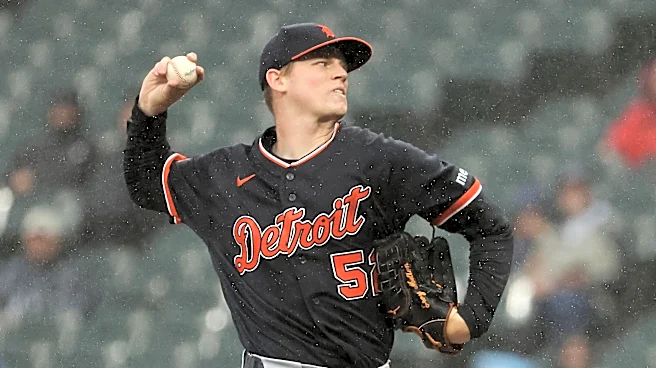
Seventy-two days later, his teammate Kevin McGonigle was born, on Aug.18, 2004, in Media, Pennsylvania.
Verlander signed his first contract with the Tigers on Oct. 25, 2004 – a five-year deal worth $4.5 million out of Old Dominion.
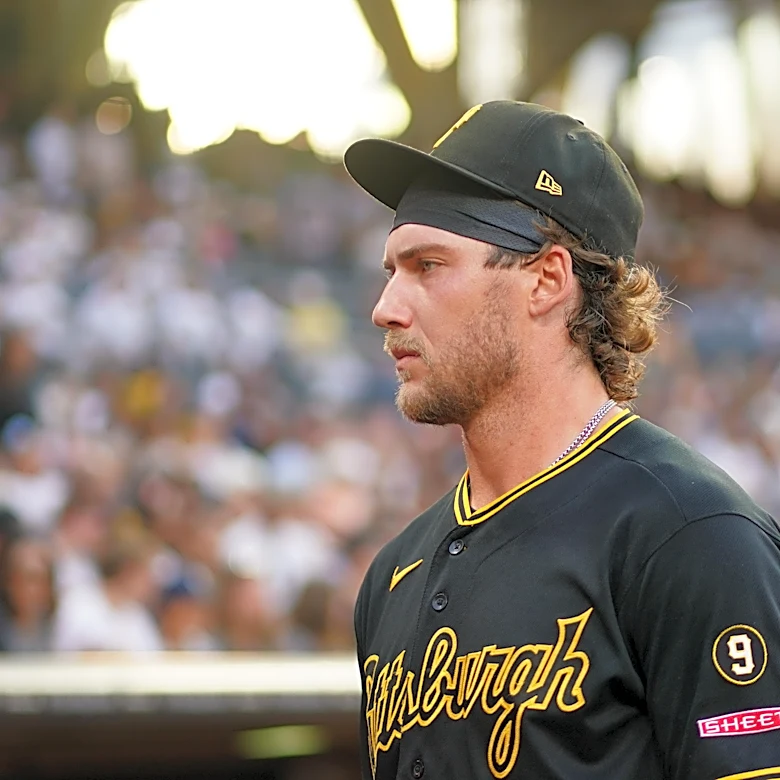
Fifty-seven days later, his teammate Max Clark was born, on Dec. 21, 2004, in Franklin, Indiana.
Now, they are all teammates, sharing the same clubhouse, wearing the Old English "D," even though they are from different generations with vastly different experiences.
Phone home?

So, let me take you behind the scenes.
Clark sits at his locker and glances at his phone. He’s able to go on an internal team
app and see every at-bat he’s ever taken in the Tigers' system.
Which is just a wee bit different from what Verlander experienced as a rookie, 21 years ago.
“You're talking to somebody who,” Verlander said with a slight pause, as if only to highlight the point, “the iPhone wasn't out when I made my debut. Think about what we're able to track and see now. Back then, they were giving me VHS tapes with my highlights.”
“Do you even know what a VHS tape is?” I asked Clark.
He broke into a bright smile.
“Yeah!” he said, although he had the look of somebody who once saw one in a museum.
So, I figured it would be cool to feature a different perspective, heading into Verlander’s final week before retirement, comparing the experiences of the oldest players in the Tigers clubhouse with those of the youngsters. Trying to put Verlander’s longevity into perspective. Trying to show how much has changed in MLB, just since Verlander became a Detroit Tiger.
The first time.
Road to the show
Let’s start with how they got here.
Clark started playing travel ball when he was 7 years old at Powerhouse Academy, a training center in Franklin.
“I still train at that facility,” Clark said. “It was the one team in Central Indiana that we had, and we went and played other local Indiana teams. But it was travel baseball. We played in tournaments for rings and championships.”
When Clark was 12, he joined the Indiana Bulls, an elite, prestigious national travel team that crisscrossed the country playing tournaments.
Verlander? Ah, no. That kind of thing didn’t exist.
“In my day, there really wasn't travel ball,” Verlander said. “There weren't specialty places to go play. I played on my American Legion team, and I played on my high school baseball team. We had a travel 12-year-old team, but it wasn't like it is now. Not big business.”

Before Clark could even walk, Verlander pitched in 20 games in the minor leagues before the Tigers called him up for his MLB debut on July 4, 2005.
“I was very fortunate and didn’t stay too long in the minors − I don't remember the bus rides,” he said. “I was just young and fresh and green.”
He thought for a second. “I did stay on a futon,” Verlander said. “I have my buddy and I lived with him.”
When Verlander’s futon started to fall apart and sag, “I just stuffed the suitcase under because the middle started falling in. So I had to try to raise up the middle.”
Now, let me pause right there. Because it’s time to bring Tigers closer Kenley Jansen into this discussion for a different perspective. Jansen, 39, remembers sharing a house with seven teammates in the minors.
“You sleep on the air mattress in the kitchen, the living room,” he said.
“What level?” I asked.
“Single-A,” he said, his eyes drifting back in time. “Double-A.”
“Those air mattresses always got a hole,” I said, thinking back to camping trips. “And it always woke you up.”
“Yeah,” he smiled. “You wake up, you're down on the ground, you got to pump it up.”
“You ever share a place with six guys?” I asked Clark.
“Heck no!" he smiled. “I got my own place. I mean, it's completely different. Well, I guess in [Double-A] Erie and in High-A, we had a roommate, but we didn't share a tiny place. I mean, we had 3,000-square foot apartments. You know, we had houses. It was awesome.”
Yes, the times, they are a changin’.
Then, there was the food in the minors.
“We were eating McDonald's,” Jansen said. “Once in a while, I would eat Olive Garden. We were living on peanut butter and jelly and cereal and cheap stuff because we weren’t getting paid.”
Now, the Tigers have nutritionists in the minor leagues.
“Now, it's completely different,” Clark said. “We've been blessed with the MLBPA. The minor league guys have really been taken care of.”
Tigers minor leaguers are now offered three meals a day at their clubhouse.
“It’s really good food,” Clark said. “You know, that's from the help of everybody else who came before us, who spoke up about how miserable it was.”

There is appreciation in his eyes.
For those who came before him.
Life of a rookie is so different
The Tigers are loaded with rookies − seven rookie position players are logging at-bats for the Tigers in September − and they have been welcomed into the Tigers clubhouse with open arms. When you consider how so many of them have flourished, maybe the root of that success is because the clubhouse vibe has changed so drastically.
Now, when a Tigers rookie accomplishes a first – earning a first win or getting a first save – they are celebrated with their teammates. There is no hazing anymore. No cold shoulders. And the rookies look comfortable and accepted, which is exactly opposite from what used to happen when Verlander was a rookie.
“It’s very different,” Verlander said. “It's less harsh. It's more team-building, camaraderie stuff, and less hazing.”
Jansen, for one, doesn’t miss the hazing that he used to see in MLB clubhouses.
“Now you can get in trouble,” he said. “You got to be nice to people. I'm always nice to people around my rookie years. Guys used to be [jerks].”

Back then, they thought that by being mean had a purpose: It would toughen up the rookies.
“It doesn't do anything,” Jansen said. “We started the era that changed that stuff. I didn't treat any rookie like they treat me before. Because I don't want to be that type of guy. I don't want to be [a jerk].”
OK, he used a more colorful word than jerk. But you get the point.
Jansen tries to see the bigger issue. He looks at rookies and sees how they can help. Teams need production from rookies to win.
“I understand this young kid is very important to help me win,” Jansen said. “I'm gonna teach him what's right, what's wrong, always treat them with respect.”
Back when Verlander was a rookie, there were unspoken rules in the clubhouse.
Especially around the training room.
And it was basically: Get the heck outta here.
If a rookie made the massive mistake of going to the training room for treatment, the veterans would chide them.
“They would shame you,” Verlander said. “It was like, ‘Hey, dude, you don't really need to be in here, man. You're 20 years old. I'm 35 and I need this, but you don't.’”
But there was another layer to that. Back then, the clubs didn’t have the number of trainers or equipment like they do now.
“We didn't have as much staff,” Verlander said. “The older players needed more treatment, so if a young guy was on the table, it would take away from the older guys who needed it.”

So, players would try to hide injuries.
Tigers manager A.J. Hinch remembers going back to a hotel at night and his wife would help him ice his arm in private so nobody would know how bad he was hurting. These days, everybody is welcome in the training room. And Verlander has seen a dramatic change in the rookies.
“It’s a different athlete,” Verlander said. “Very different. They're ready. You guys are raised differently.”
Another thing that has changed? What happens after games.
“The way guys hang out has changed dramatically, for sure,” Verlander said. “Guys don't drink as much. They don't go out much. We'll do dinner, but it's not the old days. Guys would go to bars and, you know, old baseball stuff. We hung out a lot. We partied a lot − not anymore. It’s probably better. Well, it’s definitely better for me. I wouldn't be hanging out anymore, anyway. Too old for that crap.”
Another big thing that has changed? Players' relationships with the manager. When Hinch was playing, managers didn’t have any relationship with players. But that’s something Verlander saw change during his career.
“That’s something that made Jim Leyland great,” Verlander said of the Hall of Fame skipper who managed Verlander and the Tigers from 2006-13. “He was a natural at straddling the line. That is something Leyland was really gifted at.”
Now?
One of Hinch’s greatest strengths is how he communicates with his players.
Young or old.
True workhorses fading away in MLB

So now, as Verlander gets ready for his final week in the big leagues, it is time to reflect on something else.
“One of the unique things about playing for 20 years is you see the game change so much,” Verlander said. “I also understand that that's just the nature of it. I appreciate the old game. I liked the old game. Obviously, it's my nostalgia, right?”
When Verlander made his debut in 2005, starting pitchers were true workhorses. There were 50 starting pitchers that season who threw at least 200 innings, and 32 who threw more than 210 innings (Livan Hernandez, of the Washington Nationals, led the majors with 246⅓ innings).
Now, contrast that to recent times. In 2025, there were just three pitchers who threw more than 200 innings: San Francisco’s Logan Webb (207), Boston’s Garrett Crochet (205⅓) and Philadelphia’s Cristopher Sanchez (202)
“The use of starting pitchers is probably one of the most dramatic changes in my time,” Verlander said.
And he hates it.
Then again, it was already changing when he arrived.
“The guys that were 20 years before me, the Nolan Ryans of the world, were looking at 250 innings like nothing,” Verlander said. “Now, 200 is a benchmark.”
(Verlander, by the way, threw at least 200 innings in eight straight seasons – 2007-14 – with the Tigers, while leading the majors in innings three times and crossing the milestone 12 times in a 13-season span.)
And yes, Verlander misses the old days.
“So that's the one thing that's one that's probably the biggest negative for me,” he said. “The advent of analytics has led to the starting pitching demise.”
Verlander used to study VHS tapes of pitchers who were similar to him, to see how they attacked players, and then try to come up with a game plan. Catcher Alex Avila would do the same thing, and then they would compare notes.
Now? Clark can find just about any stat imaginable. On any player. Trends. Analysis. Video. Right on his phone.
“For me, I love it,” Clark said.
Different times. A different clubhouse. And the rookies are living a completely different experience.
So, now it’s time to turn the page. Verlander will retire at the end of the season, ending an era; and a new one has already arrived in Detroit. He's set to make one final start at Comerica Park, Saturday, Sept. 26, against the Pittsburgh Pirates.
But before that, Verlander has given Clark one last lesson.
“JV’s been incredible,” Clark said. “It's crazy how much a guy can impact a clubhouse, even when he's injured. The story of him and his career has been unbelievable to watch, unbelievable to see unfold and to have it back in in Comerica is incredible.”
Obviously, Verlander has had a Hall of Fame career, a career that’s even more amazing when you consider that he’s done it while baseball has changed so dramatically.
So, savor this final page to the final chapter. When Verlander pitches for the final time in Comerica (let’s hope), get out your iPhone – the iPhone that didn’t even exist when his career started.
And watch him go out there and play with teammates who weren’t even born when he was drafted.
It’s all kinda wild. In the coolest of ways.
Contact Jeff Seidel: jseidel@freepress.com. Follow him on X @seideljeff
This article originally appeared on Detroit Free Press: Justin Verlander's time as Tigers rookie looks archaic compared to this class