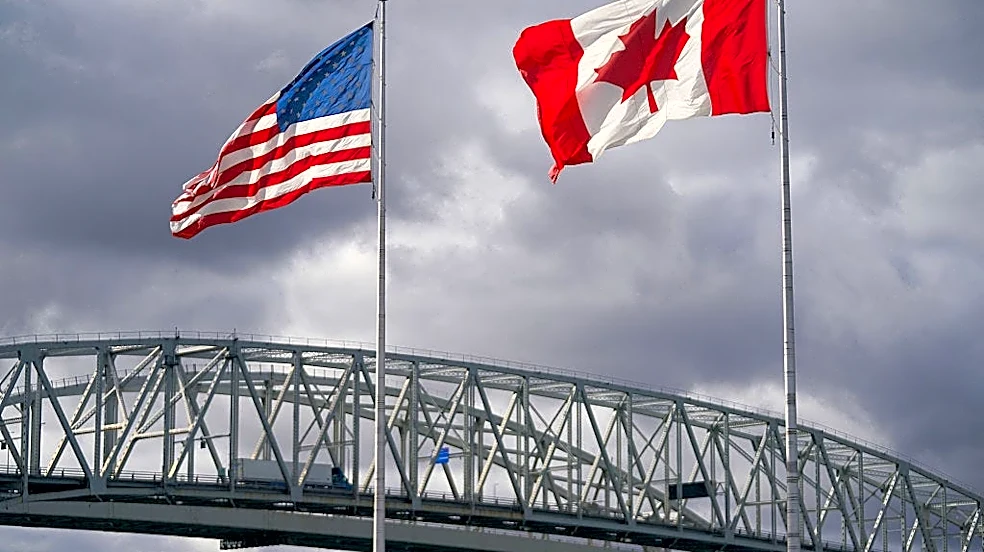








Oh, Canada. Would anyone have anticipated that our neighbor and friend across the river might play a major role in the 2026 U.S. midterm elections? Particularly in Michigan? Possibly with generally dependable Republican voters?
But did anyone honestly expect that someone would deliberately and even gleefully ignite a major economic war with one of America’s largest trading partners, a partner whose economy is closely aligned with our own, where any major disruption would inevitably damage both economies?
No. No reasonable person would imagine someone so economically, um, callous? Improvident? Idiotic?
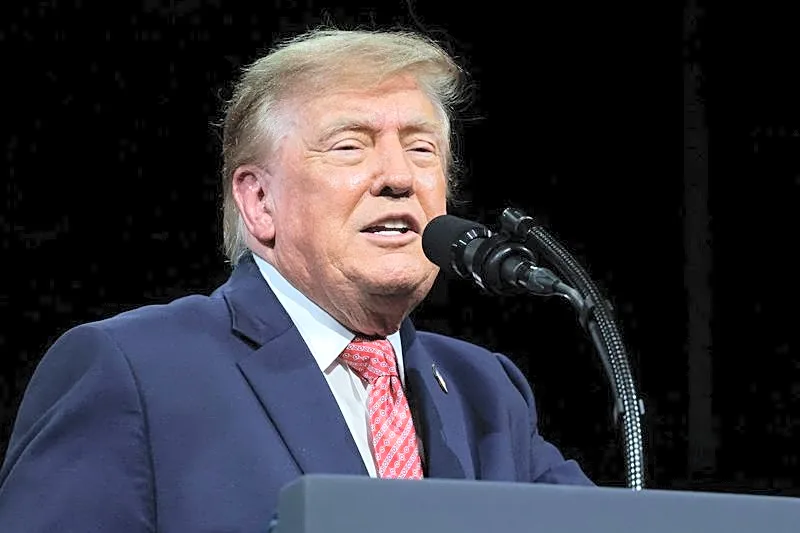
Then along came President Donald Trump.
His latest set of tariffs, and Canada’s retaliatory efforts, are barely a month old. But added to Trump’s
earlier tariff efforts, as well as his imperialistic rhetoric about forcing Canada into the U.S., both countries are indeed dealing with negative economic effects.
Canada is trying to be adultlike, expanding its economic connections with other nations. Trump’s answer is more bluster and threats, doing our economy no good.
Which means what for a large sector of influential Republicans as the Nov. 3 election looms? That sector: Top business executives, who largely – not uniformly – vote Republican. With so many facing potential economic harm because of these tariffs, what do they do?
A real conundrum for chamber-of-commerce Republicans

Will they vote Democratic? Will they choose not to vote – which, for those likely Republican voters, is essentially a ballot for the Democrats?
The political effect of the tariffs is clear. As this reporter whacked away at this column, the Republican candidate for Michigan’s open U.S. Senate seat, former Rep. Mike Rogers, issued a campaign ad saying Trump’s tariffs must be stopped.
Yet last month, Rogers supported tariffs, saying Trump was putting America first in his actions and some tariffs were needed.
Michigan’s relationship with Canada has existed as long as Michigan has. Detroit was the one of final stations on the Underground Railroad, helping escaping slaves into Windsor. Both locales were major players in the massive lumber industry in 19th century, as well as dealing in trade on metals, fish and shipping.
The political importance of Michigan and Canada’s trade alliance developed in the last 90 years. Considering how our trade and overall economic relations could affect the election, we need to keep in mind two historic aspects.
Story time with Uncle Lindstrom
When World War II started, the U.S. was the world’s largest industrial power. But Canada was struggling terribly, not fully recovered from the 1930s Great Depression.
By war’s end, Canada was among the top five industrial nations. Much of that was due to partnerships with U.S. firms, especially from Detroit. Ford and General Motors played huge roles, such as helping build more than 800,000 military vehicles in Oshawa, Ontario.
By 1945, the U.S. and Canada were the only major industrial nations not ravaged by bombing or ground war. The U.S.-Canadian economic relationship then grew during the Cold War and the booms both countries enjoyed in the 1950s and ‘60s.
The second issue to remember deals with U.S. politics. From war’s end until the late 1970s, our politics were based more on compromise than combat. Former Republican Senate Majority Leader Everett Dirksen believed strongly in working with Democrats, and sometimes quoted Victor Hugo that “no army is stronger than an idea whose time has come.”
Beginning probably with Republican Barry Goldwater’s 1964 presidential campaign, the political mood shifted dramatically, particularly on the right.
Mister, we could use a man like Dwight Eisenhower today
President Dwight Eisenhower, a Republican, was a conservative who supported social services, a national health-care system and sent troops to Little Rock, Arkansas, to integrate the schools. Conservatives believed in conserving stable structures and government. And businesses then were more politically focused on labor issues (such as minimum wages), production locations, transport questions and civil rights regulations.
By the 1990s, conservatives no longer believed in cooperation but conquest, by any and all means. That decade’s leading Republican, Newt Gingrich, instructed GOP candidates to call Democrats traitors, liars, thieves and cheats – those were the nice words.
This shift was somewhat reflected in a more specific pro-business political agenda. For the past 40 years, business execs’ biggest political demands were for lower taxes, fewer regulations and free trade, and far less on labor and production issues.
Now, most execs acknowledge some taxes are necessary for needed services – what services are needed is the issue – and regulations are needed for food and drug safety (but they are too hard on our companies, they whine).
And free trade, got to have it, they say, or said. Some of that was related to moving production for cheaper labor, but also to boost sales of U.S. products.
Business leaders wanted tax cuts, not a trade war
But as conservatives have shifted even further right, questions of taxes and regulations have gone more extreme. In many ways, for example, Project 2025 was a wish list of stripping government regulations, cutting taxes and limiting or eliminating services.
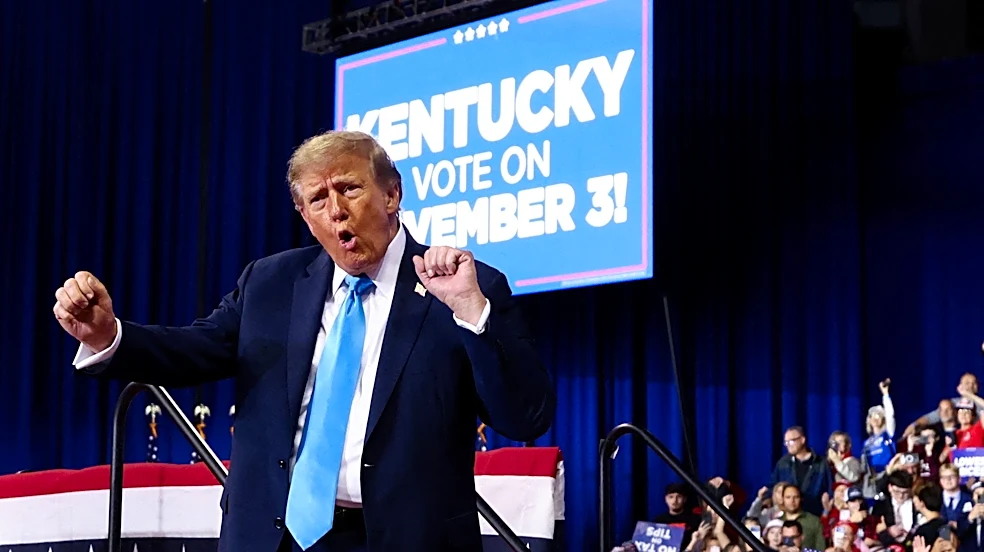
Comes then Trump. Sure, he spouts the business lines, at least some of them: lower taxes, fewer regulations. But free trade? Forget about it. Roaring at what he claimed as other nations picking on us (ignoring the role we played in assisting many of these international companies) and claiming – as he did at a 2024 rally in Macomb County just four days before the election – that tariffs were “the most beautiful word in the English language” he was, well, not totally against free trade but ...
OK, in one perverse way, Trump does favor free trade. Just so long as you, your region, your nation, are encased in his empire. Trump is on record saying he runs the nation and the world. So ... free trade?
Trump wants Canada. Not as a friend, ally or trading partner. No, he wants it on whatever he considers his charm bracelet.
He wants Canada in the same way he wants a ridiculous ballroom that’s bigger than the White House, wants his face on our money, wants his silly golf course to be the new Camp David. He wants it because he doesn’t own it, and if he can’t own Canada, then he intends to make both Canadians and Americans miserable.
Even before his latest tariff nonsense, the U.S. economy was hurting in lost sales to Canada. Dear friends who live in Ontario have told us how fellow shoppers simply ignore U.S. produce at the grocery stores. A decade ago, most Canadians bought American-made vehicles. Recent reports show sales of North American vehicles have dropped below 30% among Canadians.
So Michigan business execs must ask themselves: What do I want? Canada is showing the kind of spine so far that congressional Republicans and billionaires here have not shown. Canada will outlast Trump, so business executives here – even if they don’t do direct business with Canada – must ask, will their business outlast Trump, outlast Trump’s absurd trade tactics, and outlast the economic squalor he creates?
We should know how those executives answer the question sometime in the very early hours of Nov. 4.
Free Press contributing columnist John Lindstrom has covered Michigan politics for 50 years. He retired as publisher of Gongwer, a Lansing news service, in 2019. Submit a letter to the editor at freep.com/letters, and we may publish it online and in print.
This article originally appeared on Detroit Free Press: Trump picked a fight with Canada. Michigan GOP may pay for it. | Opinion