








There are musicians who master an instrument, and then there are musicians who seem to turn it into another organ of the body.
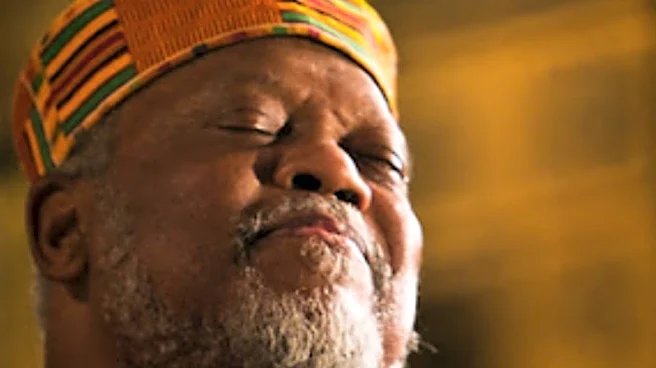
Marcus Belgrave is that kind of musician, and for him, it was the trumpet.

The late Detroit jazz great, who died in 2015, could make the horn flash, growl and sing, moving between muscular bursts and passages so warm they seemed to carry their own weather. But Belgrave’s importance to Detroit cannot be measured simply in solos. His story is also about lineage: the musicians he learned from, the artists he stood beside and the generations he helped bring along.
That expansive legacy moves toward the screen in the upcoming documentary “Marcus Belgrave: …And Damn, He Could Play.”
In the expansive, deeply moving film, narrated
by actor Wendell Pierce, Belgrave’s story is told through archival interview footage and powerful new interviews with a constellation of jazz stars, including Wynton Marsalis (whose quote gave the movie its title), Don Was, Terence Blanchard, Chris Botti, Marion Hayden, Theo Croker, Regina Carter, Wendell Harrison and many more.
For Detroit, Belgrave’s story offers a way into something larger than a single musician’s biography.
Jazz history is often recounted through a familiar constellation of places and names, but Detroit has long produced musicians capable of standing in any such constellation. Belgrave became one of the city’s essential musical figures, part of both its artistic history and its living system of mentorship.
That distinction matters.
A great player can leave recordings. A great teacher leaves musicians.
Belgrave did both, and the documentary’s most intriguing promise is the opportunity to consider those halves of his life together. The horn player and the mentor were not separate characters. They belonged to the same philosophy: music as something received, transformed and handed forward.
That makes Detroit more than a backdrop to his story: The city is part of the rhythm.
A promise made, a legacy preserved
The documentary was spearheaded by Belgrave’s wife, Joan, who also is a producer on the project. She said when Belgrave was on his deathbed, she promised him she would tell his story to the world. That journey began in 2021.
“I had just started my cancer treatments,” Joan said, “and so it was urgent for me because it was something I knew I needed to do, but I wasn’t sure I was going to make it. I pushed to get it done. When we said it was for Marcus, they all just stepped forward: ‘Tell me what you need, I’m there.’”
Director Timashion Jones was suffering from COVID-19 when Joan first made contact.
“Once I was good,” Jones said, “we got on a call and she started explaining to me about Marcus. At the time, I didn’t know who Marcus was, (but) one thing about me is I really like history and researching things. I’m a really big youth advocate — anybody who’s doing stuff for young people, I’ve got a soft spot in my heart. When I looked him up, and I looked at all these different people he mentored, that grabbed me more than anything, the impact that he made on other people. I was sold.
“A month or two later, we were sitting in front of Wynton Marsalis at Orchestra Hall. He was our first interview.”
Marsalis made it clear that Marcus’ name should be spoken among the all-time greats.
“When I play,” he said, “I’m trying to play like him.
“And damn, he could play.”

Detroit’s musical identity has always been unusually porous. Jazz, blues, gospel, R&B, funk and soul do not stay politely in their assigned rooms here. They overhear one another through the walls. Musicians cross boundaries. Churches become classrooms. Clubs become laboratories. A player learns not only from formal instruction but from proximity, repetition, competition and the admonition of an elder who knows exactly when a young musician is bluffing.
Belgrave belonged to that ecosystem.
And there is something especially fitting about encountering his legacy through film.
A photograph can preserve the cool silhouette of a trumpeter, and a recording can preserve the sound. Film can restore something else: gesture, laughter, personality, the physical exchange among musicians, and the testimony of people who remember what it felt like to share space with him.
“My hope,” said Joan, “was that people would see something in his story that could inspire them. Not just the music, but the humanity; that one person can make a difference in the world just by reaching and touching different people. I think that we’ve come to a time where the world is very ‘Me, me, me, I, I, I.’ He didn’t live in that world; it just wasn’t him.
“There was a young lady who came to the first time we showed it in Detroit, and she didn’t know who Marcus was, didn’t know anything about the film. She just kind of showed up, and she was blown away. That’s the audience I wanted to target. I wanted to target young people who can make a difference, because everybody has something in them that they can give to the world.”
Preserving the voices of a jazz generation
A particularly unique element of the film is that it features some of the final recorded interviews with legendary jazz singer Sheila Jordan, original Four Tops member Abdul “Duke” Fakir, pianist Geri Allen and Raelettes singer Mabel John.

“Mabel, we interviewed her in California,” Joan said. “She was just a ball of energy. She was really into it, and didn’t seem like her memory was fading at all. She was spot on talking about Marcus. She (soon after) passed away, and it hurt. It hurts every time we lose one, because they become family to the film crew. They were already family to me, but because of their personalities and because of Marcus and because of how they opened up their hearts and wrapped everybody up, they became family to the film crew.”
Joan referred to Jordan as “a pistol.”
“She was like, ‘Joan, you better put me in this movie!’ She was amazing,” said Joan. “We had four hours of footage of her. She loved Marcus, and she loved me, and I just felt blessed to be wrapped up in his web of incredible joy and people and love and music, and my hope is that people watching it also feel wrapped up, and feel that love that people showed for him.”
From Detroit to a bigger stage
The film will have its official premiere next month at DOC NYC, the biggest documentary film festival in the country.
“Friday, November 13, at 7:30 p.m., in the Village,” Joan said. “It’s a pretty big deal. They’re giving us a red carpet and photographers and all of that, which is pretty exciting.”
Jones agreed.
“I’ve had several movie premieres here in metro Detroit, but I’ve never had a premiere on a world stage like New York, so I’m really excited about this,” he said. “Overwhelmed!”
Joan said the team is looking to 2027 for a Detroit premiere.
“My hope is to get a distributor,” she said. “That’s the purpose for me going to a film festival: to get a distributor so that it can be available to the general public on one of the streamers, preferably Netflix, because they have so many amazing documentaries. It’s a story of Detroit.”
A documentary about Belgrave arrives with a challenge. How do you put a life of improvisation into the decidedly non-improvised structure of a film? How do you explain a musician whose importance may be obvious to jazz devotees but less familiar to viewers who have walked Detroit streets without knowing how much music those streets have held?
Perhaps you begin with the simplest proposition embedded in the title.
Listen.
Before the history, before the accolades, before an argument about legacy, there is the sound of a man putting a trumpet to his lips.
And damn, he could play.
This article originally appeared on Detroit Free Press: Marcus Belgrave documentary celebrates a Detroit jazz giant