

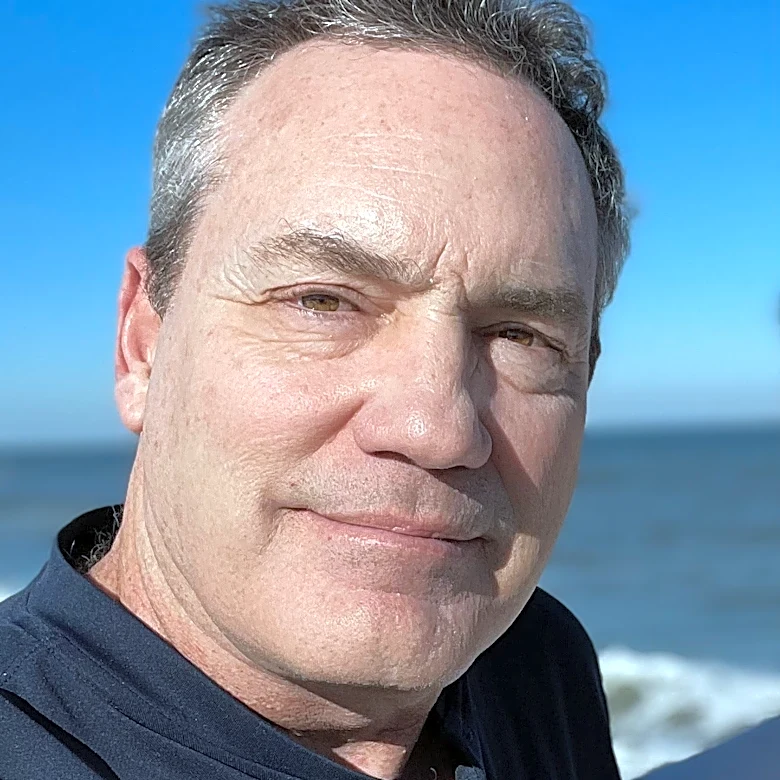



In his 31 years on the bench, retired Wayne County judge Michael Callahan saw plenty of liars, schemers and deceivers.
So when a convoy of eight armed ICE officers in six SUVs rolled up on his house this summer, claiming they were only there to put an ankle tether on his foster son, his radar went up. They had no warrant or court order in hand, and 83-year-old Callahan wasn't having it, especially because his refugee son had lived freely in the U.S. for more than seven years, attended every required check-in with ICE, had no criminal record whatsoever, and held a solid, fulltime job as a truck driver in metro Detroit. His mind raced.
He's been a model citizen.
Why was ICE here now, after all these years?
And why do they need eight armed officers
in tactical gear with magazines, pepper spray and heavy duty body armor just to put on an ankle monitor?
“I came out of the house and stood in the middle of the ICE agents and asked, ‘Who’s in charge here?’ They pointed to one man,“ Callahan recalled, noting he turned to the head agent and said: "‘I’m a judge. I’ve been a judge for 31 years and this seems like it’s a little extreme.'"
'They tricked us all'
Callahan, also a former Wayne County prosecutor and Catholic priest, has adopted eight Detroit children over the years, and fostered another eight refugees. He knows the law and understands the complex immigration system. Yet none of that seemed to matter on the morning of Aug. 2, when the country's top immigration cops came for his eldest refugee son, scoffed at his judge status − they described him as a person "claiming to be a 3rd circuit court judge" in a follow-up ICE report − and insisted on speaking with the son.
Callahan protested in the driveway. Inside the house, his wife − a retired Ford executive − explained the situation to their son: 26-year-old Meschac Munongo of the Democratic Republic of Congo, a mild mannered, 6-foot-6 Golden Glove boxing champ who eventually agreed to come out.

"He said, 'Mom, I don’t want to run the rest of my life, and I don’t want anyone to get hurt. I’ll go outside and let them put a tether on me,’“ Susan Callahan recalled, choking up.
Once in the driveway, Meschac sat down on a patio chair. Two officers approached. A brief conversation ensued.
Then the handcuffs came out.
It was all a ruse, said the Callahans, who watched in horror as ICE officers arrested the young man they had vowed to protect, told his mom to back away, placed him in the back of a government vehicle and drove off. Some two weeks later, Meschac was on a plane to Cameroon, the West African nation where the U.S. government decided he would live a new life, thousands of miles away from anyone he knows.

"He said that when they were in the car, the ICE officers laughed at how they tricked us all," said Callahan, who is outraged, frustrated and heartbroken over what happened to Meschac, especially given the hell he went through to get here.
At 17, he crossed the Atlantic Ocean stowed in the hull of a 40-foot fishing boat with his two younger brothers to escape violence that killed his parents.
He then trekked across South and Central America and went days without food and water in the horrific jungle of the notorious Derrien Gap, where a convoy of 100 immigrants entered together − but only 20 came out alive, the family said.
Yet seven years later in the driveway of a loving family that had taken him and his brothers in, Meschac met a fate he could not escape.
A summer surge in ICE arrests, and secret deportation deals
Meschac is part of a growing number of immigrants who have been targeted in a ramped-up deportation effort by the Trump Administration, which oversaw a surge in ICE arrests this summer. According to the latest U.S. Department of Homeland Security figures, ICE arrested nearly 51,000 undocumented immigrants in August, setting a new high record for ICE arrests in a single month.
July held the previous record with 50,200 arrests, though the majority of those getting picked up − 73% − had no criminal convictions, according to the Deportation Data Project at the University of California, Berkeley, and UCLA.
Against the backdrop of these arrests is another White House immigration crackdown, this one involving secret deals with countries that have agreed to accept deportees who are not their citizens, in exchange for millions of dollars. Though once a rare immigration tool, these third-country deportations have spiked under the Trump Administration, which over the last year has sent more than 25,000 immigrants to 29 countries that they have no ties to, including ones with human rights violations, according to Third Party Deportation Watch, a deportation tracker run by Refugees International and Human Rights First. The U.S. has spent at least $42 million on these deals so far.
The tactic, though, has come under scrutiny.
On Sept. 18, a federal appeals court in Boston struck down the Trump Administration's practice of quickly sending immigrants to countries that are not their own, concluding these individuals must first have proper notice and a "meaningful" chance to challenge their deportation if they fear for their safety. At issue is an ICE policy that says immigrants can be deported with as little as six hours notice, which the U.S. First Circuit Court of Appeals says is unlawful.
What − if anything − that means for Meschac and thousands of others remains to be seen. The Trump administration is appealing the ruling, which will likely wind up before the U.S. Supreme Court.
Meschac, meanwhile, continues to live in a constant state of fear and anxiety in Cameroon, a country that the U.S. State Departmenthas deemed dangerous for travel. "Violent crime, kidnapping for ransom, armed robbery, and carjacking are common in Cameroon," states the agency's latest travel advisory, which includes the strict "Do Not Travel" warnings to the country's Southwest, Northwest, and Far North regions "for any reason due to risk of terrorism, unrest, crime, kidnapping, and improvised explosive devices (IEDs)."
Still, this is same country that the U.S. last year brokered a confidential deportation agreement with, and had hoped to keep it quiet, if a letter on file in U.S. District Court is any indication.
"Given the highly sensitive nature of our discussions with the Republic of Cameroon, I ask that the Department of Homeland Security refrain from publicly discussing our cooperation with Cameroon on this matter," U.S. Deputy Secretary of State Christopher Landau wrote in a Jan. 7 letter to then-acting ICE director Todd Lyons.
When that letter was written, Meschac was living his best life in Michigan, driving a truck for the Sysco wholesale restaurant food distributor, grabbing coffee at Starbucks and Bigby with his two younger brothers, boxing at the gym, gardening at home, and swimming in the backyard pool.
Then, eight months later, without warning, he lost it all.
'I'm scared ... America was like my home'
Meschac and his brothers arrived in the U.S. on Jan. 10, 2019. Meschac had turned 18 by then, so he was detained in an adult prison and separated from his minor brothers, who eventually qualified for special juvenile visas and were granted asylum.
But not Meschac. According to immigration records, after his arrival in Laredo, Texas, he was detained for seven months. First in Texas, then Mississippi, and finally Louisiana, where an immigration judge would ultimately free him on supervised release and grant him what's known as a "Withholding of Removal" order.
Such relief guarantees a person that they will not be returned to their dangerous homeland, but it offers no pathway to citizenship. And it doesn't mean the government won't send you to a third country that's willing to take you.
That's what happened to Meschac, who according to the Callahans, was given two options in Louisiana's immigration court in 2019: Either seek asylum and stay locked up for seven years pending a decision, or agree to "Withholding from Removal," which came with no citizenship plan, but spared him from being returned to his homeland.
Meschac chose the latter.

"Right now I’m scared," Meschac said in a recent phone interview from Cameroon, where he's been laying low in a $7-a-night hotel, agonizing over his situation.
"I know I didn't do anything wrong," Meschac said. "I didn’t have any criminal record. I was living the way America needed us to live. I was working by the law and I was not doing something bad."
Meschac now spends most of his time reading in isolation in his room. He has no TV or radio, and has been quite sick in recent days, vomiting frequently and battling severe headaches and stomach pains. He is also afraid to venture outdoors. He said that a lawyer in Cameroon − who is helping him and other refugees − warned him that it's not safe there, and cautioned him to be careful. He could get mugged, kidnapped, even killed.
"Everyday I’m crying, because I don't know what to do," said Meschac, who remains uncertain about what's ahead. "America was like my home … I'm just praying God can help me."
More than anything, he said: "I want to go back to America. I want to stay someplace I'll be safe. I want to be with my family."
Feds: We didn't need a reason to deport him
Following his arrest in Van Buren Township, a handcuffed, shackled and belly-chained Meschac was taken to a Detroit DHS facility for processing. He was then transported four hours away to the North Lake Correctional Facility in Baldwin, a small town in northwestern Michigan.
The Callahans quickly hired an immigration lawyer, who filed an emergency request for a temporary restraining order in federal court.
But the government prevailed, arguing − among other things − that under a 2019 court order, Meschac was never guaranteed he could stay here forever, and that it could deport him without having reason to do so.
In a statement to the Free Press, a spokesperson for the Department of Homeland Security defended Meschac's removal, saying he had been facing a "final order of removal" since July 10, 2019, when he was released from custody on supervised release. In other words, the government contends it didn't need a reason to deport him; the court order was enough, regardless of compliance.
DHS also defended the ICE officers' arrest tactics outside the Van Buren Township home, stating:
“Allegations that ICE officers approached Munongo’s home under false pretenses are FALSE. When our heroic law enforcement officers conduct operations, they clearly identify themselves as law enforcement."
The Free Press explained to DHS that the Callahans never alleged the ICE officers did not identify themselves as law enforcement, but rather lied about being there just to put a tether on Meschac.
DHS did not respond to the trickery allegation.
Coming to America
According to court and immigration documents, ICE records and interviews with Meschac, his brother and his foster family, this is what drove three brothers to leave their homeland in Africa, in search of a better life.
In January 2018, a group of armed soldiers stormed Meschac's house in the Democratic Republic of Congo on a mission to kill his father, who was a member of the government's opposition party. They raped his mother and sisters in front of the other children, and beat his father unconscious, though he lived.
The next morning, the family fled. The two oldest girls went to France, the others to a settlement Angola. But more violence followed. In October that same year, all the houses in the settlement were set on fire. Meschac and his brothers were walking home from language school when they saw the smoke in the distance.
So they ran, and ran and ran. Five days later, they sought refuge in a church in Luanda, where a pastor gave them shelter, then arranged to put them on a boat, and sent them to America.
The boys were 13, 15, and 17. Some three weeks later, they landed in Brazil, joined a caravan of immigrants, and made the treacherous journey through South and Central America before ultimately arriving at the Gateway to the Americas International Bridge in Laredo, Texas, on Jan. 10, 2019.
Trump was in his first term as president.
Brothers have different fates
After their arrival in Texas, Meschac was separated for seven months from his minor brothers, who were sent to Chicago. There, immigrant rights advocates helped find the boys a foster family: Michael and Susan Callahan of Michigan. At the time, the suburban Detroit couple had already raised their three biological children, and were on a mission to help as many refugee children as they could.
They even doubled the size of their home to accommodate their new family members.
As Michael Callahan put it: "We always found room for more."
While living with the Callahans, one of Meschac's brothers went to college, got a degree, and became a U.S. citizen. His other brother is awaiting citizenship. Their brother's fate weighs heavy on them.
"It's hard," said 24-year-old Elie Munongo, who was on his way to church the day ICE arrested his brother, and didn't make it home in time to see him. ICE officers actually pulled him over first while he was heading to church, he said, noting he was "terrified" when four cars with their flashing lights followed before he was pulled over.
Elie Munongo, who is a U.S. citizen and Eastern Michigan University graduate, produced identification and was left alone. But back home, the ICE officers, who had been surveilling the Callahans' home since 6 a.m. that day, would find the person they were looking for.
Elie's older brother.
"He's a really kind man. He doesn't bother anybody. He works. He paid his taxes," Elie Munongo said in a recent interview. "What hurts is we came here to find safety. And this place that is supposed to give you safety is hurting families."
Meschac didn't join the Callahan family right away. After being released from detention, he first he went to Dexter, then Okemos, and ultimately joined his brothers in Van Buren Township. The trio would eventually find a missing sister, who also made the same daring trip to the U.S., only carrying a baby on her back.
The Callahans became her sponsor, too, along with her husband and children. All have been granted asylum.
Meanwhile, thousands of miles away in central Africa, Meschac thinks of his siblings and longs to be with them. Despite his unfortunate circumstances, he said: "I’m happy for them because they are safe."
'Freedom is everything'
The Callahans, meanwhile, are speaking out because they want the world to know − especially Americans − how the immigrant community is being treated by the government. ICE isn't going after the "worst of the worst," they argue, but targeting compliant refugees like their son. Not because they have to, they stress, but because they want to.
"ICE tricked us and grabbed our foster son ... despite his compliance with all immigration requirements and never having any interaction with the police," Callahan vented in a recent letter to his local suburban newspaper.

Adding to the Callahans' frustration is the lack of help from local police that day. After the ICE officers showed up, Susan Callahan called 911. She feared things could escalate, so she requested protection from the Van Buren Township police. But a dispatcher said the department has a policy not to intervene in ICE affairs, she said, so no police came.
"Our officers are not trained in civil immigration law and are not familiar with ICE’s specific policies and procedures. As a result, intervention in civil immigration enforcement matters could lead to less than desirable outcomes because our officers may not have the necessary expertise or familiarity with the applicable civil immigration laws, ICE policies, or federal procedures," Van Buren Township Deputy Police Chief Joshua Monte said in a statement to the Free Press. He also said local police do not have the authority to intervene in ICE matters.
The Callahans maintain they weren't asking for intervention, but protection in case something went wrong, like if someone got shot, or needed an ambulance. "Would the police have come then?" said Callahan, who still can't shake what he witnessed that day.
There was the ICE officer who kept telling him: "I'm just doing my job." There was trickery, mocking and laughing by officers, he said. And there were the local police who refused to come, which Callahan compared to the Gestapo doing what they wanted while local German police looked the other way.
"That's what happened in Nazi Germany," Callahan said. "And that's exactly what happened here."
All of this weighs heavily on the Callahans, who are hoping against hope that Meschac will eventually be allowed to leave Cameroon, return to the U.S., or even maybe go to Angola to reconnect with a little brother who is still living there.
Meschac, more than anything, wants to return to the U.S.. He has heard of other deportees who are being sent back And he wonders to himself: Maybe I'll get to go back, too. I followed the rules. I came for a better and safer life. There's no way I can return to the Congo.
"I was happy when I got to Texas, 'cause I knew I'm in a place where the government isn't going to try to kill me ... I'm far away from the place that killed my father, killed my mother," Meschac recalled of his arrival in the U.S., and the treacherous journey he had survived.
He saw people drown. He saw people collapse and die in the jungle. He endured starvation and dehydration.
"The only thing that made me do all these kinds of things was just to be someplace where I would be safe," said Meschac, noting he found that security at the Texas border.
And what followed, he said, was the greatest gift.
"Freedom," he said. "For me, freedom is everything."
Tresa Baldas: tbaldas@freepress.com
This article originally appeared on Detroit Free Press: A judge's personal nightmare: 'ICE tricked us and grabbed our foster son'