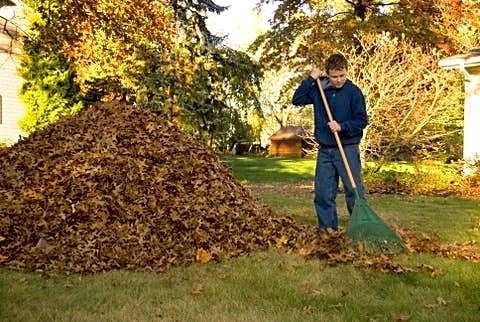









While we know shoveling snow can put you at risk for a heart attack, it's just as important to put your safety first when raking leaves this fall, particularly if you’re older or have heart disease, experts say.
Raking leaves can have a profound impact on the heart, according to the Cleveland Clinic.
“Particularly if leaves are wet, they can actually be very heavy, making raking leaves as physically rigorous in some cases as shoveling snow,” Dr. Nicholas Ruthman said in a 2020 interview.
A large amount of exertion too quickly can trigger a heart attack, especially in the cold weather.
Due to the twisting and bending of the activity, the task is essentially aerobic exercise, medical experts say, amd can cause blood pressure to go up and put pressure on
your heart. Experts urge people to use caution and not over-exert themselves.
“Yard work is a workout. And like starting any new workout, you want to start slowly. But people tend to just jump right into yard work and try to tackle it all at once. That’s a bit like going from your couch to running a marathon,” Ruthman said.
“If you aren’t super active year-round, suddenly piling on a lot of yard work can be a jolt to your system," he added.
Southern Illinois University warns that those who don't exercise regularly are increasing their risk for injuries and heart issues.
"Other health issues to consider before beginning the task of raking concern physical endurance. Many of us are sedentary during the summer months and venture out for the first time with no prior preparation. Get in shape or take it easy. Otherwise, the stress and strain can be too much for the body to endure. Heart attacks and strokes often result from cold weather exertions such as raking leaves or shoveling snow," Jim Hancock wrote for the SIU Center for Environmental Health & Safety.
Environmental experts would be quick to agree you should leave your fallen leaves alone, since they provide nourishment for your yard and a home for insects that need a place to overwinter.
How old is too old to rake leaves?
Adults older than 45 should exercise caution when shoveling snow or raking leaves, especially those with known or suspected heart disease, high blood pressure, or high cholesterol are particularly at risk, according to the American Heart Association.
Additionally, individuals who smoke, are obese, or lead a sedentary lifestyle should take extra care.
“While the average episode of leaf raking may not be extremely physically demanding, certain stressors could potentially strain the heart,” said Dr. Michael Chen, a cardiologist and director of the Cardiac Cath Lab at Adventist HealthCare White Oak Medical Center in Maryland.
Shoveling can pose a severe risk for people with heart disease and should be avoided, the Mayo Clinic recommends. The combination of strenuous physical exercise and cold weather could trigger a heart attack. This can occur as blood vessels constrict in cold weather, increasing blood pressure and potentially causing chest pain.
The University of Michigan Medical Schoolsays moderate aerobic exercise is good for people, but you have to build up to it.
"If you haven’t participated in aerobic physical activity before, gradually building up the time you engage in an aerobic activity can be helpful. Being consistent over time will improve your endurance," the school said.
Eight useful tips to minimize your risk of injury
Brown University Health says if you plan to rake leaves this fall, there are several things you can do to reduce the risk of injury or heart issues, including:
- Choose an appropriately sized rake for your height and strength.
- Use a rake with a padded handle or wear gloves to avoid blisters.
- Rake leaves when they’re dry. Wet leaves are heavier and more difficult to lift. They also breed mold and mildew, which can be unpleasant for those who suffer from allergies.
- Loosen up beforehand! Stretching for 10 minutes before raking helps to warm up muscles, which minimizes your risk of injury. Repeat for another 10 minutes afterward to help rid muscles of lactic acid, which can lead to soreness.
- Lift properly. Make sure to bend at the knees instead of the waist. Keep leaf piles small to avoid straining your back while lifting.
- Vary your movements often to avoid overusing individual muscle groups.
- Keep hydrated throughout. Dehydration can occur with any strenuous activity. It’s important to recognize the signs of dehydration, which can include headaches, dizziness, dry mouth, increased thirst, and decreased urine output.
- Don't overdo it. Raking is a strenuous, aerobic exercise. Listen to your body and take breaks when needed.
Is it fall in Michigan?
The fall equinox was on Sept. 22, marking the start of astronomical fall in Michigan. The time points to the moment when the Earth tilts equally toward and away from the Sun and brings nearlyequal amounts of daylight to all latitudes.
Meteorological fall, based on weather conditions, began on Sept. 1 and will last until Nov. 30, according to AccuWeather. Astronomical fall, on the other hand, will end with the winter solstice on Dec. 21.
Jalen Williams is a trending reporter at the Detroit Free Press. Contact him at jawilliams1@freepress.com.
This article originally appeared on Detroit Free Press: Are you too old to rake leaves? Why it may be better to leave them