



I was talking with my colleague Kevin O’Neill, the longtime Detroit radio personality, and lamenting how I never got to meet Dolly Parton.
“I did,” he said.
As my eyes widened, he told me a story — as people tend to do with Dolly Parton — about a 1975 concert in Cleveland, where Kevin was working at a small radio station. He got tickets for the show and asked if he could bring his mother backstage to possibly meet the country superstar.
The concert folks begrudgingly allowed it but told him not to get his hopes up. She was busy, she was overwhelmed, etc. Kevin and his mother waited in a hallway. And then — as often happens in Dolly Parton stories — a rainbow appeared.
“Dolly came out, by herself, and she said, ‘I heard there’s a sweet little lady
out here that I want to say hello to,'” O’Neill recalled. Dolly then ushered his mother into a room, chatted with her, took pictures with her, signed records for her and — as often happens in Dolly Parton stories — charmed her in a way she would never forget.
“On the way back to our car,” O’Neill recalled, “my mother said to me, ‘Are they all that nice?' ”
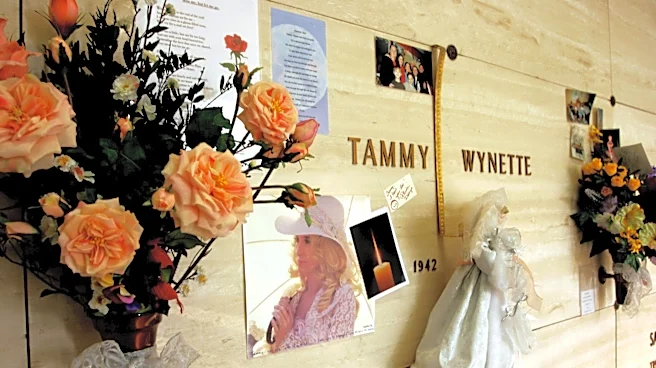
Well, no. They aren’t. And that’s what made Parton’s death last week — at age 80, from cancer — so heartbreaking to so many people.
It wasn’t just the loss of a wonderful artist, it was the loss of her particular art.
The art of niceness.

Capturing the heart of a nation
The whole country lost a friend last week. Isn’t that what it felt like? You likely didn’t know Dolly Parton personally, but you just as likely felt a true pang of sadness when you heard of her death. She may not have been the best songwriter of her generation, and she may not have been the best singer of her generation, but she sure as heck was the best-loved person of her generation.
In a poll earlier this year, 70% of Americans had a favorable view of Parton (only 5% were unfavorable; the rest didn’t know her). That was the highest score of anyone on the list, man or woman, regardless of profession. It was twice the score (35%) of Taylor Swift, who’s currently the biggest female entertainer on the planet.
Seventy percent? You can’t get 70% of Americans to agree on ice cream.
But they agreed on Parton, I believe, because she embodied things that are rapidly disappearing from American discourse: kindness, self-deprecation and success without ego.
Let’s start with the first one. Kindness. In the hours after her death, the tributes to Parton, naturally, gushed in. But they weren’t the typical hosannas to an artist’s craft, her melodies, her masterpieces. No. They were overwhelmingly about little things she did to make others feel cared for.
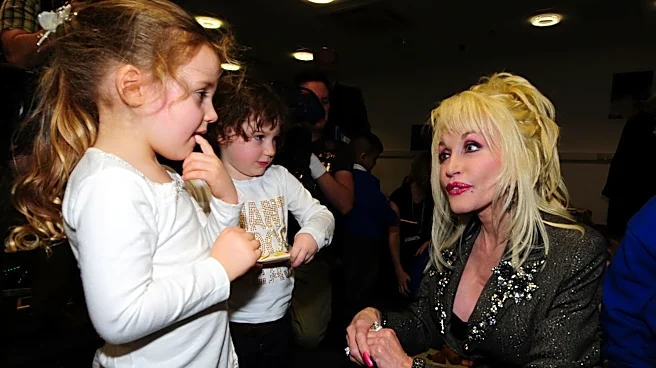
She stood up for a crew member who was getting yelled at by a movie star. She learned the names of every backstage staffer, so she could greet them. She sent a personal condolence note to a fan who’d lost a parent. She gave her own meal to an overworked production member who’d missed his. She halted her tour bus to buy ice cream for everybody on it.
Or, on a larger scale: She gave $1,000 a month for six months to hundreds of victims of wildfires in her native Tennessee. She mailed free books to impoverished children every month from birth until age 5 — over 300 million books all told. She gave $1 million to fund medical vaccine research, and another $1 million to victims of a hurricane.
She was as authentically kind to strangers as she was to fellow celebrities. On the set of the film “9 to 5,” she reportedly used her downtime to bake brownies for everyone. When fellow country music star Reba McIntire’s band was killed in a tragic plane crash, Parton offered her own band to help McIntire, in her grief, return to performing.
The countless posts and memories last week suggested the loss of a saint, not a singer. But Dolly Parton was, of course, a major singer — and actress — who, despite being recognized as the No. 1 female country artist of all time never took herself too seriously.
Which brings us to her second art. Self-deprecation.
Always in on the jokes
Younger readers may not realize that Parton’s early years were drenched in jokes about her breasts. Johnny Carson, on "The Tonight Show," could have filled a book of them by himself.
Dolly Parton claimed two massive deductions on her income tax. … You could take cover in a rainstorm under Dolly’s chest. …
It would have been easy (and justified) for her to get angry, self-righteous, take a stance about feminism or objectifying women, as others in her position might have done.
She didn’t. Instead, she made even better jokes than they did. When asked if her breasts were real, she’d reply, “They’re real big!” Or she’d laughingly lament that with all the boob attention, people don’t realize “I have a great ass, too!” She famously said, “I burned my bra, and they had to call out the fire brigade.” She even once nicknamed her assets “East Virginia and West Virginia.”
I believe this endeared her more and more as years passed. In a world where everyone seems indignant over everything, having a laugh at yourself is a welcome change. It lowers the temperature.
And then there was her lack of ego. This likely stems from that which is a part of many a beloved American success story: the rise from abject poverty. To say Dolly Parton was a poor child is stupidly understating it. One of 12 kids raised a two-room cabin, she grew up without electricity or running water and recalled huddling in bed with her siblings on cold nights and not minding if one of them peed because it warmed them up.
When you grow up so humbly, you tend to go one of two ways when blessed with huge success. You discard your roots like pulled weeds, or you let them ground you in everything that comes next.
Throughout Parton’s glitzy, rhinestone-studded, big-haired career, she never failed to separate the forest of humanity from the trees of celebrity. Being rich didn’t make her better. Being famous didn’t make her more important. This is perhaps what made her most relatable to average people, because when average people dream about the kind of success she had, they also imagine they would stay the same, remain humble, not forget where they came from.
Few actually would.
But Dolly did.
It is no surprise that one of her most beloved songs, “Coat of Many Colors,” which she claimed was her favorite of the thousands she’d written, was a simple retelling of her mother stitching her a winter coat of rags, and how kids at school teased her over it:
But they didn't understand itAnd I tried to make them seeThat one is only poorOnly if they choose to beNow I know we had no moneyBut I was rich as I could beIn my coat of many colorsMy momma made for me
The makings of a true star
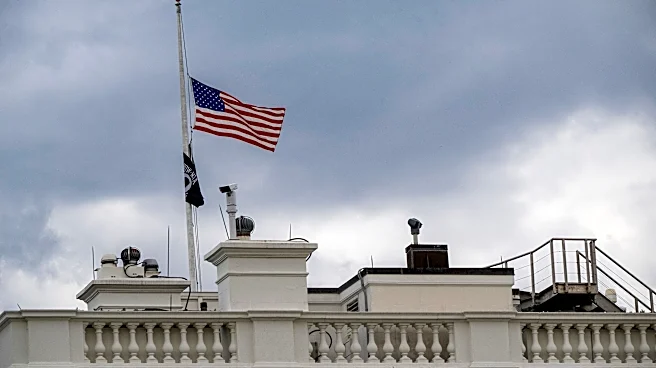
It’s a long way from that to having the Empire State Building flash pink at 9:25 p.m. (Nine-Two-Five, get it?) or the president saying the flag would fly at half-staff to honor your passing. And Parton would be the first to say she didn’t deserve such a fuss — and the first to enjoy it.
There’s one other Parton song story worth knowing. “I Will Always Love You,” her biggest-selling tune ever (thanks in large part to Whitney Houston’s version) was not, as many imagine, a love song written to a beau.
It was written for her mentor, Porter Wagoner, who hired her on his hugely popular national TV show in 1967, then saw her star rise so high that she chose to leave for a solo career six years later.
Wagoner was not happy about it. He disparaged Parton. He may have been the only person in the country who had negative things to say about her. But her response was not to engage in a public feud, but rather to pen him one of the loveliest songs imaginable.
If I should stayWell I would only be in your wayAnd so I'll go, and yet I knowI'll think of you each step of the way
And I will always love you
Wagoner was reportedly moved to tears when he heard it and agreed to let her go. And even though a few years later, he instigated a legal battle, they ultimately reconciled. Parton reportedly sang “I Will Always Love You” to him at his bedside just hours before he died.
It wouldn’t have been a Dolly Parton story if it ended any other way.
“Are they all that nice?” as Kevin’s mother asked. They aren’t. We aren’t. Maybe that’s what brings a tear about Dolly Parton’s exit from this world. We’re sad for her. And sad for us.
Contact Mitch Albom: malbom@freepress.com. Check out the latest updates on his charities, books and events at MitchAlbom.com. Follow @mitchalbom on x.com.
This article originally appeared on Detroit Free Press: Mitch Albom: Dolly Parton's death deals a blow to the art of niceness