
"Free" is one of those red flag words that should automatically warn consumers to proceed very cautiously.
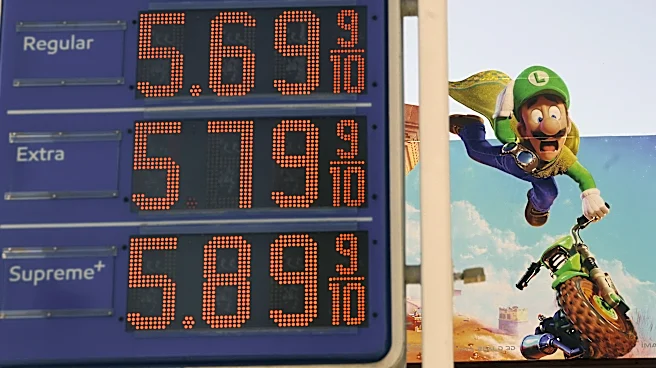
Prices at the pump hit an average of nearly $4.44 for gallon for regular gas in Michigan as of Sept.
15 — and nearly $4.33 a gallon across the country, according to AAA. We're talking about a price hike in Michigan of more than $1.39 a gallon from a year ago — up roughly 46%.
So, it should be no surprise at all that scammers are crafting their way into our mailboxes with postcards promising free gas — and, yes, free groceries, too, since those prices have gone up as well.
Sure, it's tempting. But it's a scam designed to ultimately give fraudsters access to your cash, your credit card or debit card numbers, and even more information about you.
"Gas prices are what? $4.50 right now where I am in Colorado," said Amy Nofziger, senior director of victim support for the AARP Fraud Watch Network.
When you spot a postcard for a free gas promotion, she said, your emotions can take you over the top. You start to imagine how you can use this opportunity to save money, just when you need it.

"But who is giving away free gas?" Nofziger asked me in a phone interview. "How does that make sense that an organization is going to be giving you free gas?"
The 'AAPP' isn't offering free gas
This summer, the Better Business Bureau Scam Tracker page received reports from consumers who complained that they received postcards claiming they qualified for valuable gas and grocery gift cards and vouchers.
One man in Northwest Georgia said the mailing appeared to indicate that it was from “AAPP.”
Read that postcard too quickly and you're likely thinking the AARP has some new way to save its members money. But the postcard doesn't say AARP. It says "AAPP" — whatever that is.
Google "AAPP" and the first reference you'll get the American Association of Psychiatric Pharmacists. No, I wouldn't imagine pharmacists would be involved with some gas gimmick.
According to that complaint out of Georgia, the postcard claimed that $309.64 of gas and grocery vouchers were being held in the man's name. He didn't bite.
But others who did follow up complained that they lost money once they paid a $5 processing fee. Some consumers saw additional unauthorized charges of $46 or more being taken out of their accounts.
The BBB warns: "The postcards may include official-looking barcodes, tracking numbers, expiration dates, and customer service phone numbers to create a false sense of credibility."
In some cases, the postcard might trick consumers into thinking they must act quickly by using such phrases as "Limited time offer" or "Final notice."
Ask a friend or a hotline if it's a scam
Nofziger said the criminals know how to make their pitches look true, but she suggests that you step back for a moment before rushing into anything. Ask a friend if a pitch looks legitimate or what the end game could be.
If the postcard offering free gas or groceries appears to be from AARP, pick up the phone and call the AARP Fraud Watch Network Helpline at 877-908-3360 to see if something is likely a scam. Fraud specialists can help guide you on what steps to take next if you've lost money as well.
You can call the Fraud Watch helpline even if a scammer is hiding behind the name of another group or authority.
"We want people to call us first," Nofziger said. "Use us as your best friend."
Many times, she said, people are saying that their social circles have gotten smaller, perhaps, making it harder to hear about scams from friends or community groups. If that's the case, she recommends using the Fraud Watch hotline as a way to validate if some pitch is real or not.
Maybe the lure is free gas. Maybe it's savings on your groceries. Other postcards claim to offer rebates or shopping rewards.
People are used to receiving legitimate postcards for a variety of reasons, which could make some scams seem more believable, Nofziger said.
Earlier in September, I wrote a column warning military families to watch out for a postcard promoting a so-called “Veterans Savings Program." No such program exists, even though the scammers claim to be affiliated with U.S. Department of Veterans Affairs.
Nofziger advises against calling any phone number on a postcard. Use a number that you know is real. The risk if you call a phone number on a post card is that you'll go directly to the criminal call center, which naturally will try to convince you that this is a legitimate program.
"Verify, verify, verify," Nofziger said.
Scammers want it all
When you get on the phone with a criminal, Nofziger said, they will ask you every possible question to create a profile about you.
Scammers may try to collect your address, date of birth, banking information, or other personal details that could be used for future fraud, the BBB warns.
Once someone has your information, they can either steal money at that point or try to victimize you at a later point. Or maybe even do both.
Some more red flags: Watch out for any promotion or offer of free gift cards that have a fee for handling or processing. The upfront fee is likely to be small, maybe only $5 or less, which doesn't seem like much if you can receive hundreds of dollars in gift cards or vouchers.
"You think 'Oh, I'm going to get $250 in gas vouchers,' " Nofziger said.
So paying $5 theoretically means you'd still get $245 in gas vouchers. That's if the promise is real, which it isn't.
"They're not necessarily after your $5," Nofziger said. "What they're after is the payment information that you're providing to them."
Once criminals have that payment information, she said, they are able to sign you up for an ongoing monthly subscription program that comes with a hefty fee.
Or they can use your payment information to buy items that the crime network can later resell.
Or they can figure out a way to put recurring charges on your credit card and hope you don't notice that they're there.
What should be no surprise here: The promised gift cards never show up. Or you might get some low-value coupons in the mail instead. The company becomes difficult or impossible to contact to obtain a refund.
If you run into these problems, you want to immediately contact your bank or credit card issuer to dispute such charges. In some cases, Nofziger said, it can be hard to get your money back if the credit card issuer plays hardball and says you authorized that payment by giving your card information.
Some victims, Nofziger said, end up canceling their credit card to put a stop to those charges.
The key thing: Do your research before providing any credit card or debit card information.
The AARP is not offering free gas or groceries. AARP does offer rewards to members through partnerships with Exxon Mobil Rewards+ and Shell Fuel Rewards programs.
Watch your bank and credit card statements carefully. If you've already provided payment information, review your accounts for unauthorized charges and report suspicious transactions to your financial institution immediately.
The BBB suggests that you never provide payment information under pressure.
"If you’re told you must act immediately, slow down," the BBB states. "Legitimate companies won't pressure you into making an immediate payment."
And really, free gas? Free groceries? Sounds great, but you'll only end up paying far more than you'd imagine if you rush into this one.
Contact personal finance columnist Susan Tompor: stompor@freepress.com. Follow her on X @tompor.
This article originally appeared on Detroit Free Press: Postcard for 'free gas' is tempting. But it costs more than expected