






Dozens of families living in Detroit emergency shelters will start moving into homes this year thanks to a new program.
Detroit city officials and nonprofit partners announced a three-year $9.2 million initiative offering six to 12 months of rent aid and case management for families with minor children experiencing homelessness. It's meant to ease the pressure on the city's shelter system — which has long been at or near capacity — and tackleone of the primary barriers of homelessness: the lack of affordable housing options. The investment comes amid a dramatic shift infederal funding for homelessness services thatscales back money for permanent housing in favor of temporary programs.

"With this investment, we will help approximately 140 families
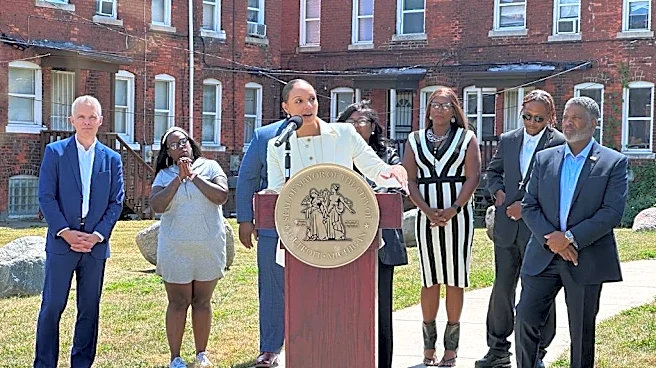
each year transition from emergency shelter into permanent supportive housing, and because this administration is prioritizing families with minor children, we also estimate that this investment will impact approximately 500 Detroiters annually,” said Mayor Mary Sheffield at a news conference on July 29. ”Our goal is to move as many families as possible into housing before winter arrives."
The effort — dubbed "Homeless to Housed" — combines two housing programs: rapid rehousing and tenant-based rental assistance. It's backed by general fund and federal grant dollars. Families will be assessed and selected based on need.
The rapid rehousing program is slated to help 78 households — or 296 people — by the end of the year. It will continue assisting 78 households every 6 to 12 months, through June 2028. That program provides rent aid, security deposits and case management. The tenant-based rental assistance program is expected to offer rent aid and case management to about 60 households, or 227 individuals, by the end of 2026.
"We are currently working with 78 families and well on our way to welcoming our first family home, with move-ins expected as early as next week," said Paris White, chief administrative officer for the Neighborhood Service Organization, one of the organizations that will administer the program. "These families receiving the keys to pose is much more than a move in, it's the beginning of a new chapter filled with dignity, stability, and opportunities."
Homelessness increased 16% from 2023 to 2024, according to the latest comprehensive data from a one-night tally that takes place each January across Detroit, Hamtramck and Highland Park. A narrower pulse check on homelessness in 2025 found a 2% increase in people living in emergency shelters and other housing programs year-over-year.
The city shored up its homelessness response aftertwo children died last year while their family was apparently unhoused and living in a van parked overnight in a Detroit parking garage. The tragedy prompted renewed attention and a sprawling seven-point plan under former mayor Mike Duggan, ranging from the addition of a 24-hour helpline to doubling the number of drop-in shelter beds.
Homeless service providerstold the Free Press earlier this year that while more resources poured in to get people off the streets, a longer term housing solution remained evasive. Shelter leaders said beds were filling up and people were staying in temporary shelters for extended stretches of time because there just weren't enough affordable homes — a reflection of a broader housing crisis in the city.
On average, families spent 192 days on a waitlist for shelter in March, according to the latest available data from the Coordinated Assessment Model (CAM) system, the main way people dealing with homelessness in Detroit, Hamtramck and Highland Park can get into a shelter.
Luke Shaefer, the city's top leader overseeing health, human services and poverty solutions, emphasized the importance of stable housing for families. He highlightedresearch showing that rapid rehousing, a rental assistance program, reduced families' reliance on homelessness services by 25%.
"With the right investment, at the right time, families can move from crisis to stability," he said.
Reach reporter Nushrat Rahman at nrahman@freepress.com.
This article originally appeared on Detroit Free Press: $9.2M program to help 140 families exit homeless shelters each year