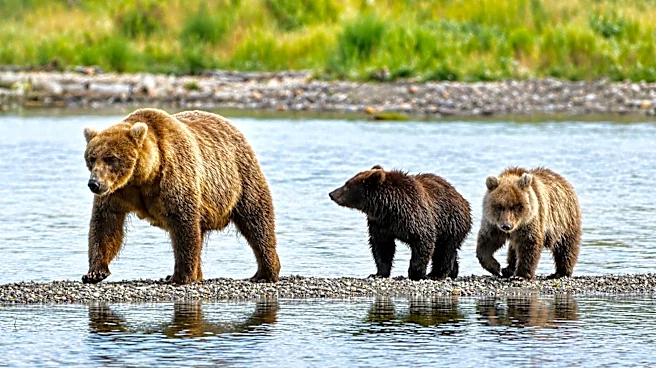



A March Madness-style bracket competition to identify the fattest bear is under way the National Park Service in Alaska, and you can help choose.
Thousands of people will vote on in head-to-head matchups starting today to decide which bear best embodies the survival skills and healthy appetite needed to make it through Alaska's harshest months during Fat Bear Week.
The annual online showdown is returning for its 12th edition this week to pit some of Katmai National Park and Preserve's bulkiest and most-beloved brown bears against each other.
"Fat Bear Week is always a celebration of the success of the bears," Naomi Boak, a media ranger at Katmai, previously told USA TODAY. "Not just the big boys, but the sows with cubs, the young teenage bears, the subadults."
When the votes are counted, only one bear will earn the title of Fat Bear Week champion.
Here's what to know about the annual competition.
When is Fat Bear Week 2026?
Fat Bear Week runs starts today, Sept. 22, and runs Sept. 22-29, according to organizers. The champion will be crowned on Sept. 29 after several days of fan voting. No voting is scheduled for Sept. 26-27.
How to see the contestants and vote
Voting for Fat Bear Week takes place online, with winners advancing through a single-elimination bracket until one champion remains. It is set to start at noon ET / 9 a.m. PT on Sept. 22.
Fans can follow the competition through Katmai's bear cams and cast ballots in each matchup during the tournament. The event is a partnership with Katmai National Park and Preserve, explore.org and Katmai Conservancy.

Which bears are competing this year?
Organizers announced the bracket for this year's competition on Friday, Sept. 18, saying finalists were narrowed from more than 100 bears that were spotted at Katmai National Park's Brooks River this year.
Park and preserve naturalist Mike Fitz, while announcing the bracket during a livestream, said the brown bears had reached "peak fat" and are ready to handle the long winter ahead.
The National Park Service's Sarah Bruce added that the bears were selected from those that showed up at the river early in the summer and reappeared again later in the season, allowing the team an opportunity to take good before-and-after photos showing how many pounds the bears packed on while feasting on salmon over the summer.
Participants have been divided into different groups and include:
Bear families identified by the mother's ID number and how many cubs they reared:
- 132 and three spring cubs: Despite being one of the largest and most experienced mother bears at Brooks River, 132 is a first-timer at Fat Bear Week, competing with her fourth known litter of three spring cubs. She is characterized by grizzled dark brown fur, forward-leaning ears, and a wide belly. Her face is distinguished from other bears by the inverted V or chevron pattern of fur on her forehead.
- 284 and two spring cubs: This mother has a prominent shoulder hump, grizzled brown fur, and blond-tipped ears.
- 610 and two spring cubs: Making her first Fat Bear Week appearance, this small adult female has a long muzzle and grizzled light brown fur. She is identifiable by a large scar, which is sometimes visible at the top of her hips.
- 806: Mother to a spring cub and adopted 2.5-year-old cub, this bear has round blond-tipped ears and grizzled brown fur.
- 901 and her spring cub: 901 is a medium-sized adult female with blond-rimmed and triangle-shaped ears. Her fur is golden brown in early summer and grizzled brown in late summer.
Sub-adult bears that are competing include:
- 620: A female subadult bear with a long tail and light brown fur that becomes grizzled brown by late summer.
- 694: A male subadult with round ears placed high on his head and uniformly brown fur with hints of a remnant natal collar near his neck.

Adult females competing this week:
- 909: A large adult female with brown late summer fur and wide-set blond ears. She's a resilient mama bear, who lost two of her cubs this season.
- 428 Studious: Daughter of former Fat Bear Week Champion Bear No. 128 Grazer, 428 is recognizable with her short-pointed muzzle, blond ears, and grizzled blond fur in late summer.
- 131: This bear has blond ears, dark eye rings, a short muzzle, and light brown to blond fur that turns grizzled brown by late summer.
- 910: With dark brown fur, a prominent brow ridge, and somewhat short forward-pointing ears, 910 has attracted desires from many males during the brief bear mating season, including fellow Fat Bear Week contenders Bucky and Walker.
Adult males you can vote for this week:
- 32 Chunk: 2025's Fat Bear Week champion has a large distinctive scar on his muzzle and a protruding canine tooth from a broken jaw suffered in 2025.
- 164 Bucky Dent: With grizzled brown fur and blond-tipped ears, this young upstart is an ace fisher-bear. He stands out with a line of darker fur near his eyes on his upper muzzle.
- 151 Walker: A Brooks River regular, this large adult male has dark brown fur, a pear-shaped body, a long muzzle and large round ears.
- 903 Gully: Two-time champion Grazer's offspring, Gully got this nickname because he likes to snack on gulls in addition to salmon. The medium-large adult male has grizzled brown fur and a long straight muzzle. In the early summer, he is often identifiable by his Eeyore-like sitting position on the lip of Brooks Falls.
What is Fat Bear Week?
Fat Bear Week is an annual celebration of Katmai's brown bears as they reach peak weight heading into hibernation, according to the National Park Service.
The annual event, which began as Fat Bear Tuesday in 2014 and expanded into Fat Bear Week in 2015, takes place at the Katmai National Park and Preserve in Alaska. Wildlife and bear enthusiasts from across the world are invited to participate in the event via live cams on explore.org, through which they can observe the bears in their natural habitats as they "feast on a banquet of Alaska wild salmon in one of the greatest salmon runs left on earth," NPS said.
The single-elimination tournament is held as hibernating bears reach peak fat after a summer-long effort. For each matchup, contestants vote for the bear they believe "best exemplifies fatness and success in brown bears," officials wrote on the contest website.
As Katmai National Park puts it: Pick the bear you believe is most prepared to survive the long Alaska winter.

Who won Fat Bear Week 2025?
32 Chunk claimed the Fat Bear Week crown in 2025, defeating veteran bear 856 in the championship matchup.
According to USA TODAY reporting, 32 Chunk received 96,350 votes, while 856 earned 63,725 votes.
You can see all the previous winners in explore.org’s Fat Bear Week Hall of Champions.
Does Michigan have brown bears?
No, brown bears do not live in Michigan. Michigan is home tomore than 12,000 black bears, which tend to be smaller and less aggressive than their brown bear cousins.
Black bears in Michigan also eat massive amounts of food in the fall as they prepare for hibernation.
In Michigan, adult female black bears range from 100 to 250 pounds, and adult males weigh between 150 to 400 pounds.
How big do brown bears get?
Alaskan brown bears are the largest brown bears and require a very high caloric intake of food, the NPS said. Brown bears in Alaska can eat 80 to 90 pounds of food per day in the summer and fall, gaining around 3 to 6 pounds of fat each day, in order to store fat for the winter.
Brown bears typically weight200 to 1,000 pounds,the NPS said. They can stand up to 9 feet tall on their hind legs.
This article originally appeared on USA TODAY: Who're you calling fat? Fat Bear Week returns at Alaskan national park