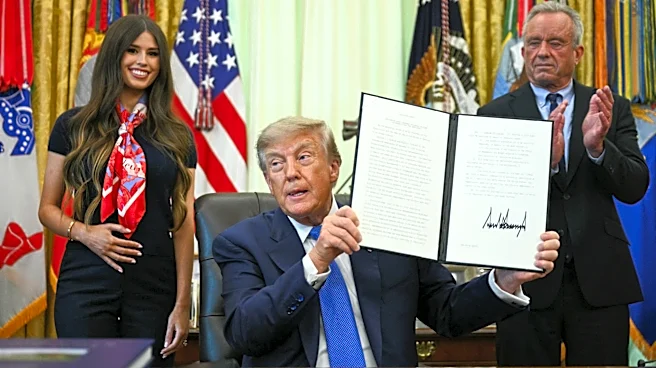






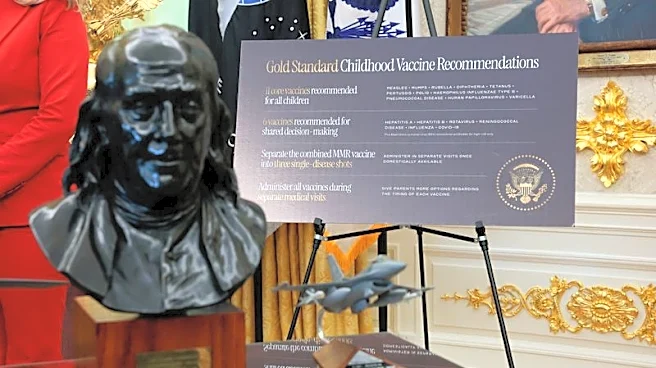
The Michigan Department of Health and Human Services said it will stand its groundon childhood vaccines, leaving its recommendations unchanged despite the executive order President Donald Trump signed Aug. 10, declaring that the federal government now recognizes "gold-standard" guidelines that seek to trim the immunization schedule for kids by seven vaccines, from 18 to 11.
The president's executive order also calls on manufacturers to separate the combined measles, mumps, rubella (MMR) vaccine into single-disease shots and takes aim at state and local vaccine mandates that require immunizations to enroll children in school.

Dr. Natasha Bagdasarian, Michigan's chief medical executive, said the state health department will continue to follow the child
and adolescent immunization schedule supported by the American Academy of Pediatrics and the American Academy of Family Physicians, per a standing recommendation she made in 2025, when the Trump administrationfirst signaled it would attempt to alter the federal childhood vaccine schedule.
“Michigan’s childhood vaccine recommendations, school requirements and exemption processes remain unchanged, even in light of the recent federal executive order,” Bagdasarian said in a statement issued Aug. 17. “We understand that shifts in federal guidance can create uncertainty for parents and physicians, so we want to provide clarity. Michigan continues to support the immunization schedules outlined in our Standing Recommendation, which remain the foundation of our approach to protecting children’s health.”
The state health department said it "continually reviews evidence regarding vaccine safety and effectiveness, and there is no new data to support changes to the vaccine schedule at this time."
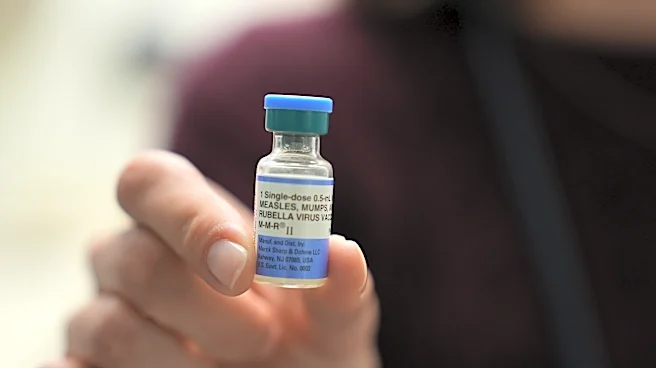
MDHHS said it supports the ongoing use of combined vaccines, including the MMR, which "have a long history of safety and effectiveness and can reduce the number of injections that children need."
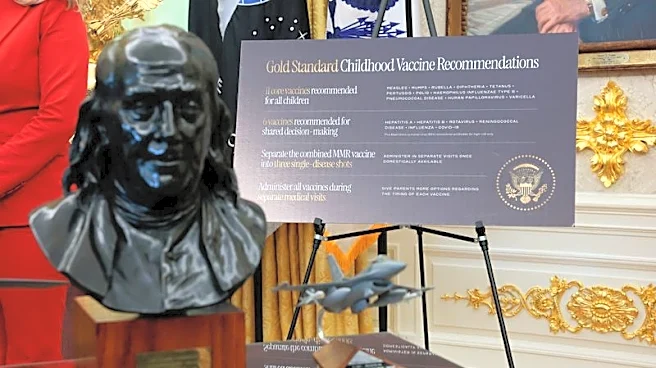
Trump's executive order, however, identified what it calls "consensus vaccines" that the federal government will continue to recommend, saying that narrowed list more closely mirrors the slate of immunizations given to children in some European countries. They are: measles, mumps, rubella, diphtheria, tetanus, pertussis, polio, Haemophilus influenzae type B, pneumococcal disease, human papillomavirus and varicella.
The executive order also says the following vaccines should be given only to children in certain "high-risk" groups: hepatitis A, hepatitis B, rotavirus, meningococcal disease, influenza and COVID-19.

It outlines that "shared decision making" between parents and medical providers should affect decisions about whether to give children respiratory syncytial virus (RSV) monoclonal antibodies along with vaccines that protect against hepatitis A, hepatitis B, meningococcal B, meningococcal ACWY and dengue.
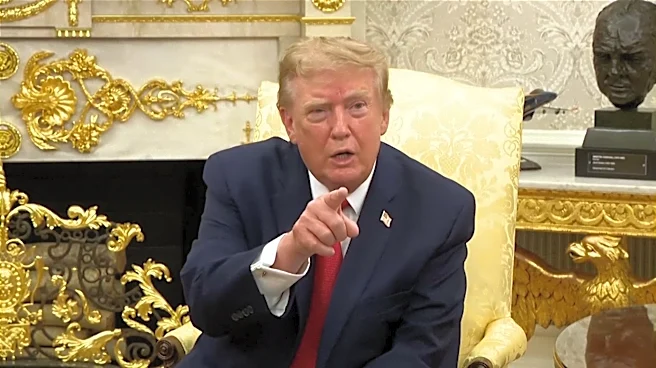
During a news conference, Trump insinuated without evidence or scientific proof that vaccines are linked to autism and even death, saying: "The MMR, we want it in three separate vaccinations, given at separate times. Together, there could be a possibility they're quite lethal, and separately, it looks like they are not at all lethal, but just very effective."
He later acknowledged that "we do not know exactly what the cause is with respect to autism" but added that reducing the overall number of vaccines recommended for U.S. children and breaking up combination vaccines will "make a big difference" in lowering autism rates.
Dr. Andrew Racine, the president of the American Academy of Pediatrics, said Trump's comments and executive order are "not only disheartening but dangerous" because they sow confusion and plant the seeds of doubt about the safety and efficacy of vaccines in the minds of parents.
"Dozens of studies involving millions of people show there is no link between vaccines and autism, and yet federal leaders continue to promote this outdated, disproven idea to scare families," Racine said in a statement. The executive order, he said, "will do nothing to support families of children with autism or advance understanding of the condition.”

"Instead of ensuring every family can access life-saving vaccines for measles, influenza, RSV and more, federal leaders are once again spreading misleading claims. ... Delaying or skipping shots is risky, especially as measles continues to spread and children go back to school."
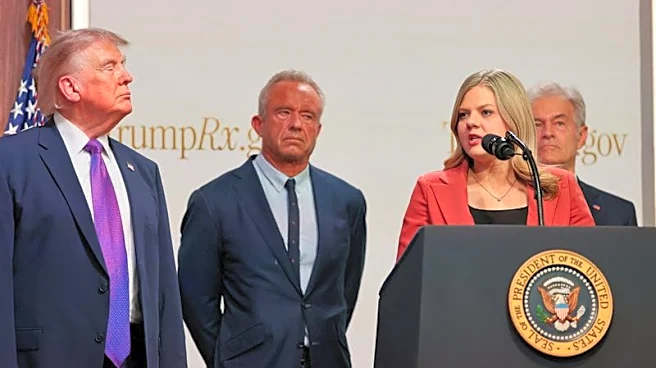
Trump called the vaccine executive order a "major victory for parents' rights, religious and constitutional rights," in that it also includes a clause requiring local, state and federal governments to "maximize parental authority" by allowing exemptions to vaccine requirements for school enrollment for medical, religious and philosophical reasons. The U.S. Attorney General's Office and the U.S. Department of Justice were ordered to take action to ensure compliance.
Michigan law already allows parents to obtain vaccine waivers from their local health departments for religious or philosophical reasons when enrolling their children in school. Medical waivers signed by a physician also are granted.
The number of children with waivers based on religious or philosophical beliefs that allow them to skip one of more vaccines required to enroll in Michigan schools has steadily risen in recent years — a trend also being seen nationally.
Vaccination coverage among kindergartners in the United States decreased for all reported vaccines during the 2025-26 school year, according to the CDC, with immunization rates ranging from 92% for diphtheria, tetanus and acellular pertussis vaccine (DTaP) to 92.4% for the MMR and polio vaccines.
Michigan's kindergarten immunization rates are lower than the national average, with just 90.9% of children starting the 2025-26 school year with the recommended number of doses of the MMR vaccine, according to the CDC, and immunization rates for other vaccines, such as diphtheria, tetanus, and acellular pertussis vaccine (DTaP), falling to 90.8%.
It comes as the number of U.S. measles cases have reached a 35-year high this year ― with 2,566 confirmed measles cases nationally as of Aug. 13, the CDC reported. Michigan has so far reported 16 measles cases and two outbreaks.
MDHHS also has reported increases in other vaccine-preventable diseases, such as whooping cough, and urged parents and caregivers to make sure that their children are up to date on the full slate of vaccinations recommended by theAmerican Academy of Pediatrics and the American Academy of Family Physicians.
During an Aug. 14 episode of the "Public Health OnCall" podcastfrom the Johns Hopkins Bloomberg School of Public Health, Dr. Joshua Sharfstein, a pediatrician and the vice dean for public health practice and community engagement, said it'll be very difficult and time-consuming for manufacturers to separate out the combined MMR vaccine, as Trump ordered, and make individual-disease doses, get them tested and licensed for use by the American public.
"There’s no country on planet Earth that does that," Sharfstein said. "It’s not even possible because those vaccines aren’t really made in the quantities to be able to do that. There’s no scientific authority that has recommended it. There's no study that backs it."
He said it's concerning for parents to hear the president say that the combined MMR vaccine isn't safe.
"Parents want the best for their children," said Sharfstein, who previously served as the principal deputy commissioner of the U.S. Food and Drug Administration and is the director of the Bloomberg American Health Initiative. "Parents are really interested in good information, but they don’t know where to find it. If they’re ... getting the message that the MMR vaccine is unsafe in the middle of a measles outbreak, it’s really stressful and they may not make the choice to protect their family ... because they're confused.
"It's really important for parents to turn to their pediatricians, the people who have been taking care of their children, who have their children's best interests at heart, who know the evidence. Vaccination shouldn't be political, but we live in a time when there [are] all kinds of signaling about health positions based on politics, and I think this is a great example about why that can be very dangerous."
Reuters reported that two manufacturers, Merck & Co. and GSK, have licenses to make combined measles, mumps and rubella vaccines in the United States, but single-disease shots for these individual diseases have not been available since Merck stopped making them in 2008.
"Even under current expedited review pathways, it could take years — potentially as many as 10 — to meet the safety and efficacy requirements to obtain FDA approval and then begin manufacturing and commercialization" of single disease shots, Merck said.
Dr. Lauren Azevedo, president-elect of the Michigan Chapter of the American Academy of Pediatrics and a pediatrician at MSU Pediatrics, said in a statement issued by Michigan for Vaccines, a coalition of public health agencies, health care providers and community organizations, that there is no evidence to support Trump's assertion that spacing out vaccines for diseases like measles, mumps and rubella is any safer than following AAP guidelines.
"The timing of every vaccine has been carefully tested, studied and reviewed before it is recommended for children," Azevedo said. "When shots are spread out or left out, children spend more months unprotected, families make more trips to the doctor’s office, kids face more stress and anticipation of shots, and costs go up. Parents deserve guidance grounded in that evidence, and in Michigan, that is exactly what our state’s standing recommendation delivers."
Contact Kristen Shamus: kshamus@freepress.com. Subscribe to the Detroit Free Press.
This article originally appeared on Detroit Free Press: Michigan holds line on vaccines for kids despite Trump executive order