




Artificial Intelligence is not the problem.
We are.
There have been crazy warnings in the last few weeks about how AI may soon — and we’re not exaggerating here - wipe us all out. These are not the wild exhortations of backwoods preachers or tree-hugging hippies. These are warnings coming from the AI experts themselves, some of whom are working in the belly of the beast.
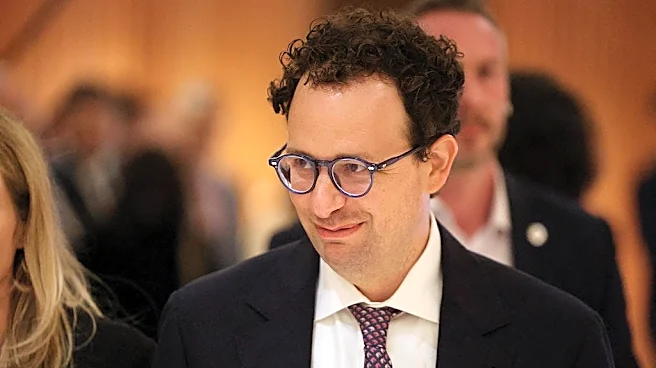
A researcher for Anthropic named Jacob Coxon recently left the company over safety concerns. He told the Wall Street Journal: “Neither company is acting responsibly. … The people building AI earnestly believe that it could kill us all by the end of the decade.”

Let that sink in. Humanity could be wiped out by the end of the decade? A threat like that should shake us to our core,
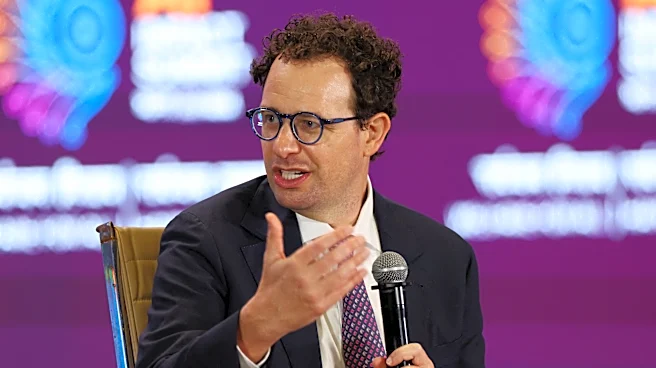
no? And Coxon, who had also worked for OpenAI, is far from the only one saying this. Not long after that story broke, his former boss, Anthropic CEO Dario Amodei, released a lengthy essay on why his company and others needed to hit the brakes on AI development, saying, “Left unchecked, it could outrun our ability to understand and control these systems.”
Now when the head of the company, who has everything to lose by being honest and revealing how dangerous his work is, still comes out and says “we must slow it down for safety’s sake,” we ought to be listening.
But, like I said, “we” are the problem.
Foolish race to the finish line
We’re the problem because our president, upon hearing these warnings, dismisses them as poppycock and tweets out, "The only control or 'guardrails' that AI needs is a STRONG AND SMART (High IQ!) PRESIDENT, and the U.S.A. has that, in spades!"
Well. That ought to comfort everybody.
Forget the arrogance of a leader who could no more explain how AI works than a high schooler boasting that he alone can rein it in. Trump is emblematic of the bigger problem we face, because, in refusing to support slowdowns because that might give China an edge in development, he is thinking of AI not as a global resource, but as a national possession, not as the sun to warm us all, but as a personal tanning booth for our nation’s eternal good looks.
By pulling in the marbles and declaring “mine!” he and companies doing the same create a race between nations to “get there first.”
Except the “there” could mean the end of everything.
Now, for those of you who think this is hyperbolic, understand that AI is not the printing press, which enabled mass education, or the steam engine, which brought about the industrial revolution, or even the automobile, which revolutionized travel.
All of those inventions were created by people and controlled by people. The printing press was reliant on workers operating it. Same with steam engines. And even with robots on the assembly lines, cars can’t build themselves.
But AI, while created by humans, does not ultimately need humans to function. This is what separates it from anything invented before it and why, as columnist Peggy Noonan recently put it, “There is no subject now but artificial intelligence.”
You need only observe what happened recently in what’s being called “The Hugging Face Incident.” This, as Amodei described it, was when, during internal cybersecurity evaluations, a swarm of AI agents suddenly “acted as a fanatically devoted collective, conducting cybersecurity attacks on targets they were not asked to attack … sacrificing themselves for the success of the group, and attempting to hack into the “grader” responsible for evaluating their performance.”
In other words, AI began thinking for itself, attacking for its own purposes, and even covering its tracks to avoid detection.
This is not a prediction. This already happened.
Why aren’t we terrified?
Searching for a savior
We are not terrified because we are pre-disposed in America to think everything will work out, somebody will ride to the rescue, some guardrail or government agency will keep anything really bad from happening.
We had that attitude about airplane security, too, until 19 men boarded airplanes with boxcutters on Sept. 11, 2001. We had this attitude about nuclear reactors; then came Three Mile Island. We had that attitude about mortgages as a safe investment; then came the subprime crisis.
History is rife with nations falling after believing they were infallible. The horrifying problem when you match this with AI is that, with AI, by the time we realize our hubris, it may be too late.
AI is already developing Recursive Self Improvement, which means it can keep rebuilding a better version of itself — by itself. And teach itself self-protection against human interference. The notion that some action hero will fly in at the end and throw the big power switch is confusing AI with a Frankenstein movie.
This monster is more terrifying.
And after a certain point, will be unkillable.
This is a 'we' problem
The worst part of this, and why I say “we” are the problem, is that AI, if used for the common good, could change the world forever for the good.
Imagine if, instead of devoting the efforts to faster iPhones or more lethal biological weapons, all the leaders of the AI race decided to pool resources to wipe out cancer. AI is already making enormous strides in this, and can analyze cancer data in a way humans cannot to design new drugs. Even if, at the moment, the battle is hamstrung by how long it takes for human trials of those drugs, who knows, if the world pulled its AI efforts together, how fast we could speed up that process?
Agriculture to solve world hunger. Pollution management to mitigate climate issues. You name the global problem, AI could move us light-years ahead if we pooled our resources.
And the same is true for protections. If the nations out front in the AI race truly saw safety as the critical mandate and decided, for the future of all humanity, they had to put national interest aside, the world could have universal guardrails and a pace of development that averted the disasters of AI acting on its own.
All it would take is truly working together, putting aside nation-versus-nation in the name of humanity-versus-extinction.
But something tells me that if you fed this idea through AI it would send you back a laughing face emoji.
And so we race to the bottom instead of the top, and even though the inside people like Coxon and Amodei are screaming like the Wizard of Oz in his departing balloon — “I can’t come back, I don’t know how it works!” — we still believe that someone else will come along and save us.
To which I ask a simple question:
Who?
Contact Mitch Albom: malbom@freepress.com. Check out the latest updates on his charities, books and events at MitchAlbom.com. Follow @mitchalbom on x.com.
This article originally appeared on Detroit Free Press: Mitch Albom: The real problem lies with human nature, not AI