




With the Nov. 3 election just two weeks away, Republicans and Democrats continue to rally for support on their own roadmaps for Michigan’s future. Freep Opinion asked state Legislative candidates in competitive races in Wayne, Oakland and Macomb counties about some of the biggest issues in this year’s election.
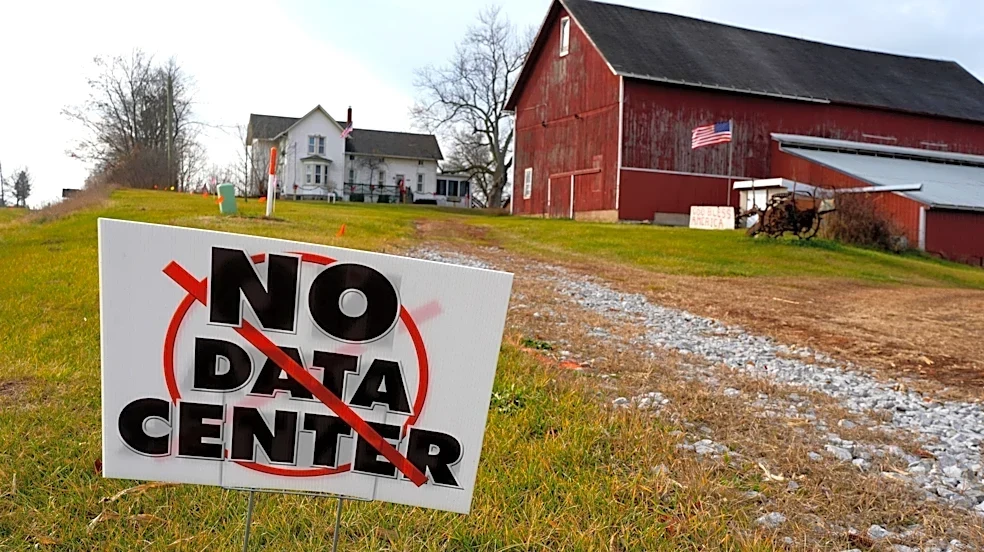
One thing they agree on? They're wary of data centers.
As AI expansion drives infrastructure demand, the general consensus seems to be that data centers are inevitable – but need better regulation. Still, individual approaches differ; while most of the candidates we interviewed call for additional regulations for new data center projects, two support a statewide moratorium and one remains straight out opposed.
Here’s where the candidates
interviewed by the Freep Editorial Board stand on data centers.
'Data centers are coming'
The candidates who are least skeptical are sitting state lawmakers who voted for a 2024 law that imposes some environmental requirements on data centers in exchange for a tax break.
- Douglas Wozniak (Republican, 24th Senate District)
- Jason Hoskins (Democrat, 7th Senate District)

State Reps. Douglas Wozniak, R-Shelby Township and Jason Hoskins, D-Southfield are currently serving terms in the state House, and are running for state Senate.
In an interview with Freep Opinion, Hoskins said, “Data centers are coming, and there is certainly a need for us to have data centers. If not in Michigan, certainly in the United States.” Especially with AI and the high amount of data people consume, he added that “we definitely need places to store all of it.”
Wozniak said that a one-year moratorium on data centers for the whole state would put Michigan “behind in the development of what needs to get done.”
“But it can’t be done without guardrails,” Wozniak added. He believes data centers should be approved by local communities – not mandated by the state – and locals should look at guidelines to address data centers’ water and electricity usage during that process.
Considering the debate around data centers, Hoskins said, “I understand the concerns.” While he thinks that current legislation provides sufficient guardrails, he also believes that there’s room for improvement. “I think there’s questions from residents about some of the protections we put in that we can definitely address,” like providing some clarifications around environmental standards and requiring community benefits, Hoskins said.
More protection, more regulations
Most candidates agree that there should be additional regulations for new data centers siting in Michigan.
- Abbas Alawieh (Democrat, 2nd Senate District)
- Alex Hawkins (Democrat, 55th House District)
- Joanna Whaley (Democrat, 2nd House District)
- Justin Onwenu (Democrat, 1st Senate District)
- Kevin Hertel (Democrat, 12th Senate District)
- Kimberly Fisher (Democrat, 11th House District)
- Lisa McIntyre (Democrat, 22nd House District)
- Melanie Macey (Democrat, 6th House District)
- Natalie Price (Democrat, 10th Senate District)
- Shannon Dare Wayne (Democrat, 31st House District)
- Theresa Brooks (Democrat, 9th Senate District)
For Shannon Dare Wayne, a candidate running for state House, that starts with transparency standards. “I’d want people to know that these conversations are coming up,” she said. When knocking on doors to talk to voters in her district, Wayne said she learned that most people feel like they'd been left in the dark about data center developments. “So, the first thing is making sure that there is transparency and public input,” Wayne said.
Alex Hawkins, another candidate running for state House, said he understands the need for data centers, but he doesn't think accepting them with open arms is the right answer. “I think that the state Legislature needs to have very, very strong guardrails to protect ratepayers, people, citizens to make sure that we keep our clean water and [data centers companies are] not just using up all of our resources for their own benefit,” Hawkins said.
The chief mechanism for regulating data centers in Michigan is currently the tax credit legislation that was passed in 2024; it put an incentive – not a requirement – in place for data center companies that adhere to some regulations. However, residents of the areas where developments were proposed since have continued to voice concerns about local water supplies, energy costs and ambient noise.
With data centers a key issue in the 2026 election, most of the legislative candidates Freep Opinion interviewed agreed that the current mechanism isn’t enough. Lisa McIntyre, who is running for a seat in the state House: “I think there needs to be more teeth in that.”
Even Sen. Kevin Hertel, D-Saint Clair Shores, who sponsored the original legislation in the state Senate, is now among several lawmakers trying to put additional guardrails in place. Hertel said new legislation would require a community benefit agreement between the community and the data center company. It would also prohibit government officials from signing non disclosure agreements, and ensure that a data center cannot lead to increases in the residential electricity rate. Plus, it would add environmental standards requiring data centers to use renewable power sources, limit water intake and address air quality.
“If you put all those pieces together, it says if you're a data center and you want to invest in the state of Michigan, you are going to meet the strictest standards anywhere in the country,” Hertel said.
But how about a moratorium?
“I think a moratorium is fine, but a moratorium is a temporary fix," Hertel said. "We need to make sure we have a long-term solution for the state of Michigan." For now, he said he’s pushing hard to try to get legislation across the finish line in the Senate.
A moratorium 'so we can catch our breath'
Some candidates said they support a moratorium − a temporary pause on new data centers being built − either locally or across the state.
- Denise Mentzer (Democrat, 61st House District)
- Sarah Pounds (Democrat, 54th House District)
- Sean Carlson (Democrat, 13th Senate District)
- Sherry Berecz (Democrat, 28th House District)
Sherry Berecz passed a moratorium on data centers as the supervisor of Brownstown Township. “We are in our second six month period of doing that,” she said. In that same vein, Berecz said she believes that residents should get to decide whether a data center is built in their community. “I know that I'm not interested in a data center unless it's built with union labor, without backdoor deals and without exploiting our natural resources. I think many of those things have been overlooked,” Berecz said.
Rep. Denise Mentzer, D-Mount Clemens, who is running for reelection, would support moratoriums at the local level. “A blanket overall state moratorium, I'd need a little bit more convincing on that," Mentzer said. “But I think local communities need to be able to say, ‘Hey, we're putting a pause here. We're going to pause for six months, or we're going to pause for a year until we put our zoning ordinances and our guidelines in place.’”
Only Sarah Pounds, a candidate running for state House, and Sean Carlson, running for state Senate go a step further. Both said they would support a statewide moratorium on new data centers. Looking at utility usage as well as the water that large-scale projects are going to take, Carlson said, the state needs to step in. In backing additional regulation, he said, “I’m supportive of the moratorium so we can catch our breath and make sure that these things are developing."
No data centers
One way or another, most candidates advocate for additional regulations. But only one candidate is strictly opposed to data centers.
- Jaime Churches (Democrat, 27th House District)
Churches simply said, “We have them. I don't think that we need more.”
Submit a letter to the editor at freep.com/letters, and we may publish it in print or online.
This article originally appeared on Detroit Free Press: What Michigan's 2026 candidates say about data centers | Opinion