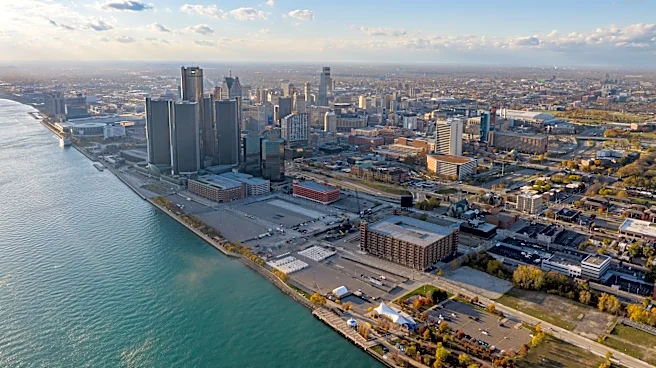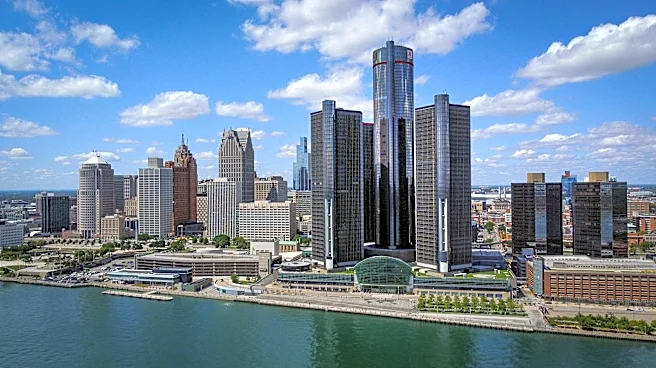





The Renaissance Center is just shy of 50 years old.
And middle age is proving brutal.
The city of Detroit Assessor's Office recently found the massive 1977 office and hotel complex on the downtown riverfront to be "functionally obsolete."

That designation was necessary to unlock eligibility for public incentives for a planned $2.2 billion partial demolition and redevelopment of the site.
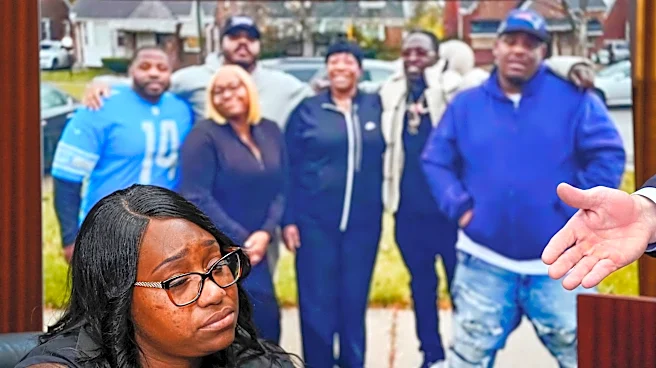
That redevelopment plan, proposed by Bedrock and General Motors, has drawn criticism at public meetings from some Detroit residents who have questioned the need to tear down two of the five original Renaissance Center towers. The two 39-story towers that would come down — Towers 300 and 400 — are the pair nearest the riverfront.
"Tearing down buildings that are structurally
sound really doesn’t make any sense," one critic, Rodney Pearson, said at a public hearing this week.
Yet for the specific requirements of the Transformational Brownfield incentive program, the RenCen appears to fit the definition of being past its prime and ready for some facelifting and reconstruction.
The Assessor's Office, in an Aug. 4 letter to the quasi-public Detroit Brownfield Redevelopment Authority, listed four key attributes that make the RenCen qualify as being "functionally obsolete."
- Overcapacity: Possessing over 4 million square feet of space, most of it now vacant.
- Deficiencies of design: Having building configurations and floorplates that "no longer meet the functional requirements and expectations of modern mixed-use users."
- Bad relationship to surroundings: The "inward-facing design" is separated from the surrounding network of streets, not integrated into the landscape and has "limited pedestrian connectivity."
- An overall reduced utility: "Collectively, these conditions substantially diminish the property's utility and economic viability in its current form and materially impair its ability to compete effectively in the modern real estate market without substantial redevelopment."

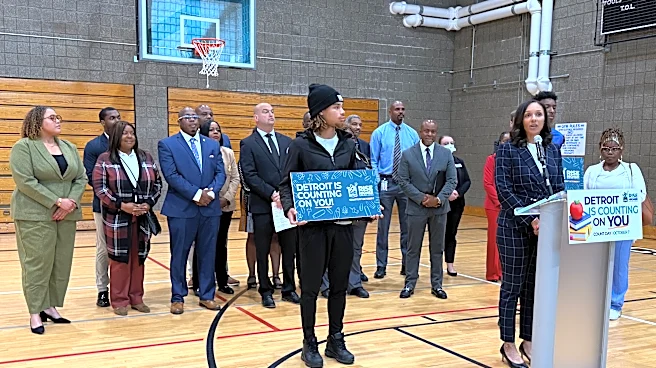
The assessor's findings were discussed at the Sept. 29 public hearing for the Detroit Brownfield Redevelopment Authority. The discussion was prompted after Pearson and others questioned the need to demolish the two office towers that would come down under Bedrock and GM's $2.2 billion redevelopment plan.
“You guys are talking about Brownfields, (but) Towers 300 and 400 are not dilapidated — they are sound buildings," he said. "So how does that even qualify as a Brownfield? I don’t see that logic at all.”
Detroit businessman Herb Strather, who also spoke at the hearing, took issue as well with the "functionally obsolete" label. He called on city officials to do a request for proposals for the Renaissance Center, as an RFP may find someone interested in the towers that are slated for demo.
“But the building is not obsolete," Strather said.
Brian Vosburg, a staffer for the brownfield authority, said that in addition to the assessor's determination about the Renaissance Center buildings being obsolete, there is also environmental contamination on the surface parking lots surrounding the RenCen.

While such contamination would ordinarily qualify a site for a brownfield, Bedrock and GM aren't looking to expand the brownfield incentive's tax capture area beyond the RenCen buildings and to those neighboring parcels.
The Brownfield Redevelopment Authority has yet to vote on the development partner's Transformational Brownfield request. Ultimate approve for the incentive must ultimately come from Detroit City Council and the Michigan Strategic Fund in Lansing.
A city of Detroit spokesman had no comment Oct. 1 regarding the Assessor's Office determination for the RenCen.
GM issued a statement on the determination:
“The city of Detroit Assessor’s determination reinforces what we have said since announcing plans to redevelop the Renaissance Center: The facility is not viable in its current form," the statement said. "Our plans will transform the site into a more accessible and welcoming destination for people across the region, while strengthening its connection to Detroit.”
Bedrock officials have said that saving Towers 300 and 400 and converting them to housing would cost about $800 million and be cost prohibitive.
Contact JC Reindl: 313-378-5460 or jcreindl@freepress.com. Follow him on X @jcreindl
This article originally appeared on Detroit Free Press: Why Detroit declared Renaissance Center 'functionally obsolete'