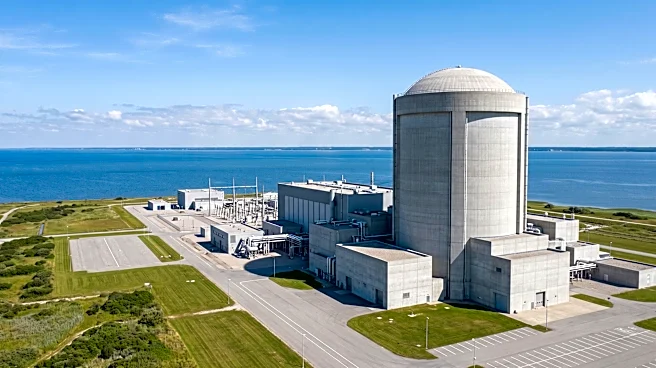

The U.S. Nuclear Regulatory Commission is investigating a late-August incident at the Palisades nuclear power plant in west Michigan where a large assembly of nuclear fuel rods "tipped" during installation,
halting the refueling process and requiring the plant's operator to seek a license amendment from the federal regulator to retrieve the assembly from within the nuclear reactor vessel.

Neither the Palisades plant's owner, Camden, New Jersey-based Holtec, nor NRC officials released information to the public about the incident for weeks. NRC spokeswoman Viktoria Mitlyng, in a Sept. 24 statement to the Free Press, stated "the tipped (not dropped) fuel assembly did not meet reporting requirements to the NRC."
"There has been no radiological release and no workers or the public have been affected," she said.
But a leading nuclear energy watchdog found the incident, and the lack of transparency about it, disturbing.
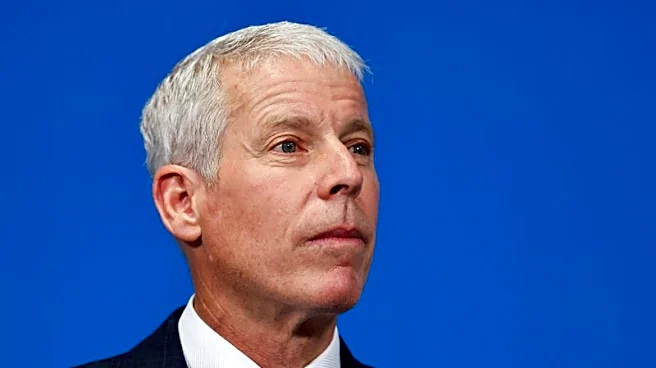
"I suspect that the rush to do things quickly is leading to mistakes − and you don't like to have too many mistakes when you're talking about a nuclear power plant," said Edwin Lyman, a physicist and director of nuclear power safety with the Union of Concerned Scientists, a nonprofit based in Cambridge, Massachusetts focusing independent scientific research and citizen action on environmental, health and security issues.
Holtec is attempting to make Palisades the first commercial nuclear power reactor in the U.S. to be repowered after permanent shutdown. Built in the late 1960s, the Palisades nuclear power plant began commercial power generation at the end of 1971 and it operated for roughly 50 years until it shut down in May 2022. But with the subsequent need for carbon-free baseload energy, job preservation, and rising electricity demand from data centers and artificial intelligence, Holtec, the federal government and Michigan Gov. Gretchen Whitmer pushed to refurbish Palisades and put it back into operation.
The company only mentioned the fuel rod assembly incident nearly a month later − as one of several notices in a Sept. 21 overview press release entitled "Progress Report on Palisades’ March to Startup."
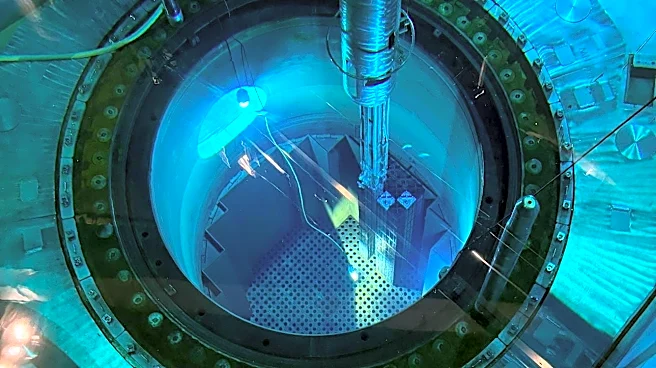
"Palisades entered Mode 6 [Refueling] and began loading fuel into the reactor vessel on August 30, 2026. During fuel-loading activities, one fuel assembly tilted from its upright position after it had been placed, and the fuel-handling machine grapple had been disengaged. Plant personnel responded promptly in accordance with established procedures, and the U.S. Nuclear Regulatory Commission [NRC] was notified. Plant personnel evaluated the incident and determined that it did not trigger the safety reporting requirements under NRC regulations. Fuel loading remains paused while Holtec addresses the affected fuel assembly.
"Consistent with the plant’s nuclear quality assurance program, a root cause evaluation has been initiated to determine the cause of the event and identify any resulting corrective actions. In parallel, Holtec’s corporate engineering division has devised and is developing equipment for the fuel retrieval and on-site storage equipment to return the fuel to the spent fuel pool. Palisades is also preparing a License Amendment Request (LAR) for submission to the NRC related to the proposed methodology to retrieve the assembly."

Holtec responded to Free Press inquiries on Friday, Sept. 25, with a statement on the incident nearly identical to its Sept. 21 release.
Holtec spokesman Nick Culp, in the emailed statement, added that other plant restart activities not dependent on the fuel-loading issue continue, including Palisades' reconnection with high-voltage transmissions systems that will ultimately allow the power generated at the nuclear power plant to reach the transmission grid.
Lyman called it a "PR blunder" for Holtec to not disclose the fuel assembly incident in a timelier manner.
"For this company to only promote the successes and to keep quiet about its failures shows a lack of transparency on their part and gives it the feeling of a cover-up," he said. "This will increase suspicion and, I would think, distrust."
Incident occurred shortly after refueling started
Holtec issued a news release on Aug. 31 announcing that it had begun fuel-loading at Palisades − meaning the tipped assembly incident must have occurred shortly after the process commenced.
A nuclear power plant's fuel assembly is a bundled structural matrix of ceramic uranium dioxide fuel pellets stacked inside long metal tubes, supported by a rigid framework. An assembly typically has 179 to 264 fuel rods, is 12 to 14 feet long and weighs between 700 and 1,750 pounds.
Holtec, in its Aug. 31 press release, noted that the Palisades refueling consisted of 204 fuel assemblies and included both new fuel and previously used fuel assemblies from the Palisades plant's final operating cycles prior to its 2022 shutdown.
"That is an issue, because once it's been irradiated there are fission products within the fuel, and if one of those fuel rods were to rupture, some of those gases could escape," Lyman said. "It's not as radioactive as spent fuel that's no longer usable and is waste. But it has more radioactivity than in an unradiated assembly. It will increase the challenge to recovery compared to if it was all unradiated fuel ... it will require very special precautions."
NRC cited Holtec for violations shortly before incident
NRC officials on Aug. 31 issued two notices of violation to Holtec for its Palisades restart work, characterizing the violations as Green-level "findings of very low safety significance."
Inspectors found that Holtec "failed to implement and maintain its radiation protection program for work activities with high alpha contamination levels," and "failed to monitor internal dose for individuals impacted by elevated airborne radioactivity in accordance with established procedures." Inspectors further found that "the issues with high alpha contamination levels and airborne radioactivity were not promptly raised to sufficient levels to initiate timely corrective actions to prevent repeated occurrences."
The violations were considered Green-level because no regulatory dose limit was exceeded with workers despite the elevated levels of airborne radioactivity.
"Some workers received greater-than-expected dose associated with these work activities. At no time did any worker approach federal occupational radiation dose limits," Culp said.
"The performance did not meet our standards, and we take this issue very seriously, Palisades completed a comprehensive root-cause evaluation and implemented corrective actions to prevent recurrence, including strengthened radiological controls, procedures, oversight and staffing."
Lyman called the violation notices "very disturbing," and said he doesn't put much stock in the NRC's assessment of the incident's low safety significance.
He noted President Donald Trump's Executive Order 14300 of May 23, 2025, ordering the reform of the NRC.
"Abundant energy is a vital national and economic-security interest," the order states. "In conjunction with domestic fossil fuel production, nuclear energy can liberate America from dependence on geopolitical rivals. It can power not only traditional manufacturing industries but also cutting-edge, energy-intensive industries such as artificial intelligence and quantum computing."
The NRC, the order states, is failing to bring online new commercial nuclear power because "instead of efficiently promoting safe, abundant nuclear energy, the NRC has instead tried to insulate Americans from the most remote risks without appropriate regard for the severe domestic and geopolitical costs of such risk aversion."
The order called for "a deadline of no more than 18 months for final decision on an application to construct and operate a new reactor of any type, commencing with the first required step in the regulatory process, and (2) a deadline of no more than 1 year for final decision on an application to continue operating an existing reactor of any type, commencing with the first required step in the regulatory process."
"The NRC is now a tool of the White House political program, and that program is expanding nuclear power as fast as possible and getting rid of regulations that they saw as slowing it down," Lyman said.
NRC has also proposed a rule that would reduce the scope of non-emergency events that have to be reported to either the NRC or the public in a timely fashion, Lyman said.
The recent incidents at Palisades "illustrate that trying to speed things up, trying to reduce oversight to meet arbitrary timelines, is counterproductive in the end, because ultimately it only causes delays down the road or potentially even worse," he said.
"Nuclear power operation isn't something you can speed up and lower your guard on without expecting serious consequences."
Contact Keith Matheny: kmatheny@freepress.com.
This article originally appeared on Detroit Free Press: Nuclear regulators probe fuel assembly installation mishap at Palisades