





Many people view today's high cost of living as a major stumbling block on the road to retirement. But we've got some good news: Average balances in 401(k) plans reached record highs in the second quarter, according to new data from Fidelity Investments.
On average, retirement savers saw their 401(k) balances grow 10.5% in the second quarter from the previous quarter — the strongest showing in a quarter since the fourth quarter of 2020 when average balances were up 10.8%.
What's even more amazing: Millennials — who currently range in age from 30 to 45 years old — saw their average 401(k) balances increase 14.2% during the second quarter. And, get this, millennials saw their average 401(k) balances go up 26.1% year over year.
Who can get upset when
a 401(k) statement shows a 26.1% gain over just a year?
What drove the gains? Strong saving habits and a strong stock market, as well as employer matching contributions, according to the Fidelity Investments analysis for the second quarter.
Who wants to be a 401(k) millionaire?
Much is made of all those 401(k) millionaires out there — even though we're really talking about far fewer than a million people.
Yet more people joined the club in the second quarter. We're talking about a record number of 401(k)-created millionaires.
In the second quarter ending June 30, Fidelity's data indicated there were 769,000 401(k) millionaires. That's up significantly — a bit more than 19% — from the first quarter ending March 31 when Fidelity reported 645,000 savers in that millionaires club.

Fidelity Investments 401(k) data for the second quarter based on 27,300 corporate defined contribution plans and 25.8 million participants as of June 30.
What it takes to build retirement savings
Michael Shamrell, vice president of thought leadership at Fidelity, told me that savers who found sizable success in the second quarter, perhaps surprisingly to many, did not do a lot to see that growth. They didn't make big changes in their investments or suddenly shift significantly more from their paychecks into their 401(k) plans.
"People really just stayed the course," Shamrell said.
While many people express concerns about the financial squeeze from higher prices and the rising cost of living, many do not seem to be reducing the amount of money that they're setting aside for retirement.
Shamrell said Fidelity's data indicates that people are not pulling back on their 401(k) contributions. And, he said, employers typically offered the same level of matching contributions in the second quarter, too.
As the economy hit bumps in the past, such as during the Great Recession from December 2007 through June 2009, employers often would reduce or even eliminate the employer's matching contributions into their 401(k) plans.
The U.S. economy isn't currently in a recession and hasn't been in one so far in 2026, based on the official word from the National Bureau of Economic Research. But some employers have felt uncertainty in light of such things as tariffs and persistent inflation.
Yet most employers are staying the course now, too, when it comes to matching contributions.
Shamrell said employers recognize that a 401(k) match is a benefit that will attract and retain talent. Shamrell said 80% of 401(k) plans on Fidelity's platform offered some type of employer contributing in the second quarter.
Fidelity spotted some interesting viewpoints in its second quarter "Well-being Tracking Study," a survey that is designed to get a picture of financial health, economic confidence and retirement savings behaviors.
More than half of workers surveyed in the second quarter — 55% — felt concerned about the economy, namely inflation and the cost of living. Yet, just over a third — 36% — continue to feel positive about their personal finances, partially due to positive market conditions and increasing levels of retirement savings.
Why the right mindset matters
Shamrell told me that many savers benefit from a mindset to save even a little bit more over time. "Even small steps can have a big impact down the road," he said.
Just saving an extra 1% each year will help someone build a larger balance in a 401(k) plan over many years of working, he said.
During the second quarter, he said, 12% of savers increased their contribution rate. Among that group, 40% of those savers went in manually and made such changes. The majority, some 60%, increased their contributions based on auto-escalation features offered in the plan that can raise retirement contributions automatically.
Fidelity says about a quarter of the plans on its platform have employee savings contribution rates set by the employer to go up automatically at specific points in time.
Total average savings rates remained at record levels for the second consecutive quarter, holding at 14.4% for 401(k) savers and 12% for 403(b) savers and staying close to Fidelity's recommended 15% annual savings benchmark. That savings goal includes both the employee contributions, as well as employer matching contributions.
When it comes to the pitfalls to avoid, savers need to try to avoid trying to time the market, Shamrell said. It rarely works in your favor to make major changes based on what you think the stock market will or won't do. And many savers, he said, realize that's true.
Only 5.5% of 401(k) savers on Fidelity platforms made changes to their allocations in the second quarter, he said.
Another smart money move: Do not risk your retirement savings on the tip-of-the-moment from influencers or others on social media. You don't want some guy in a T-shirt on YouTube to tell you it's OK to stop saving entirely or put every dime you've got on one stock.
If you want to take a gamble, it's wise to not do that with 401(k) money.
Another key tip from Shamrell: People who build up savings in their 401(k) plans have an easier time doing so if they contribute every dollar they need to receive the maximum amount of matching contributions from their employer each year.
Many times, contributing 6% of your salary ensures that you'd receive the full match. But you need to take time to understand the rules of your plan.
More than eight in 10 participants in 401(k) plans saved enough money to receive their employer's full matching contribution.
How does your 401(k) balance look next to others in your age group?
Sure, many of us would love to be a 401(k) millionaire but the reality is that most of us aren't.
The average 401(k) balance in the second quarter of 2026 was $155,800 — up 10% from the fourth quarter of 2025. The average balance is up 75% from the first quarter of 2016.
Yet, if you don't have a seven-figure 401(k) yet, how much money might your friends and neighbors really have saved up for retirement?
Thankfully, average balances are up for many age groups. Here's a look at how the numbers play out by age group:
- Savers in their 20s had an average 401(k) balance of $22,800 in the second quarter, up from an average of $20,600 in the first quarter.
- Those in their 30s had $75,200 on average, up from $66,900 in the first quarter.
- Those in their 40s had $156,800 on average in their 401(k), up from $140,500 in the first quarter.
- Those in their 50s had $263,500 on average, up from $237,800 in the first quarter.
- Those in their 60s had $281,200 on average, up from $257,900 on average in the first quarter.
- Those in their 70s had $286,900 on average, up from $264,500 in the first quarter.
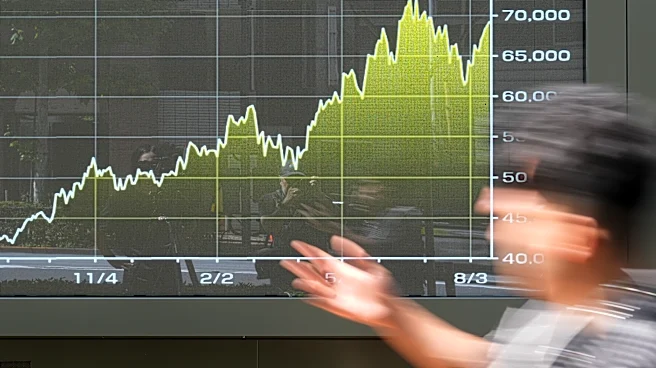
We need to remember that the stock market had some pretty maddening turns in early 2026. The Dow Jones industrial average shot up to close above the 50,000 mark for the first time ever on Feb. 6. But investors felt a shock as when the Dow unexpectedly dropped nearly 11% by late March following the sudden U.S. air strikes and ongoing war in Iran, which began Feb. 28.
But the recovery was fairly swift. And the Dow ultimately broke an all-time record close of 54,085.88 points on Aug. 4.
Consistent savings tends to benefit many savers over time during upbeat markets and downturns Fidelity noted, for example, that women who had continuously participated in a 401(k) plan for at least five years surpassed the quarter-million-dollar average balance mark.
What does more money really mean in retirement?
We'll give you a super rough ballpark idea of how 401(k) savings could play out in retirement.
Say you'd expect to withdraw 4% of the account balance in retirement in order to try to make the money last throughout the rest of your life.
If you have $250,000 in your 401(k), you could withdraw $10,000 a year sustainably, according to Melissa Joy, president of Pearl Planning, a wealth adviser in Dexter.
If you had $1 million in your 401(k), you could withdraw $40,000 per year, Joy told the Detroit Free Press.
Much of course will vary by retiree. If someone chooses to delay taking Social Security benefits until closer to age 70, for example, they might decide to take out more money during earlier years in their retirement, she said.
"Time and again, I see that older retirees who are in their late 70s or 80s, just don’t have the same spending needs that they did in earlier years," she said.
"Ironically, their accounts have continued to grow with good markets recently and their financial condition continues to improve while their spending needs stay the same or get lower."
For traditional 401(k)s, there are taxes to consider. Eventually, she said, retirees face required minimum distributions. In 2023, the age for required minimum distributions shifted from 72 to 73. In 2033, the age for a required minimum distribution goes up to age 75.
Contact personal finance columnist Susan Tompor: stompor@freepress.com. Follow her on X @tompor.
This article originally appeared on Detroit Free Press: Why 401(k) savers got a boost, saw record balances in second quarter