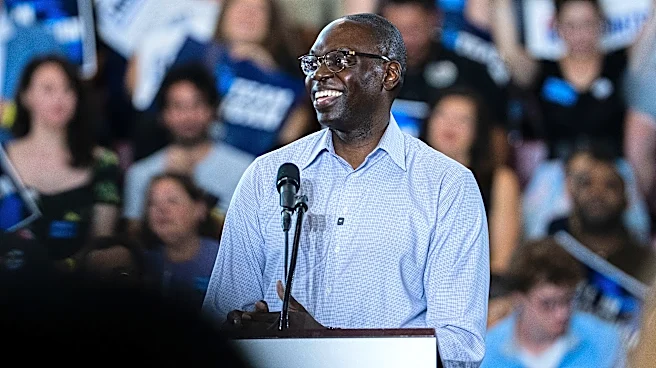





Michigan Lt. Gov. and Democratic Secretary of State candidate Garlin Gilchrist II is calling for stricter campaign finance laws, vowing to advocate for greater transparency of political spending, if elected.
Gilchrist was expected to unveil his campaign finance platform on Wednesday, Sept. 23. In a brief phone interview Sept. 22, he said the volume of money tied to elections "is something that really turns a lot of people off" from wanting to participate in the democratic process.
"The elections this year are going to be obscenely expensive, hundreds of millions of dollars spent in this process," Gilchrist said. "And that money has frankly made a lot of people cynical and caused a lot of people, a lot of young people, to kind of just check out
and not think it matters."
Michigan's Secretary of State race pits Gilchrist against Republican and Macomb County Clerk Anthony Forlini this fall. The winner will replace outgoing Secretary of State Jocelyn Benson, a Democrat running for governor. Forlini has centered much of his campaign around voting integrity.
If elected, Gilchrist said he would back moving up campaign finance disclosure requirements ahead of Election Day.

Currently, committees are allowed to file their final campaign finance reports weeks after the election takes place. Gilchrist said this allows campaigns to raise money without informing voters about donors, a current blind spot in the state's campaign finance system.
"I think you should have to tell us before Election Day, before people finish voting," he said. It's not immediately clear how the disclosure deadline would move up but Gilchrist said he would advocate for a change to Michigan's current law.
Gilchrist is also calling for elected officials in Michigan to be limited to a single leadership political action committee. Leadership PACs allow elected officials to raise and spend campaign money on other candidates — Gilchrist argued the current system allows politicians to circumvent campaign contribution limits by having multiple funds at their control.
Some of the changes Gilchrist is calling for would require approval from the Michigan Legislature and governor to take effect. But Gilchrist's campaign noted other changes could come directly from the Department of State. He said if elected, he would work with the Michigan Attorney General's office to crack down on campaign finance violations.
Michigan's campaign finance system has been characterized by some lawmakers as weak when it comes to transparency. In 2022, the Coalition for Integrity ranked Michigan 29th in the U.S. when it came to transparency in its campaign finance system.
He acknowledged other issues causing a lack of transparency in campaign finance stem from federal rules. Some politicians and groups use 501(c)4 nonprofit organizations, sometimes called social welfare funds, to raise vast amounts of money without being subject to the same disclosure requirements as traditional campaign committees.
"The ultimate goal is to make sure that this money cannot corrupt our politics through federal law either," Gilchrist said.
Gilchrist also reaffirmed his support for the Michiganders for Money out of Politics (MMOP) proposal, a ballot initiative that seeks to ban Michigan's utility monopolies and other corporations with large state contracts from making donations to political campaigns.
"I think this is a really important starting point," Gilchrist said. "One of the reasons that so many people have grown cynical, or checked out of politics, checked out of voting, is because they believe that corporate influence has become so dominant. And this is an effort to really begin to cut that off."
Supporters of MMOP argue it would curb corporate influence over state politics, although opponents contend it would allow out-of-state groups to influence Michigan government since they would not be subject to the same rules. The political spending ban would extend to the state's utility monopolies and any corporation that holds a state contract worth more than $250,000. Individuals and other organizations with ties to entities covered by the ban would also be banned.
MMOP's backers say corporations have an outsize influence in Lansing, largely due to their campaign contributions. Opposition groups, including the very businesses that would be banned from making contributions should the initiative become law, argue they have the right to participate in the process since they are affected by what's passed in the Capitol.
You can reach Arpan Lobo at alobo@freepress.com
This article originally appeared on Detroit Free Press: Gilchrist calls for reforms to Michigan's campaign finance system