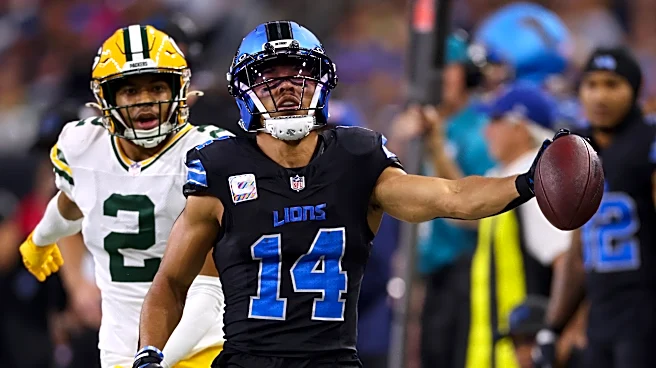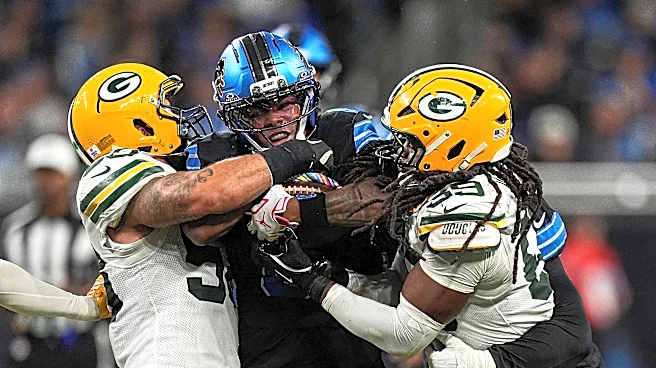


Maybe this is why Brad Holmes liked the guys he had in the room.
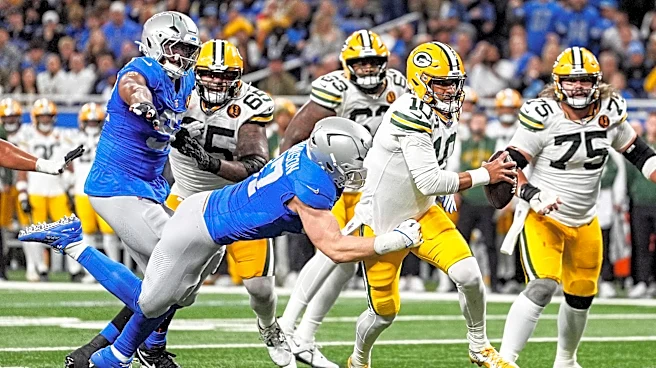
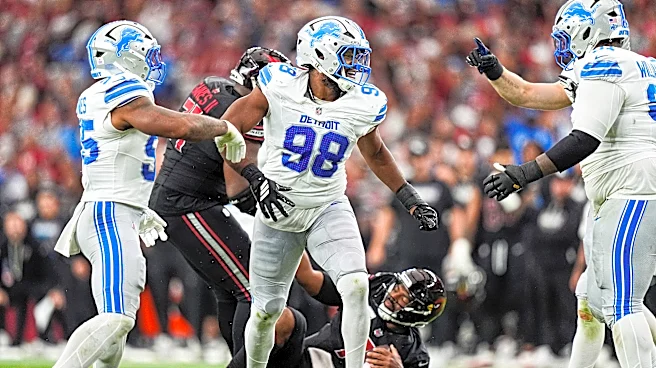
The Detroit Lions played their best defensive game of the season in Sunday’s 20-17 win over the Green Bay Packers, and it came with an unorthodox approach to the secondary.
The Lions rotated defensive backs throughout the game, giving five cornerbacks and three safeties heavy minutes as a way to combat Jordan Love and the Packers’ deep-passing game.

Some of the rotation was injury-based. Brian Branch played 45 of a possible 67 defensive snaps in his return from a torn Achilles as the Lions monitored his workload in the first half, and Ennis Rakestraw left with an ankle injury in the fourth quarter.
But all eight defensive backs – Branch, Chuck Clark and Keith Abney at safety, and Rakestraw,
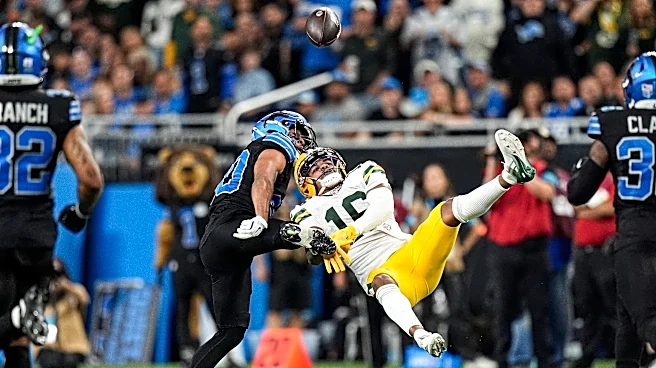
D.J. Reed, Roger McCreary, Rock Ya-Sin and Khalil Dorsey at cornerback – played at least 14 snaps, or 21% of the game, and combined for five pass breakups, one interception and no touchdowns allowed.
“We [saw] Dallas do it, and the coaches, I think they [saw] that maybe and they were just like, 'We've got to be fresh, especially with all the shots that Jordan Love has been taking this year,'” Reed said. “That can be a lot of wear and tear on your body, especially if you’re playing a lot of man, so I think they went at it at that approach, and I definitely thought it paid off.”
Reed, who played 61 of 67 defensive snaps, said he left the game with his body feeling better than it did the first five weeks, when he sat out nine total defensive plays.
He still shadowed Packers receiver Matthew Golden in most of the Lions’ man-to-man concepts, and he allowed just one catch on two targets, according to the NFL’s Next Gen Stats, and had a big pass breakup down the field and a huge stop on fourth down.
“I’ve been pretty beat up, but I actually feel really good and I played better, so I’m all for it,” Reed said. “So yeah, everybody played well.”
More than rest, that was the point of the rotation – to get everybody involved and playing at a high level while limiting their exposure in a secondary that’s struggled much of the year.
The Lions entered Sunday last in the NFL in passing and total defense and with a spotlight on the back end. The unit has looked lost at times this fall, blowing assignments and giving up chunk plays at a high rate, and Holmes has been under pressure to add to the unit via trade.
That pressure won’t disappear after one good game. Everyone remembers how things went downhill after the Legion of Whom win over the Tampa Bay Buccaneers last year.
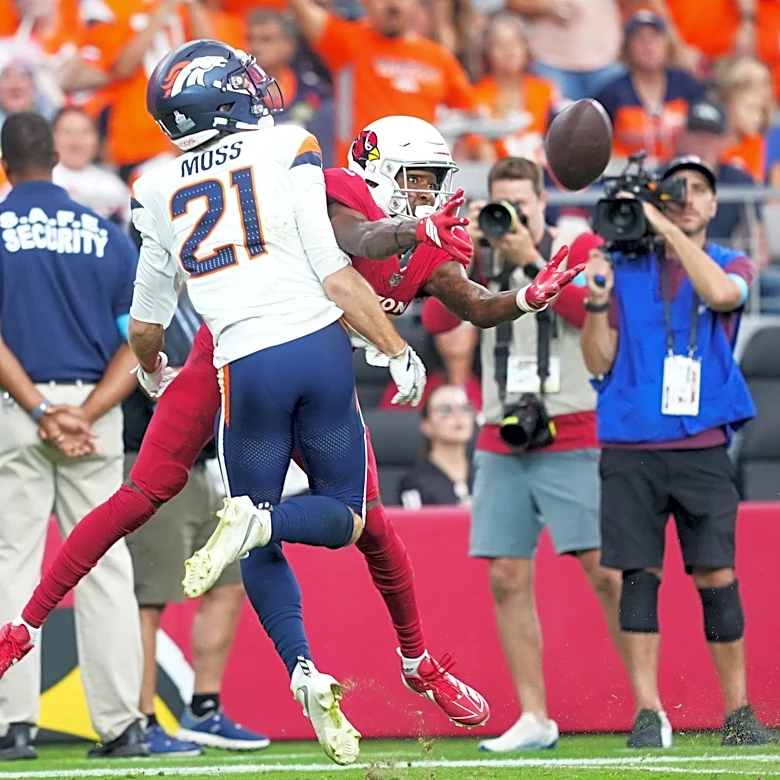
But for one game, at least – two if you include the Lions’ win over the Arizona Cardinals before the bye – the secondary proved Holmes right.
McCreary played every snap at cornerback and allowed three catches on six targets for 50 yards, with little run after the catch (nine yards). Ya-Sin (14 snaps) returned to the lineup for the first time since he was benched in Week 3 and made a potentially touchdown-saving tackle on a bubble screen. Dorsey, in his most extensive defensive action of the season (14 snaps), had a 47.9 passer rating against on a day officials mostly looked the other way at his and the secondary’s physical play.
And Branch had his first interception since Oct. 20, 2024, and brought some much-needed stability to the safety position in his return from injury.
At a minimum, the secondary seems to be trending up with room to grow once Kerby Joseph returns to the field. And with only four games left against teams that rank in the top half of the NFL in passing (the New England Patriots next month, Chicago Bears twice and a Week 18 rematch with the Packers), the Lions’ new secondary rotation might be here to stay.
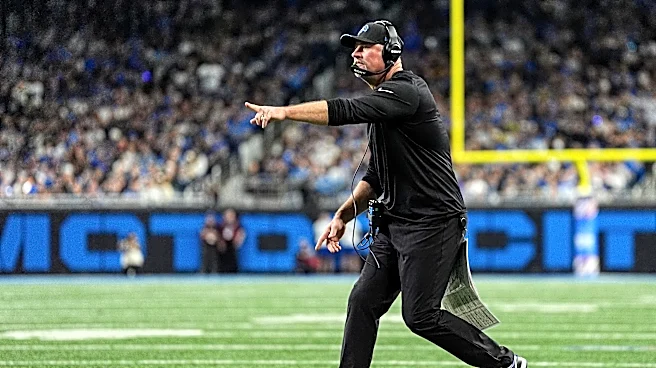
“We're going to use all those guys, just like we did today,” Lions coach Dan Campbell said. “That was the plan coming in. … They're all going to the game. We're using them on special teams, we're going to use them on defense, too. Let's roll them. And we also knew those guys would launch some of these, so let's get some fresh bodies in there if we need to. And we'll continue to do that. When guys step up and make plays, you’re going to give them more opportunities.”
Ref show?
I thought the officiating was bad Sunday, with the most egregious call being the unnecessary roughness penalty on Packers defensive tackle Devonte Wyatt in the third quarter that set up the Lions’ final touchdown.
Amon-Ra St. Brown was tackled after a 4-yard gain on second-and-11, got up to run when he didn’t hear a whistle, was wrestled to the ground by Wyatt again and inadvertently kicked umpire Terry Killens Jr. in the midsection on the play. Killens humorously − and perhaps feeling embarrassed because he got kicked to the ground − threw a penalty flag while on his back, moving the Lions from third-and-7 to first-and-10 at the 11, and they scored two plays later.
Referee Alex Moore defended the call in a pool report after the game, saying he didn’t know if there was a whistle but the play was over regardless after St. Brown was tackled the first time.
Packers safety Xavier McKinney complained about the officiating after the game, but as is always the case, that’s not what decided the outcome, and the bad whistles cut both ways.
Lions linebacker Derrick Barnes was on the wrong end of a tough unnecessary roughness penalty for hitting Packers running back MarShawn Lloyd late. Barnes hit Lloyd an instant after Lloyd had a pass sail through his hands and didn’t even use full force on the play.
Barnes said after the game he was mostly happy with how the game was officiated, but he would “probably not [do] nothing different at all” on that play.
“Everybody knows me, I’m a nice guy and out there I don’t ever want to put my team in a situation like that, especially in a critical situation like that,” Barnes said. “But I’m playing football. I mean, I was already breaking full speed. And honestly, I was going to go make a tackle and literally maybe a half a yard when he dropped the ball. I was already going full speed. And I literally pulled up. I didn’t go to the ground − he went to the ground, I didn’t go to the ground, so I don’t know how that was a personal foul, but however they see it is how they see it.”
4th-down call was correct
As I wrote in my postgame grades, I thought in the moment Dan Campbell made the right decision to try and convert the hotly debated fourth-and-1 play the Lions got stuffed on deep in their own territory against the Packers, and after hearing from two people heavily involved in their teams’ game management decisions around the NFL on Monday, I’m even more firm in my belief that was the right call now.
Analytically, most models support Campbell’s decision to go for it in that situation − in a tie game, from his own 24-yard-line, with 4:53 on the clock. As Campbell said after the game, it was highly likely the Lions would get another possession no matter the outcome of the play. And while the call would have looked (and felt) much worse had Josh Jacobs held on to that would-be touchdown three plays later, adhering to the analytics is by nature trusting the process and living with the results.
I still don’t like calling a slow-developing run play on what the NFL's tracking data shows was a fourth-and-1.75 yards. That distance and the fact it was a low-scoring game could tilt the decision the other way in some models.
But Campbell is aggressive by nature. The Lions have reaped the rewards of that approach throughout his tenure as coach, and more than luck, that’s how I saw things play out Sunday.
A look at Minnesota
Another week, another big game for the Lions, who host the NFL’s only remaining unbeaten team, the NFC North-leading Minnesota Vikings, this Sunday, Nov. 1, at Ford Field.
The Vikings have one of the best defenses and one of the worst offenses in the NFL, but did you know they’re actually scoring more points per game (20.8) than the Packers (20.6)?
Minnesota, of course, swept the season series against the Lions last year, winning games with J.J. McCarthy and Max Brosmer as their starting quarterbacks. McCarthy is in New York now winning games for the Giants, Brosmer is the Vikings’ No. 3 quarterback, and Kyler Murray is under center in Minnesota.

The quarterback most under the spotlight in this game, though, will be Jared Goff, who’s had his ups and downs against Vikings defensive coordinator Brian Flores’ blitz-happy system but has played really good football this year.
Goff led the Lions to two 31-point outings against the Vikings in 2024 – the most points Minnesota gave up all year – when the Lions edged the Vikings for the division. But Flores got his revenge last year, sacking Goff 10 times and forcing five turnovers in two games.
Goff is 4-4 against Flores-run defenses in his career, dating back to the Los Angeles Rams’ Super Bowl loss to the New England Patriots, and Lions offensive coordinator Drew Petzing is 0-1 against Flores as a play caller. Petzing’s Arizona Cardinals had 154 yards rushing in a 2024 loss to the Vikings (including 48 by his then-quarterback Murray), and a good rushing attack surely will be central to the Lions’ game plan this week.
Minnesota blitzed on a whopping 85.2% of the Indianapolis Colts’ dropbacks in its come-from-behind win Sunday and leads the league in blitz rate (57%) and pressure rate (33.8%), according to Pro Football Reference. I can’t imagine the Vikings blitz Goff nearly as much this week, but Goff will have a chance to insert himself in the MVP conversation if he has a strong game.
Dave Birkett covers the Lions for the Detroit Free Press. Contact him at dbirkett@freepress.com. Follow him on Bluesky, X and Instagram at @davebirkett.
This article originally appeared on Detroit Free Press: How Detroit Lions mixed up their secondary and shut down the Packers