
Welcome to the 2026 voter guide for Michigan's Aug. 4 primary election. The voter guide ‒ separate from the Detroit Free Press' news coverage and the Detroit Free Press Editorial Board's endorsements ‒ offers
candidates the chance to communicate with voters in their own words. We remove entries that include false or unverifiable statements, personal attacks on other candidates or foul language, but responses are otherwise unedited.
Find GOP gubernatorial candidate John James' questionnaire responses here, or visit our Voter Guide.
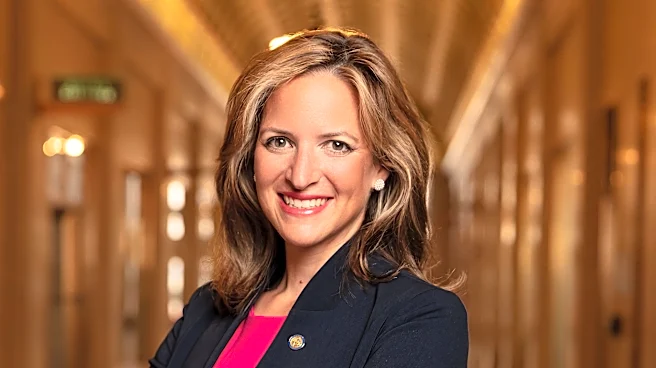
Jocelyn Benson
Candidate for governor, Democrat
Age: 48

What is your current occupation? Please share any other work experience relevant to the role you are seeking.
I have served as Michigan’s Secretary of State since 2019. In that role, I’ve taken a broken system and made it work for everyone. I improved our elections from a ranking of 31st in the country to consistently among the top five, and slashed wait times at Secretary of State branch offices from hours to 20 minutes or less. We’ve made it so you can renew your license at a grocery store kiosk or online, and launched mobile offices to bring services directly to communities across the state. My record as Secretary of State has been one of saving Michiganders time and money, and that will be my goal for all of state government when elected governor.
Do you have previous political experience? If yes, please describe.
Before serving as Michigan’s Secretary of State, I was Dean of the Wayne State University Law School. In that role, I raised funds to ensure all students could pay for their education, lowered costs by freezing tuition and expanding scholarships, and led Wayne Law to become one of the country’s leading law schools.
Michigan schools have struggled with literacy, absenteeism and uneven student outcomes. What is the first K-12 policy change you would pursue as governor, and how would you measure whether it worked?
Michigan’s governor has a responsibility to transform schools for our kids and economy. As an educator and the daughter of teachers, this is personal. I’m proud to offer not just a single proposal, but a comprehensive education plan — developed with teachers, parents, and students — to strengthen public education in Michigan. My plan will:
- Institute the Michigan Education Guarantee, ensuring our students are career or college ready by graduation;
- Raise teacher pay and increase wrap around support to ensure we are doing right by those charged with preparing our students for the jobs of tomorrow;
- Care for our youngest children by ensuring early childhood education for all;
- Fully invest in our schools with an equitable, adequate, and transparent funding model to provide every child, educator and school with the resources they need.
What changes, if any, would you make to Michigan’s tax structure? Please identify one tax you would cut, raise, expand or eliminate, and explain how you would offset the impact on the state budget.
As Michigan’s population ages, we need to make sure families can afford to stay, thrive, and take care of their aging families. As governor, I’ll work to adopt a $5,000 caregiver tax credit to alleviate the financial burden of caring for a loved one. This will ensure the people who have called Michigan home for their entire lives have the support they need from family members – and that their families have the resources they need to provide that support. Seniors are so vital, and with our senior population rising, this policy will help ensure long-term stability for families and the Michiganders they care for.I will make sure this is done in a fiscally responsible way. As Secretary of State, I transformed branch offices, cut inefficiencies, and redirected the funds freed up to make the investments we needed. I’ll take the same approach as governor to ensure this fits into a budget that works for everyone while helping more families afford to care for their loved ones.
Michigan has offered major incentives to attract business investment. What standards should companies have to meet to receive state support, and should the state claw back incentives if promised jobs or investment do not materialize?
We should welcome innovation and jobs that companies coming to our state may bring, but they will have to do right by Michiganders. Corporations don’t get to have our taxpayer dollars if they don’t deliver the jobs they promised, and we bring business to Michigan by investing in people first, not corporations. Transparency is my first priority when it comes to giving corporations any sort of subsidy, and if they receive taxpayer dollars, my administration will ensure that they create and maintain good union jobs and commit to responsible contracting standards. I’m also committed to holding corporations accountable if they try to skirt these requirements. If corporations move jobs away or fail to deliver the jobs they promised, we must hold them accountable.
Data centers strain electric utilities, water resources and have drawn broad opposition from Michigan communities. Should Michigan court data centers, and if so, what limits or requirements should Michigan place on data center development?
Data centers can only come to Michigan if they follow our rules. We should welcome innovation and jobs, but we must do so transparently, without allowing companies to harm our environment, abuse our water, or drive up energy costs. Michigan must enact clear, strict, enforceable guardrails to ensure projects only move forward if they commit to delivering well-paying union jobs without harming residents through higher utility bills or excessive water use.My plan:
Data centers must help power Michigan’s clean energy future with investment that strengthens the grid, supports affordable energy, and ensures families and small businesses aren’t burdened with rising costs.
My plan requires:
- Public hearings before project approval.
- Full transparency and disclosure — no backroom deals.
- Proof before construction that projects won’t strain natural resources or raise energy costs.
- Developers — not consumers — pay for added energy use.
- Union contracts guaranteeing good-paying jobs.
How should a Michigan governor respond when federal policy conflicts with the state’s priorities or values? Please give one example of when you would cooperate with the federal government and one example of when you would challenge it.
My job is to make government work for Michiganders – and that means working with Washington when it helps lower costs and raise wages and pushing back when they threaten our rights and freedoms or raise costs.I’ll challenge the federal government when our democracy is at stake. I stood up to President Trump when he tried to overthrow the 2020 election and when his supporters showed up outside my house demanding that I comply. And I’m continuing to stand up to his efforts to sow doubt in the integrity of our elections with his demand in April to have access to Wayne County ballots.But I’ll work with anyone on infrastructure funding that repairs our roads and bridges and creates good-paying jobs here at home. Results matter way more than politics. So the test is simple: does this make life better or worse for Michigan families? That’s the one question I’ll ask.
What role, if any, should state agencies and local law enforcement play in federal immigration enforcement? Should schools, courts, hospitals or other public institutions be treated differently?
I understand that Michiganders have legitimate concerns about border security, but masked federal agents have no place in our streets and our schools. I won’t bend the knee to Trump — I will stand up for our communities, not enable attacks on them. As governor, I’ll use every resource available to protect Michiganders’ rights, including ensuring state police don’t participate in raids and providing support for families targeted by unlawful federal overreach. Law-abiding immigrants are our neighbors, coworkers, and community members, and our institutions should not be used to do unnecessary harm to people who are just trying to thrive. I will use every tool in my toolbox to protect Michiganders against federal overreach.
What is your plan to create good-paying jobs in Michigan over the next four years? Please identify the industries you would prioritize and the specific tools you would use to grow them.
My campaign is about making Michigan the best place to get a job, build a career, and retire. Good paying jobs, growing businesses, strong farms, and vibrant communities require investments in people, infrastructure, and innovation. Investing in people means career opportunities for every Michigander through lifelong learning and expanded CTE and apprenticeships, with tax incentives for businesses that invest in workers. With infrastructure investments, we’ll build strong, connected communities and reliable energy to support job growth. And with innovation, we can make Michigan a scale-up state by modernizing LARA and supporting startups and growing companies. Building communities people want to live in helps attract talent and grow our economy. This approach supports employers, strengthens supply chains, boosts small businesses, and ensures more families can find stable, good-paying work across Michigan.
What role should the state play in making child care more available and affordable?
The state has a responsibility to ensure high-quality childcare is available and affordable for every family. As governor, I will ensure universal childcare from cradle to Pre-K with high-quality centers using science-based curriculum and competitive pay for childcare staff. We must expand pre-K for all and provide early support for children with special needs so every child meets key milestones. And I will push to extend support and services for parents of young children by expanding Rx Kids statewide and connecting families with wraparound services. When children are healthy, supported, and cared for from day one, they are better prepared to learn and succeed.
What would you do to make Michigan more attractive to young workers and families?
I’m a mom of a nine year old kid and in 10 years, he’s going to be deciding what he’s going to do with his future. I want Michigan to be the place he chooses to call home.That’s why as governor, my focus will be on making Michigan the most affordable state in the country – so our children can stay and young people from across the country can come here to work and thrive.My affordability agenda will increase housing accessibility by streamlining regulations, supporting starter homes, and holding accountable investors who drive up rents. We will lower healthcare costs through a healthcare affordability board, a caregiver tax credit, and by ending price gouging. I will lower energy costs by stopping the unfair rate hikes and modernizing our energy grid. I will also make childcare more affordable by expanding Rx Kids and removing barriers for providers.
A measure to call a state Constitutional Convention is on this year's ballot. Do you plan to vote in favor of a con-con?
No
Michigan has struggled to improve government transparency. Will you pledge to expand the Freedom of Information Act to the governor's office?
Yes
How to vote
Local clerks mailed absentee ballots to Michigan voters Sept. 24. Registered voters may cast ballots early, in person, across the state from Oct. 24 to Nov. 1 ‒ check with your local clerk for your city's early voting start date, location of early voting sites and absentee ballot dropboxes. And, of course, you can vote ‒ and register to vote ‒ in person on Nov. 3, Election Day.
This article originally appeared on Detroit Free Press: Where MI governor candidate Jocelyn Benson stands on education, taxes, more