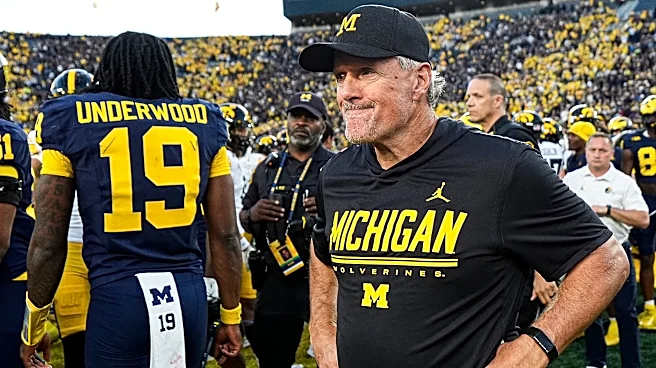

As the direction of Michigan football is called into question, so too is that of its runs.
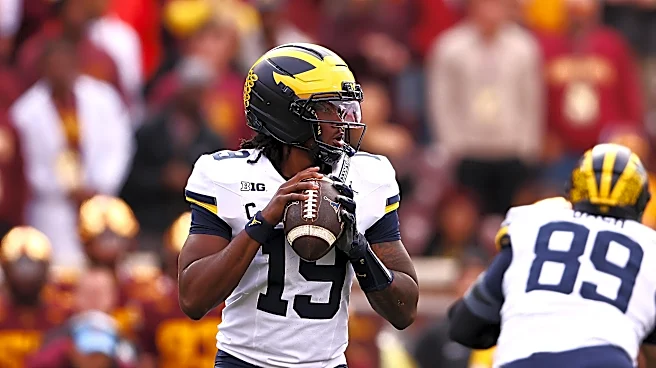
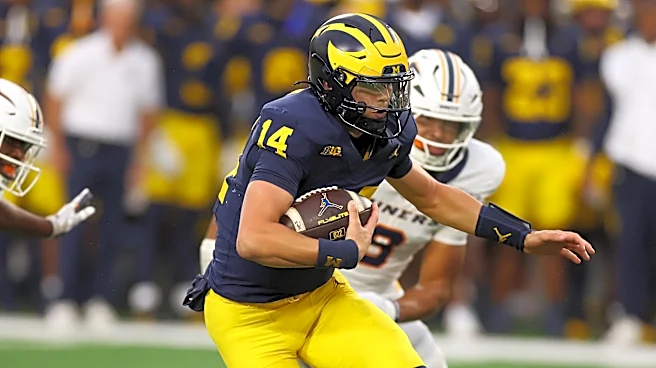
Quarterback Bryce Underwood has taken ample blame, but it's difficult to separate his troubles from the rushing game that has been among the most disappointing in the nation.
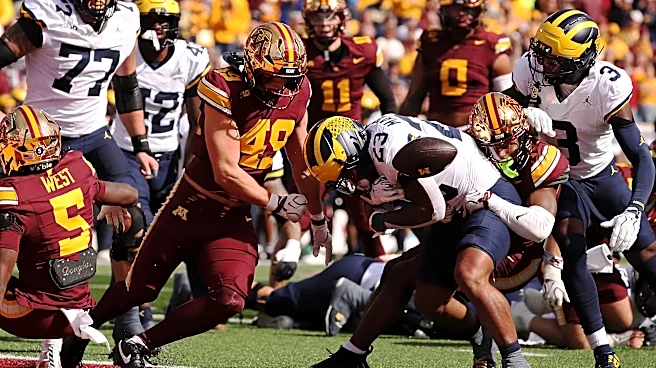
Coach Kyle Whittingham foretold the importance of the ground game this summer when he called it "a quarterback's best friend." To this point, it has served more as an enemy for Underwood. Michigan, perennially one of the top rushing teams in the country, is rushing for 135 yards per game – which ranks No. 100 out of 138 FBS-level squads – as the attack, rather than going north-south, has seemingly gone sideline-to-sideline too frequently.

says is 'most discouraging' for Michigan
The Wolverines (3-2, 0-2 Big Ten) are in the midst of a much-needed bye week after having dropped the first two games of league play for just the third time in 60 seasons (1967, 2014). Whittingham called it the "biggest challenge" he has faced in more than 40 years as a coach following U-M's 20-14 loss to Minnesota on Oct. 3, but speaking a few days later with Jon Jansen on the "Inside Michigan Football" show, it seemed he knew where the fix needs to start.
“I’ve said this for weeks and weeks, but we’re more of a downhill team and I think we got away from that just a little bit,” he said. “If we can continue to be a downhill team, let the offensive line just roll off the ball, we’re going to have the most success running the football.”
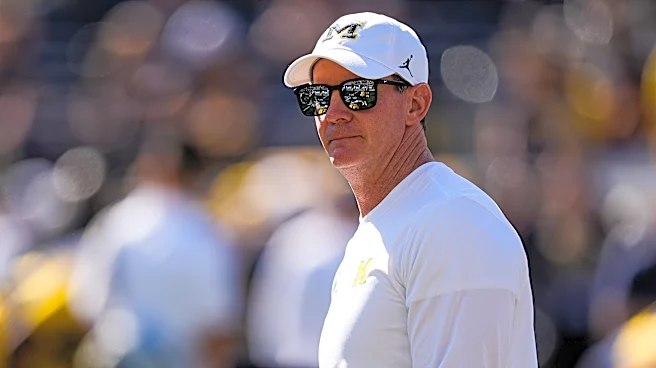
Who's to blame for the struggles? For starters, the play-calling by offensive coordinator Jason Beck has been questionable. Just last week, U-M ran with its "rhino" package (six offensive linemen on the field) on 28 of 49 (57.1%) of plays. One might think an extra blocker would give the run game a numbers advantage, but it seemed to have the opposite effect.
With fewer receivers on the field, defenses aren't having to worry about as many routes downfield, which has allowed teams to load the box with an extra defender and stymie U-M close to the line of scrimmage. Running a Wildcat package (a direct snap to the running back) has also been questionable at best.
“The positive is it gives you an added number in the run game,” Beck suggested a few weeks back, falling back on his time at Utah. “Gives you a plus-one run, so that’s always something we’re carrying. I think we led the country last year in Wildcat runs."
The problem is, it's not "a plus-one" in the run game. Instead, it takes Underwood – normally a threat as a runner – out of the play entirely and signals that the Wolverines are almost guaranteed to run the ball, allowing defenses to flood the backfield.

With all of it combined, Michigan has been virtually without explosive plays on the ground. Through five games, the Wolverines have just one rush of 20 yards or more; that came from Underwood on a 38-yard touchdown scamper against Oklahoma in Week 2. U-M has just 13 rushes of 10 yards or more, seven by Underwood, three by lead running back Jordan Marshall and one by true freshman Savion Hiter.
It's the first time this century U-M hasn't had a ball carrier have 100 yards in a single game through five weeks.
It's a stark contrast to last year's explosive attack led by Justice Haynes and Marshall; they combined for 38 carries of 10 yards or more in 13 games.
Everybody involved feels they have some responsibility for what's happened.
“Obviously if we’re not able to run the ball, that’s a direct reflection of the offensive line,” tackle Blake Frazier said Tuesday. “That’s what we’ve been working on ... “I would love [more downhill runs]. I think that’s what we have gotten away from a little bit. I know Jordan said that [earlier this year].
"This is Michigan football. You think of Michigan football, you think downhill runs."
October seems like a good time to get it going. Not only did U-M have a week to get healthy but earlier in the week, the Wolverines reportedly had an offensive meeting "airing everything out, nothing off the table" to clear things up.
Beck's scheme was wildly successful at Utah last year against Big 12 competition; the Utes finished No. 1 nationally in yards per carry (6) and No. 2 in both rushing yards per game (266.3) and rushing touchdowns (41). But clearly, through five weeks, it hasn't worked in the Big Ten.

“Offensively, they have to adjust. There’s no way forward without adjusting,” Fox's Joel Klatt recently said on "The Herd with Colin Cowherd." “They cannot go out there and try to run this exact same philosophy and this exact same scheme because it has proven to be ineffective so far for Michigan.”
U-M's goal of making the College Football Playoff is officially on life support and it feels apropos that U-M's next chance to establish the run comes against Penn State, a team the Wolverines ran the ball on 32 consecutive times in 2023 in a 24-15 win during its CFB championship run.
Tony Garcia is the Michigan beat writer for the Detroit Free Press. Email him at apgarcia@freepress.com and follow him on X at @RealTonyGarcia.
Next up: Nittany Lions
Matchup: Michigan (3-2, 0-2 Big Ten) vs. Penn State (3-2, 0-2).
Kickoff: 3:30 p.m., Saturday, Oct. 17; Michigan Stadium, Ann Arbor.
TV/radio: TV TBA; WCSX-FM (94.7).
This article originally appeared on Detroit Free Press: Michigan football's ground game 'has no way forward without adjusting'