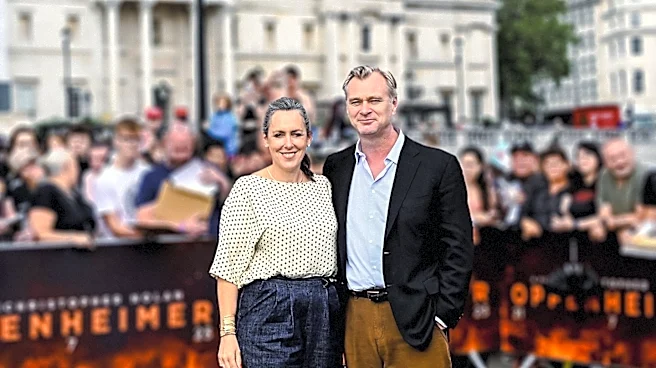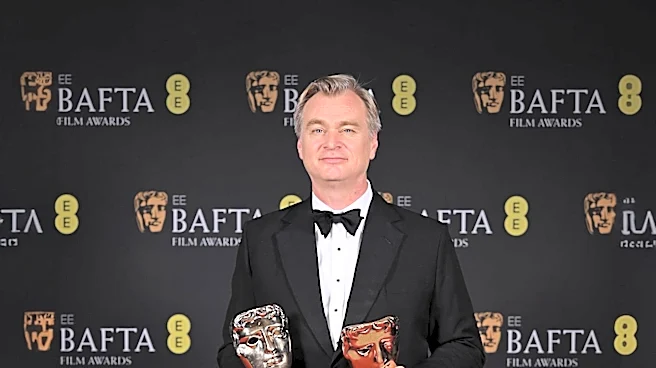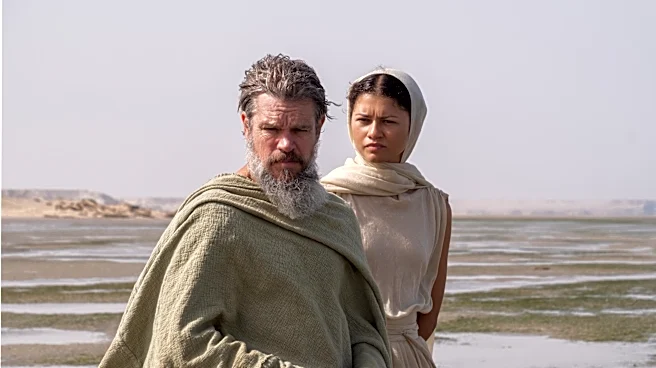

Recently, I saw Christopher Nolan's "The Odyssey" in theaters, and while I didn't drive over two hours to Grand Rapids to view it in its truest form ‒ IMAX 70mm ‒ I had a great time. It was my first Nolan film,
and I consider it to be a stellar introduction to his world of filmmaking.
Nolan shot the entirety of "The Odyssey" on high-resolution IMAX 700mm cameras, then ran over two million feet of film. The post-production process is incredibly analog, involving physical cutting, gluing and color grading in a lab before the final version of the film can be shown in theaters.
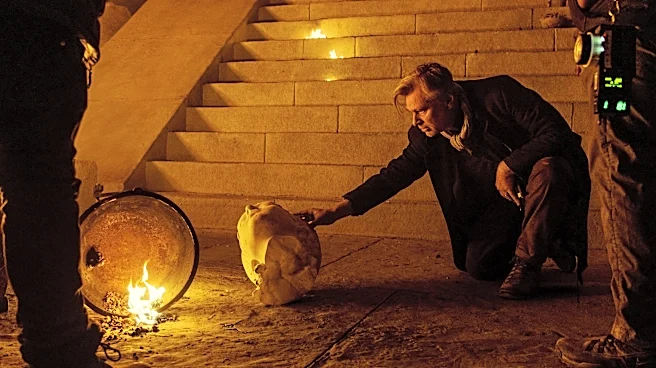
As a 19-year-old growing up with the current film industry, CGI is no stranger to me. It's been pumped into movies for as long as I can remember, and I'm rather desensitized to the idea of green screens and other things. What is a stranger to me, however, is a movie being shot with the lack thereof of CGI and rather with primarily physical effects. So color me shocked when I found out that the cyclops in "The Odyssey" was a puppet, and that they actually built a Trojan Horse.
Nolan's film has currently made $652 million worldwide, including both the international and domestic box office, and currently ranks among the top five highest-grossing Hollywood movies of 2026. Very impressive, considering it's an adaptation of a Greek poem over a millennia old.
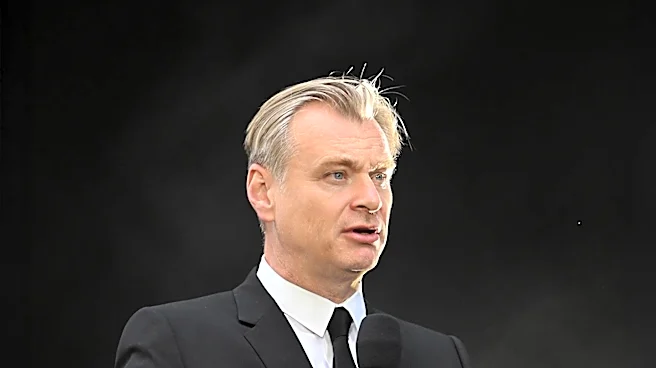
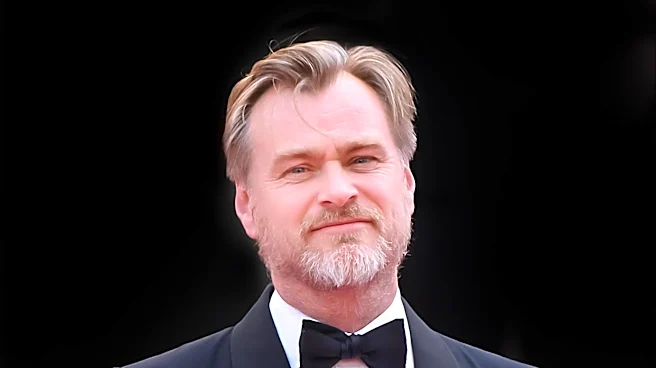
I think part of that is because of Nolan's appraisal as a director, but I also think it's because of this film's unique appeal. It's no secret that Nolan does as much filming as possible without CGI, and I think that's the kind of creativity most viewers are looking for in this day and age. At least, that's what I'm looking for, and the bombardment of special effects is often what pulls my heart out of a lot of other modern-day action-intensive films. The story can be fictional without feeling entirely inhuman.
I find the more organic way of filming and creating a huge relief as well as a testament to how intensely Nolan cares for his craft; however, others are calling it "performative" and "unnecessary."
As a society, we've clearly strayed much too far.
Art should take time
Filmmaking, directing, acting, creating ‒ these are all inherently human processes. They always have been and they should stay that way. And yet, for whatever reason, when we get wind of people preserving these practices, the first words to leave our mouths label it as some sort of act, or suggest methods and ways to shorten the process. Why? Because we're growing increasingly reliant on shortcuts and technology to do the work for us.
The convenience of inputting a prompt into AI and allowing it to spit out a "creation" of its own in a matter of seconds has made us disgustingly numb to the complex workings of the human mind. Making things, whether it be art or videos or anything along those lines, used to be appreciated for how long it took. It was a mutual understanding that to produce good things by hand would take time and effort. And now, it's almost preposterous to some that not everything can be done in a day. Rome wasn't built in a day, but I guess if they had ChatGPT, it could've been.
It's a marvel and huge win for humanity that a multi-million dollar project like "The Odyssey" has a director like Nolan, who evidently cares about the human-making of film, and sees the importance in doing so. And it's only fair that a story that's been told, written and rewritten for over 2,000 years gets that level of respect.
The careful curation of art, and the tedious manner in which it is done, is the exact reason so many relics and pieces exist years later. Because these things take so much time to make, we keep them, preserve them.

Our continued exposure to seeing life through only a digital lens has allowed for the value in physical practices to become diminished. Seeing things on your phone is not the same as seeing them in person, whether different historical landscapes or priceless pieces of art.
There's no urgency, no yearning to grasp these items and hold them before our eyes, because we only have to search them on our phones to get a glimpse. We no longer care for complexities; we want ease and shortcuts. So when others do things that stray from the ideology, we ostracize them, and critique them for stepping out of the norm.
Everything written has a story
It's no secret that our attention spans, as a collective, have been shrunken to bits, and that our patience has, too. We no longer see the significance of waiting, nor do we care for the payoff that comes after. This is a horrifying thing. Ultimately, if this continues to be our priority, physical, tangible things will be harder and harder to come by, and it will grow increasingly harder to tell what's human-made and what's not.
Books, paintings, sculptures, films ‒ we initially prioritized their maintenance because they carry value as well as meaning. The humanity in art is the exact reason why art continues to exist and is a necessity in human culture. Without it, we cannot properly catalog our history and how we've progressed through time. Everything written has a story behind it; everything painted has history. That's not something that can be digitally replicated.
We need the physical in creation. It's not performative to want to preserve the human nature of things. To make things in a way that preserves their authenticity is a way of paying homage to those that have come before us. Yes, we can advance; that's not the issue, but we shouldn't go completely off track. Making more films that both look and feel intrinsically human, like Nolan's "Odyssey," isn't the cure alone, but it's a starting point I ‒ and hopefully others ‒ can get behind.
Kyla Lawrence is a college student, and a Free Press opinion intern. Submit a letter to the editor at freep.com/letters, and we may publish it in print or online.
This article originally appeared on Detroit Free Press: I saw Nolan's 'The Odyssey.' and now I'm mourning humanity | Opinion