



If you can muddle through most of a People magazine crossword puzzle, you should do just fine on the Montreal Cognitive Assessment.
If you understand that MoCA is not an I.Q. test, you're already a step ahead of the Leader of the Free World.
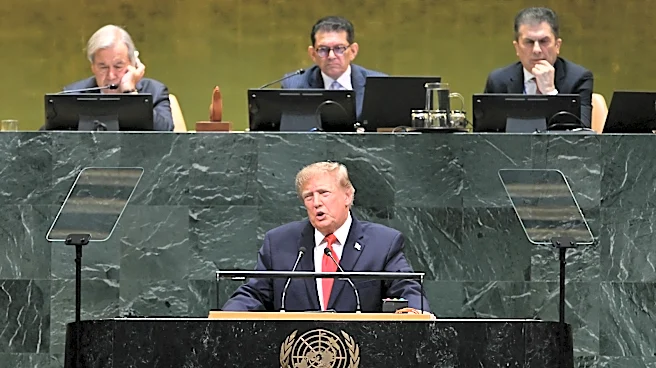
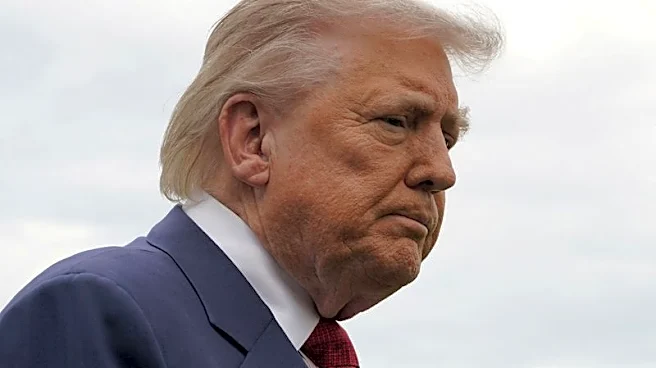
When I took the exam in mid-August, I already knew what MoCA is and isn't. President Donald Trump has taken it four times, most recently in May, after which he posted, "I scored a perfect 30 out of 30, considered ‘extreme intelligence.’ "
No. That's not what his score meant, and that's not what the test is designed for. So ahead of his next attempt, whenever that may be, I figured I'd take a whack at it myself.
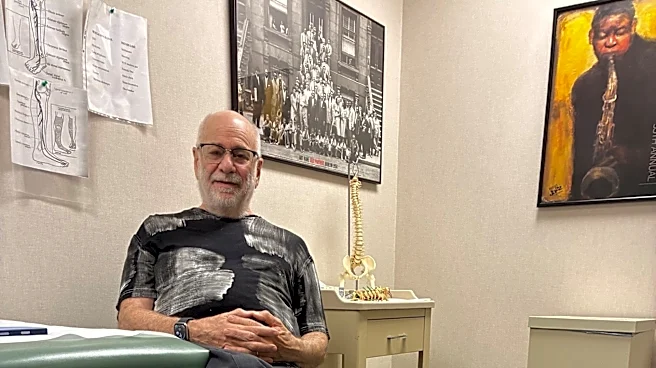
Southfield neurologist Leonard Sahn was kind enough to administer the exam and expound on its purpose,
and I can now say that I also racked up 30 points, which among other things means I knew what day it was.
I was also able to identify drawings of a horse, a tiger and a duck. Can I have the nuclear codes now, please?

Establishing a baseline
Sahn, 80, is starting to wind down his practice after half a century.
It used to be that he'd devise his own screening tools for mild cognitive impairment or early signs of dementia, which is what MoCA aims to detect. He might hand someone a map of Michigan and say, "Show me how to get to Grand Rapids."
Then, in 2005, Canadian neurologist Ziad Nasreddine introduced a quick, comprehensive assessment that has become the standard across the globe.
MoCA offers simplicity, speed and commonality, and has the added advantage of being easy to make fun of when a president declares, "One of the doctors said he’s almost never seen a perfect score. I had a, had a perfect score. I had the highest score. And that made me feel good.”
"Jimmy Kimmel Live!" host Jimmy Kimmel, for instance, aced the test and then said it was "about as difficult as the maze on the back of a box of Captain Crunch."
In fairness, at least some of it is harder than that. And, Sahn noted, it's not the first go-round that matters.
A broadside of B's
Drawing conclusions from a single test, Sahn said, is as much a misappropriation as treating MoCA like a college placement exam.
"It's more useful longitudinally," he said, meaning scores are best interpreted at intervals.
A passing grade is generally considered 26. Declining totals might suggest problems with memory or cognition.
At his practice, he said, in bright, comfortable rooms decorated with posters from the Detroit Jazz Festival, an actual diagnosis would involve a full neuropsychological workup, typically filling two six-hour sessions.
MoCA takes 10 minutes, and actually includes a clock: draw one, and set the hands to a specific hour and minute.
That's worth three points. Repeating five short nouns and then recalling them five minutes later, in any order, is worth five. The president was once so pleased with his performance there that he kept reciting five words − person, woman, man, camera, TV − even though those weren't the ones on the exam.
Multiple versions of the entire test have been copied online, so it's an easy Google, but it still seems unsporting to print more than a few questions here and potentially alter someone's results.
The test taker needs to repeat a couple of short sentences. There's a bonanza, six points, for identifying the date, month, year, day, place and city. If you know the commonality between a hammer and a screwdriver, that's helpful.
One entire minute on my test was devoted to coming up with words that start with B: bankruptcy, bombast ...
Another B-word, Joe Biden, probably wouldn't have racked up a score to boast about by the end of his term in the White House. And I realize that someday, I might be in the same boat, barge, battleship, barque, brigantine.
But for one morning, firmly upright in an office chair with my feet planted on the floor, I showed that I, too, was a stable genius.
Or stable, at least.
Reach Neal Rubin at NARubin@freepress.com.
This article originally appeared on Detroit Free Press: I took the same test as President Trump. At least I knew what it was