



There are multiple spots beachgoers should avoid this weekend as families are heading out to get in a last summer vacation before kids head back to school.
In Michigan, more than a half-dozen beaches are closed or under advisories because of high bacteria levels as of Friday, August 7, typically from wildlife, according to the Michigan Department of Environment, Great Lakes and Energy,
which provides that information via an online dashboard.County health departments routinely collect water samples for bacteria levels atbeaches across Michigan to determine whether the water is safe for swimming, according to the EGLE, and post that information online.
Need a float for a beach day? Find it at Target
To be considered safe for swimming, the E. coli
counts must be below 300 per 100 milliliters.
These Michigan beaches have bacteria advisories. Where to avoid water
These Michigan beaches are closed or under advisories in Michigan:
- Four Mile Beach on St. Marys River in Chippewa County
- Paradise Beach on Stewart Lake in Oakland County
- Independence Lake County Park in Washtenaw County
- Lake Oakland Shores in Oakland County
- Lakeview Waterfront Park on Houghton Lake in Roscommon County
- Sugden Lake at Oakridge subdivision in Oakland County
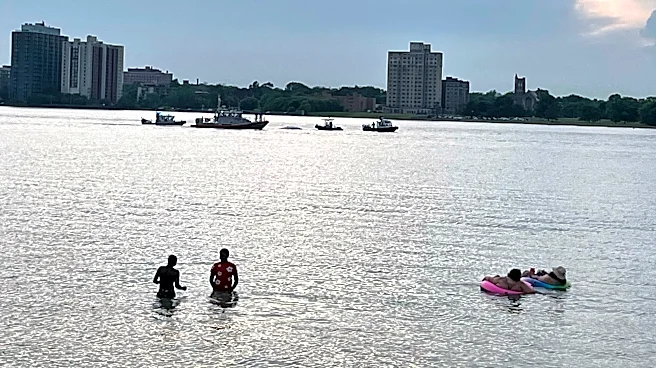
- St. Clair Shores Memorial Park Beach on Lake St. Clairin Macomb County
- Thelma Spencer Park on Carter Lake in Oakland County
- Chalmers Lake at Woodcrest Farms subdivision in Oakland County
Check the conditions at your Michigan beach
The EGLE map lists information for beaches in Michigan, including water quality sampling results, beach advisories and beach closures.
The website also includes information on combined or sanitary sewer overflows, which lead to partially treated or untreated sewage being released into rivers and streams.
Why do officials check for E. coli?
Generally, coliforms are bacteria that are not harmful and are naturally present in the environment, according to the U.S. Environmental Protection Agency. They are used as an indicator that other, potentially harmful, fecal bacteria (indicated by the E. coli species) could be present.
If any routine or repeat sample is total coliform positive or present, the system (i.e., the lab) must further analyze that sample to determine whether E. coli is present. E. coli is a more specific indicator of fecal contamination and is a potentially more harmful pathogen than other bacteria typically found in the coliform group.
Consumption of or contact with water contaminated with feces of warm-blooded animals can cause a variety of illnesses, the U.S. Geological Survey said. Minor gastrointestinal discomfort is probably the most common symptom; however, pathogens that may cause only minor sickness in some people may cause serious conditions or death in others, especially in the very young, old, or those with weakened immune systems.
What is swimmer's itch? Does E. coli cause it?
Swimmer's itch is a skin rash caused by an allergic reaction to microscopic parasites that infect some birds and mammals, according to the Centers for Disease Control and Prevention.
Swimmer's itch is often incorrectly attributed to E. coli exposure, according to the Clean Lakes Alliance.
Symptoms can include:
- Tingling, burning or itching of the skin
- Small reddish pimples
- Small blisters
What can I do about swimmer's itch?
Swimmer's itch typically clears up on its own within a week. If the itching is severe, your health care provider may recommend prescription-strength lotions or creams, the Mayo Clinic said.
Some home treatments may provide relief until it goes away:
- Apply a corticosteroid cream or an anti-itch lotion, such as those that contain calamine.
- Take an oral nonprescription antihistamine (Benadryl) or one with loratadine (Alavert, Claritin, others).
- Avoid scratching the rash.
- Cover affected areas with a clean, damp washcloth.
- Soak in a bath sprinkled with Epsom salts, baking soda or an oatmeal-based bath product (Aveeno, others).
- Make a paste of baking soda and water, and then apply it to the affected skin.
This article originally appeared on Detroit Free Press: Is your favorite Michigan beach closed for swimming? Check advisories