



It's Tuesday, Aug. 4. Election Day is once again upon us, Michigan.
Thanks to early and absentee voting, more than a million Michiganders have already cast their ballots in the statewide primary election. Still, many more will flock to the polls today to decide a slate of key primaries. For those still hoping to take part, here's a guide on what's on the ballot, how to register to vote on Election Day, and more.
Am I registered to vote in Michigan?
If you're unsure if you're already registered to vote, you can check your registration status online at michigan.gov/vote.
Can I still register to vote in Michigan on Election Day?
Yes. In Michigan, you can register to vote up until polls close on Election Day, at your local clerk's office, with proof of residency. If you're
unsure if you're already registered to vote, you can check your registration status by visiting michigan.gov/vote. There, you can also find the address of your local clerk's office.
Who is eligible to vote in Michigan?
To register to vote in Michigan, you must be:
- A U.S. citizen
- A Michigan resident for at least 30 days by the time you vote
- At least 17.5 years old, and be 18 by Election Day
- Not currently serving a jail or prison sentence
Within 14 days of an election (including on Election Day itself), you must provide proof of residency. This can include:
- Your Michigan driver’s license or state ID
- A current utility bill
- A bank statement
- A paycheck or government check
- Another government document
At your local clerk's office, you can register to vote, request and return an absentee ballot on Election Day itself.
What time do polls open in Michigan?
Polls are open from 7 a.m. until 8 p.m. local time in Michigan. If you are in line at 8 p.m., you are still permitted to vote.
Where can I find my local polling place?
You can find your polling precinct by visiting the Michigan Voter Information Center at michigan.gov/vote. There, you can enter your address and the site will provide your polling place.
On Election Day, in-person voting must take place at your assigned polling place. Bigger cities and townships typically have multiple polling locations, so make sure you arrive at the correct one.
What should I expect at the polls?
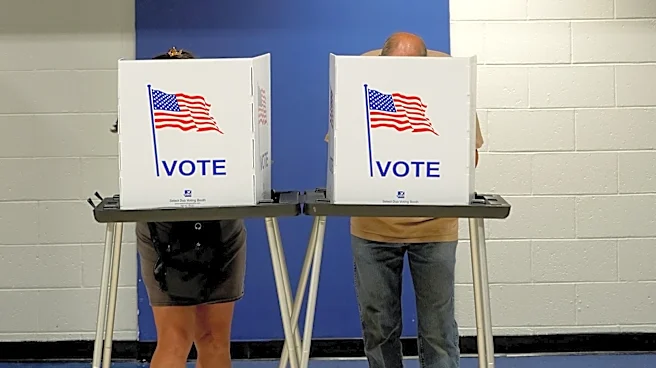
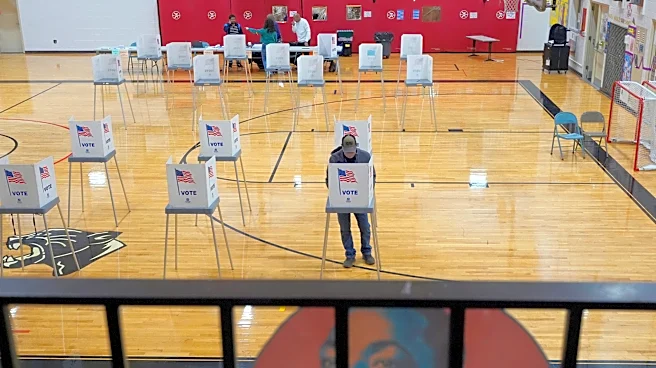
Once you arrive at the polls, you'll be asked to check in with local election workers. The election staff will provide you with a ballot or another option to vote if additional accommodation is needed.
You will be asked to provide a form of photo ID to vote.If you don't have an ID, you can still vote. You'll be asked to sign a form verifying your identity.
Here's a list of valid forms of photo ID, according to the Michigan Secretary of State's office:
- Michigan driver's license or state ID (may be expired)
- Driver's license or state ID issued by another state
- Federal, state or local government-issued photo ID
- U.S. passport
- Military photo ID
- Photo ID from an educational institution
- Tribal photo ID
I have an absentee ballot. When do I have to turn it in?
Absentee ballots must be returned by 8 p.m. on Election Day in order to be counted (there are exceptions for military and overseas voters). If you received an absentee ballot and have not yet returned it, you can still fill it out and return it on Election Day to:
- A secure dropbox in your community
- Your local clerk's office
- Your polling place
You can find secure dropbox locations for your community at michigan.gov/vote.
How do Michigan primary elections work?
Michigan has open primary elections, meaning you do not have to be a registered member of a political party to vote in that party's primaries.
But you can only vote in a single party's primary races. That means if you wanted to vote in the Democratic primary for U.S. Senate, you could only vote in other Democratic races on the ballot. You can vote in one party's primary, then vote for candidates of another party in the November general election.
Depending on where you live, there are potential non-partisan races on your ballot, as well. The party primary you choose to participate in does not affect the non-partisan section of your ballot.
What's on the ballot today in Michigan?
Here are some notable contested races voters will decide on:
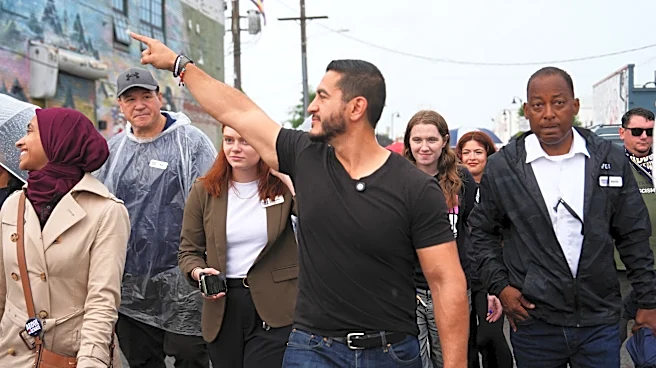
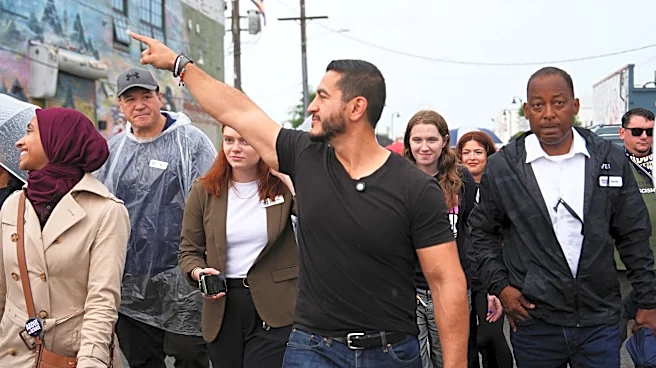
- Democratic U.S. Senate primary: U.S. Rep. Haley Stevens, D-Birmingham, and former Wayne County and Detroit health director Abdul El-Sayed are running to replace retiring Sen. Gary Peters, D-Bloomfield Township. The winner is expected to face Republican Mike Rogers, who is running unopposed in that primary. Michigan Rep. Mallory McMorrow, D-Royal Oak, also appears on the Democratic primary ballot but she dropped out of the race in July.
- Republican gubernatorial primary: U.S. Rep. John James, R-Shelby Township, and Bloomfield Hills businessman Perry Johnson, are running for the GOP nomination to replace Gov. Gretchen Whitmer, who is term-limited. Also on the ballot are former Attorney General Mike Cox and Michigan Senate Minority Leader Aric Nesbitt, R-Porter Township, but both dropped their bids for governor.
- Democratic gubernatorial primary: Secretary of State Jocelyn Benson and Genesee County Sheriff Chris Swanson are running for the party's nomination.
- Congressional primaries: All 13 of Michigan's congressional seats are up for election this year.
- State legislative races: All 110 seats in the Michigan House of Representatives and all 38 seats in the Michigan Senate. State House seats are up every two years in Michigan, while state Senate seats are up every four years.
- And other local races: You can see what's on your ballot at michigan.gov/vote and clicking "What's on the ballot."
You can reach Arpan Lobo at alobo@freepress.com
Looking for more on Michigan’s elections this year? Check out our voter guide, subscribe to our elections newsletter and always feel free to share your thoughts in a letter to the editor.
This article originally appeared on Detroit Free Press: It's Election Day! Your guide to voting in Michigan's August primary