






Cities renew themselves by building on the past. Knowing when to build new and when to preserve what’s gone before is never an easy choice in Detroit.
This summer, news broke that Detroit may get a major new hotel built just north of the Huntington Place convention center. It will add the hotel rooms Detroit’s planners say the city needs to grow its convention business, a key source of revenue and image-building.
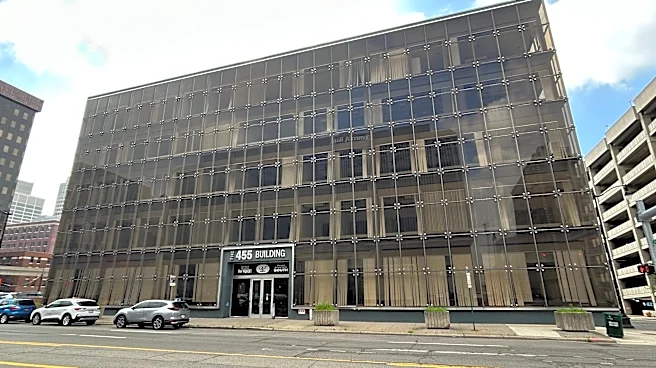
But this new hotel will require the demolition of a city block, now home to the Fort Washington building, a 1960s-era office structure, and perhaps other structures. There are no undisputed architectural gems in the hit list, and nobody seems to be raising any howls of protest.
Yet I have long wondered about the real estate industry’s willingness to clear away the past as a matter of routine when it gets in the way.
Demolition has been Detroit's default setting
Back in 1990, working for the Free Press, I covered Ford Motor Co.’s construction of Regent Court, a 670,000-square-foot Class A office structure for its workers in Dearborn. The building began to empty out during the COVID-19 pandemic, and Ford sold it to a private developer, who demolished it to make way for a new mixed-use project.

It’s astonishing to me that a major modern building barely 30 years old would be trashed because it’s deemed to no longer be useful. But, of course, it happens all the time.
The old Kmart headquarters on Big Beaver Road in Troy? Gone. And of course downtown Detroit has been blighted over the decades when numerous buildings fell to make way for surface parking lots.
I agree that sometimes demolition of the past is necessary. Detroit is infinitely better off that the old cement silos on the east riverfront gave way to the splendid new RiverWalk. And I venture to say that downtown is better off today with the new Hudson’s tower in place instead of the empty Hudson’s store that defied years of attempts to find a new use for it.
And as I’ve written here before, I’m happy to accept the loss of a couple of towers of the signature Renaissance Center, if we really get the greatly enhanced public access to the riverfront that’s promised.
But preservation of the old often provides just as many, if not more benefits, to a city than the promise of something new and shiny.
Ask harder questions before the wrecking ball arrives
The renovation of the Book Tower, after years of vacancy, has given Detroit a beautifully renewed classic on Washington Boulevard. And the renovation of so many others ‒ the Book-Cadillac Hotel, the David Whitney Building, Broderick Tower, the surviving historic mansions in Brush Park, and many more ‒ preserved gems that probably could not have been bettered by something new.
I know that historic preservation is hard, expensive and requires real dedication. Often, the preservationists pleading to save an older structure are bystanders who don’t own it, or have any money to save it. The real estate industry prefers a clean slate to build upon, and certainly we need a lot more affordable housing, retail and, yes, hotel rooms in Detroit.
What I’m looking for is a more nuanced debate in Detroit about the pros and cons of demolition versus preservation. Maybe the hotel near Huntington Place is just what Detroit needs. I just wish deals like this weren’t presented as done deals before they’ve been thoroughly debated.
There are arguments for each approach, and no easy answers. But blithely throwing away the past just because it’s in the way is no answer.
John Gallagher was a reporter and columnist for the Free Press from 1987 to 2019. He continues to do freelance writing, public speaking, and book projects. His latest book is Rust Belt Reporter: A Memoir, published by Wayne State University Press.
Submit a letter to the editor at freep.com/letters and we may publish it online or in print.
This article originally appeared on Detroit Free Press: Detroit's future can't always come at the expense of its past | Opinion