






Retail stores in downtown Detroit have been opening at a steady clip with a variety of major national and local brands drawing foot traffic for several years. Now, Addofio Addo is looking to draw some of them into the city’s neighborhoods.
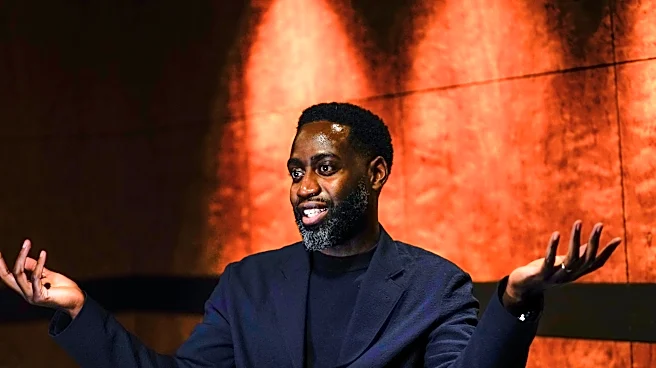
Detroit’s new director of retail attraction is three months into the role — tasked with attracting both large and small retailers beyond downtown — and conversations have already begun on what residents need and which brands he may convince to invest in the city’s neighborhoods. Mayor Mary Sheffield hired Addo, 38, in July. Addo has a background in music, marketing and business development. His most recent role as business development director with Bedrock Detroit involved bringing Rihanna's Savage X Fenty
boutique to downtown. He also worked with Apple on programming for its store opening and brought Afro Nation to Detroit.
Addo said discussions with retailers thus far have involved non-disclosure agreements and could not identify which companies have their eyes set on Detroit, but he did share what residents can expect in the next year.
“Detroiters can expect some intentionality behind retail. I think that is the biggest piece. I think you will see more of a presence really advocating and showing how Mayor (Sheffield) cares deeply about retail attraction. We lose so much to folks going to the suburbs to spend,” Addo told the Free Press. Sheffield in July said Detroiters spend about $3 billion a year on retail in suburbs.

He aims to convince businesses that “it makes the perfect sense to be in Detroit, because you’re going to get a certain level of warmth that you won’t find in most cities, here,” Addo said. “Detroit is just not like any other city, so we can’t attract retail like any other city.”
It all depends on individual neighborhood needs.
“Every city needs its downtown, but when you think of most cities, whether its Detroit, New York, Atlanta ... you really need to understand what the neighborhoods are about, too, right? Because the neighborhood actually is the fragments of DNA that makes the downtown, downtown. What am I getting here that’s unique to this place?” Addo said.
Intentional retail for Detroiters
Kamau Clark, lifelong Detroiter and eastside resident, agrees with a connecting neighborhood’s personality with its demographics.
“I think there is a need for retail that signals what neighborhoods are for. I think there’s a way to do that that preserves the history of Detroit and the people that call Detroit home without pushing them out,” Clark said. “A lot of neighborhoods need retail that doesn’t signal gentrification or doesn’t signal that Detroit isn’t for them.”
And it really depends on what neighborhoods already have, and the retail voids that have yet to be filled, Clark said.
Clark said “when we think about big box stores, I think there’s some neighborhoods that are kind of at a place where they have strong density and a lot of folks there, and they may already have things, like grocery stores that are kind of firm in the neighborhood. They might be ready for an interesting clothing store,” whereas others might need grocery stores, hardware stores or places for people to meet and gather.
Addo is looking into denser neighborhoods and examining how well they connect to public transit, while considering a "healthy retail mix" for those areas, he said.

“We don’t want to have everything that’s in New York and Chicago, and Atlanta and so forth,” Addo said. “It’s like, OK, what are we offering that’s different? We need the essential goods, like, where can I buy a toothbrush, and toothpaste and t-shirts, and things like that. But also, where can I go find some exciting brands, that like, oh my gosh, this is here in the city?”
Having grown up in Morningside, Clark said he recalls a paint shop on East Warren Avenue that closed after more than 20 years, adding that it’s “something folks don’t have in the neighborhood, a place to buy paint and things for the house.”
“I think also it’s just basic places for someone to buy clothing, whether its formal wear, something more casual, other stuff like wine stores, places that are kind of dual use,” Clark said, adding that even some neighborhoods could benefit from big box stores.
More brands and parking
Cortney Robinson, 32, grew up near 7 Mile and Livernois Avenue, and as a student at Cass Technical High School − class of 2012 − frequented downtown when the city's retail landscape looked very different.
She and her classmates would walk down Grand River Avenue, hop on the PeopleMover, snap photos and eat at Burger King and other restaurants inside the Renaissance Center. She described downtown as an area without many food options besides Bucharest Grill, and noticed a homeless population and several abandoned buildings at the time.
“There used to be a movie theater in the Renaissance Center, so we would go to the movies,” Robinson said. "We never ran into much crime or anything because we were always in bigger groups. ... We created fun because there wasn’t much down there.”
Robinson now lives in Southfield, though she frequents the city regularly and sees an opportunity to keep building downtown as a destination for fashion, utility, entertainment and dining. She'd like to see see more clothing brands, such as Cos and Mango, businesses like Dollar Tree, Five Below, Aldi, and Sephora, and restaurants like J. Alexander’s and Olga’s. And she would like to see more parking options downtown.
“Parking and traffic, I think those are the barriers that stop me from shopping downtown,” Robinson said.
Dozens of other shoppers have emailed the Free Press or weighed in online with the need or desire for many of the same businesses: movie theaters, grocery stores, big box stores such as Target, more restaurants, beauty stores, fitness clubs, a Marshalls, HomeGoods or TJ Maxx, Nordstrom, and a popular response, Uniqlo.
Not a 'rinse and repeat' city
One of the administration’s priorities is ensuring a seamless process to get a business started, Addo said. That includes understanding zoning, permitting and grant opportunities to cut down costs and any barriers holding back business owners.
Detroit has many business owners coming in from other cities and planting their roots here, he said, which is "interesting because…I think folks want to keep it as a hidden gem, because once you fall in love with Detroit, you’re like, “Man, I don’t want to tell everybody” because then its just like, will it remain the same? And I think that’s the same for retail. If you’re the one that’s going to bring these national brands here, how does this interfere with what's been going on here? And that is totally not what I’m for. I’m really about, how do we enhance some of the businesses that are here because I don't want us to be a rinse and repeat city. I want us to be a city that’s alive, I want it to thrive."
Dana Afana is the Detroit city hall reporter for the Free Press. Contact: dafana@freepress.com. Follow her: @DanaAfana.
This article originally appeared on Detroit Free Press: Not all neighborhoods equal. Detroit retail chief targets their needs