



The most important question before Michigan voters in this high-stakes election year is, arguably, who will become our state’s next attorney general.
Attorney General Dana Nessel’s office has stood between Michiganders and the Trump administration’s reckless disregard for the law, established precedent and democratic institutions, with Nessel filing or joining multistate legal challenges to protect Michiganders’ constitutional rights and retain dollars allocated to our state by the U.S. Congress and withheld via executive order or simple departmental fiat.
Nessel and the other Democratic AGs challenging President Donald Trump in court
have been overwhelmingly successful, winning outright in 40 of 56 cases as of June 29; some cases remain pending and in other instances, the federal government changed its plans when challenged.
Nessel’s calibrated legal strategy has kept $3.4 billion in federal spending in our state for medical research, public health, education, statewide library services, disaster mitigation, mental health resources for students and services for crime victims. The AG has blocked illegal tariffs and an ICE detention center planned for Romulus, and most important, is fighting to preserve crucial American values like birthright citizenship, free and fair elections, women’s and LGBTQ+ Michiganders’ rights.
Of course, the responsibilities of Michigan’s attorney general extend far beyond warding off the excesses of an erratic chief executive. The AG is the state’s top lawyer and top law enforcement official, representing Michigan in civil and criminal proceedings, protecting Michigan consumers from scammers and price gouging and intervening in regulatory matters like rate increase requests from public utilities.
These days, those functions are just table stakes for a Michigan attorney general. Our next AG must continue to be a bulwark against the Trump administration's slash-and-burn tactics – at least for the next two years.
So on Nov. 3, Michigan voters must ask: Which of the two candidates for attorney general is most likely to do this work?
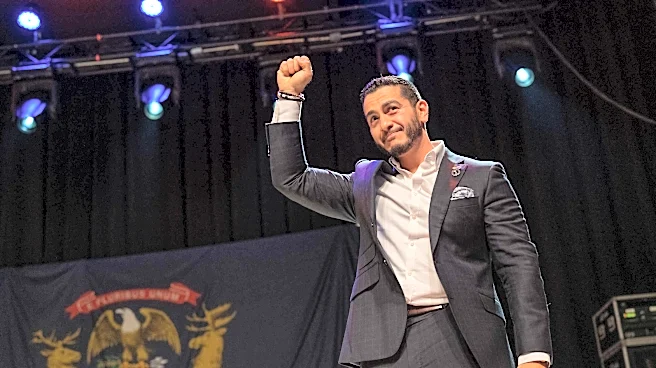
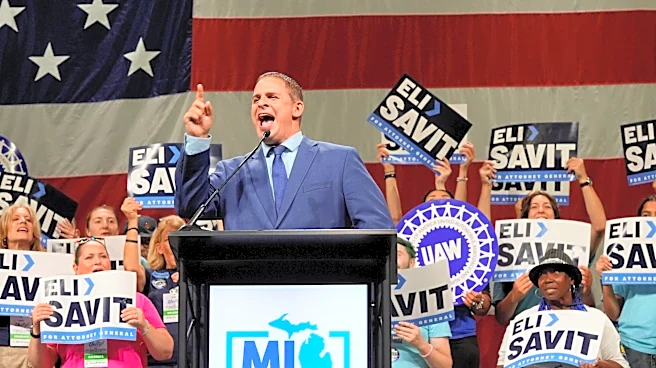
We believe it’s Washtenaw County Prosecutor ELI SAVIT.
Trump's agenda is reshaping the AG's job
Savit, 43, said he resolved to run for attorney general after reading Project 2025, a conservative re-shaping of America that the Trump administration is following like a bible.
Savit describes the document as “a legal blueprint for dismantling everything that I care about in American democracy, civil rights and voting rights and environmental and consumer protection, reproductive rights,” adding, “I knew that lawyers ... were going to be playing a really key role in standing up and preserving what we have in this country, and I started thinking, ‘OK, how can I best serve at this moment?’”
Unlike his Republican opponent, Eaton County Prosecutor Doug Lloyd, Savit has pledged to continue Nessel’s lawsuits against the Trump administration. Savit says he will protect the reproductive rights of Michigan women – after the 2022 overturn of Roe v. Wade, Savit and six other elected prosecutors joined the Whitmer administration to win an injunction of Michigan’s draconian 1931 abortion ban.
Voting rights, rights for women and LGBTQ+ Michiganders? Fundamental, Savit says.
Powerful companies won't police themselves
Beyond protecting constitutional rights, Savit says the attorney general's office must be prepared for regulatory challenges.
The Canadian energy giant Enbridge has proposed housing its aging Line 5 pipeline in a tunnel beneath the Straits of Mackinac.

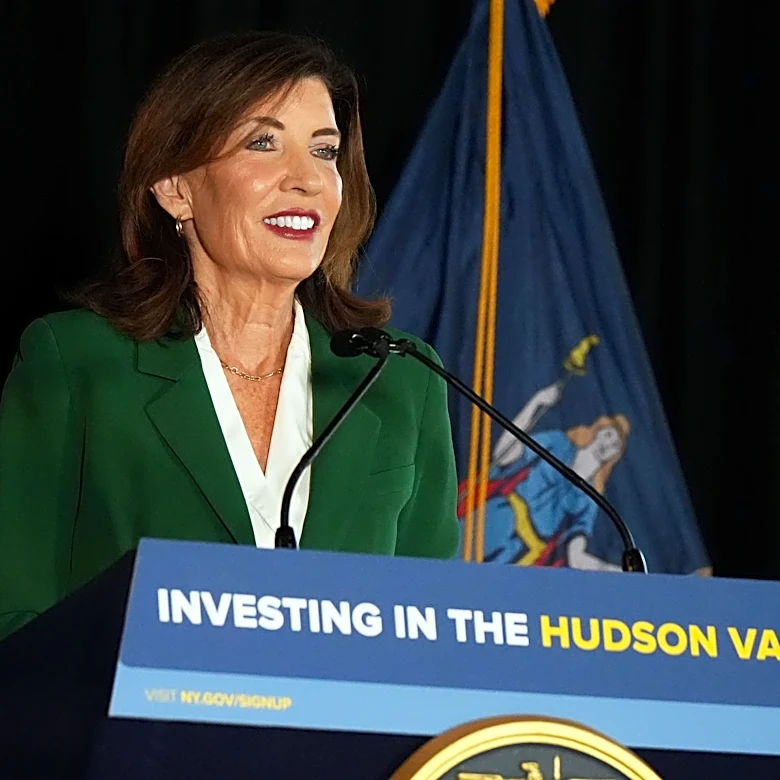
Gov. Gretchen Whitmer is reconsidering permits her administration issued for the project, calling the tunnel a “ticking time bomb” in the Great Lakes. Savit says he will continue Nessel’s lawsuits against Enbridge, and says one priority is to overturn a recent precedent in Michigan’s Western District that would bar states from regulating pipelines.
Savit also believes AI needs tighter regulation, pointing to recent stories about AI agents working outside their programming parameters. He says Michiganders shouldn’t be stuck with rising utility costs for high resource-consuming data centers. The attorney general is responsibile for challenging utility rate increase requests.
Willing to rethink old assumptions
After graduating magna cum laude from the University of Michigan Law School, Savit won clerkships in the federal courts, including for former U.S. Supreme Court Justices Sandra Day O’Connor and Ruth Bader Ginsburg, and spent five years at the City of Detroit as senior advisor and legal counsel, where he led the city’s lawsuit against the opioid industry and sued tax delinquent landlords and speculators.
He ran for prosecutor in 2020 on a suite of progressive reforms, like a pledge to end cash bail in Washtenaw, to make expungement more accessible and pursue alternatives like treatment or rehabilitation over incarceration.
Contrary to his critics’ assertions, all hell has not broken loose in Washtenaw County. Savit has taken a nuanced approach to reform, balancing safety with rehabilitation.
Cash bail – the practice of requiring a cash deposit to ensure the accused shows up for court – has been broadly misused, reformers like Savit say, and as a result, people without cash on hand may be incarcerated indefinitely, regardless of the severity of their alleged crimes, while those with money are released.
Folks stuck behind bars are more likely to lose their jobs, housing or custody of their children.
Savit says his office doesn’t object when a judge or magistrate deems a suspect too dangerous for pre-trial release, but opts not to seek a cash bond for low-level and non-violent offenses. Nearly all of them, Savit says, show up for trial.
Savit wants to expand statewide a Washtenaw County expungement program for nonviolent offenders; expungement leads to real wage growth and housing stability, he says, but is costly to pursue without assistance.
The county’s diversion programs, he says, are for people whose crimes don’t impact public safety. Among participants in the county’s pre-plea program, an outside audit found that 90% have completed all of the program’s requirements, and none have reoffended. Such programs, he says, aren’t for everyone. “But we achieve those results by selecting the right cases,” he says. “If you’ve shot a gun at somebody, I’m sorry, I’ve got nothing for you other than to try to separate you from the community.”
Legitimate concerns, but not disqualifying
Savit’s time as Washtenaw County prosecutor has not been without controversy. An ongoing federal lawsuit filed by a former employee claims the prosecutor retaliated after the employee notified the state’s Attorney Grievance Commission of a colleague’s failure to follow protocol. Savit declined to comment, citing pending litigation.
Savit has been criticized for performing outside work as an independent contractor for a public interest law firm, Dema Law, while serving as prosecutor. Savit says that as county prosecutor, he is not barred from taking outside work, and that none of the work he performed involved Michigan or Washtenaw County. Savit says he did the work in his spare time, not on the county clock, and hasn’t worked for Dema in “over a year.” In response to a Free Press Editorial Board inquiry, a spokesperson for Savit’s campaign said he earned $16,792 for that work last year, the only year for which he has totaled that income.
Behind closed doors, even some fellow Democrats have expressed discomfort with Savit’s contract work; it’s a lapse of judgment we trust he won’t have time to repeat in Lansing.
Lloyd's experience isn't enough for this moment
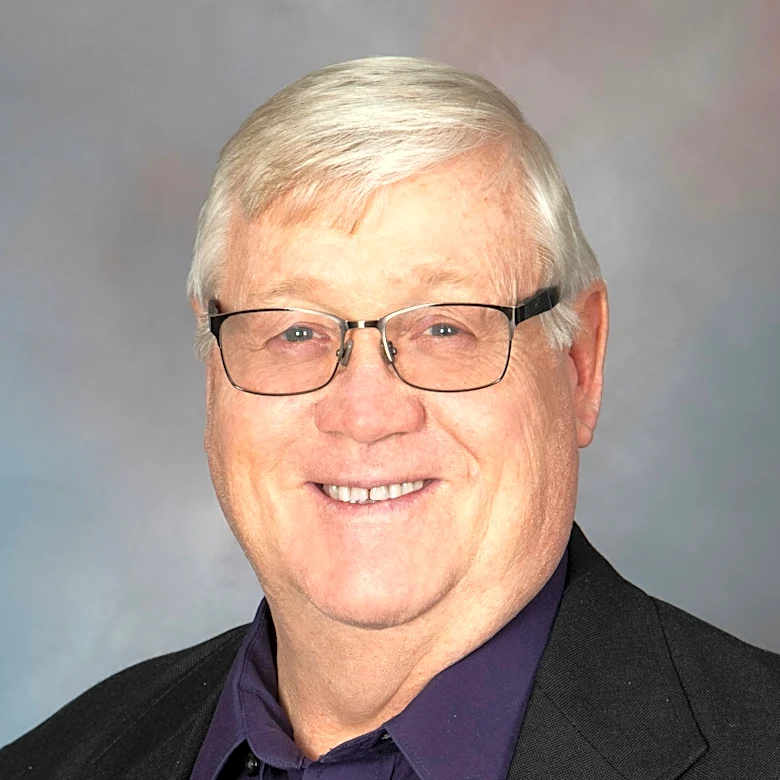
Doug Lloyd, Savit’s Republican opponent, points to his 34 years as a prosecutor as his qualification for the office, and noted that Savit lacks such experience. It’s worth noting that an AG’s time is split, and Lloyd lacks Savit’s civil resume.
Lloyd suggested that Nessel’s lawsuits are partisan, not motivated by legal principle – an odd assertion, given Nessel’s win rate in court. Lloyd also says he’d drop the AG’s lawsuits against Enbridge, saying that Michiganders are more concerned about the cost of heating oil than environmental risks of the pipeline in the Great Lakes.
In an hour-long endorsement interview with the Free Press Editorial Board, Lloyd was defensive when asked to explain a story involving a contract investigator for Eaton County who intervened in a convoluted dispute between Lloyd and a builder constructing a home for the Lloyd family in Charlevoix County, reported exclusively by the Free Press on Sept. 22.
Lloyd, the Free Press reported, did not have a written contract for the work, and his own office had previously charged the contractor with a financial crime. The prosecutor says he was bilked by the builder, and that he and his family are the victims. The contract investigator, he says, was a friend who helped out in the dispute, and wasn’t paid for that work by either himself or his office. County records, however, show the contractor twice met with a Charlevoix sheriff’s detective and identified himself as an investigator for the Eaton County Prosecutor’s Office.
When asked what he’d learned from the episode, Lloyd said he’d learned empathy for the victims of scams, but would not say it was a mistake to use an investigator who had done work for his office to intervene in a personal matter.
Lloyd has a strong record in Eaton County. But for these complex times, he’s just not the right choice to protect Michigan and Michiganders.
How to vote
Local clerks mailed absentee ballots to Michigan voters Sept. 24. Registered voters may cast ballots early, in person, across the state from Oct. 24 to Nov. 1 ‒ check with your local clerk for your city's early voting start date, location of early voting sites and absentee ballot dropboxes for absentee. And, of course, you can vote ‒ and register to vote ‒ in person on Nov. 3, Election Day.
Submit a letter to the editor at freep.com/letters, and we may publish it in print or online.
This article originally appeared on Detroit Free Press: Free Press endorsement: Eli Savit vs. Doug Lloyd for Michigan attorney general