




Ford Motor Co. remains No. 1 in loyalty for truck ownership, but Toyota is right on its tail for truck-owner loyalty — in fact, Toyota dominates the industry overall as the brand with the most customer loyalty regardless of the type of vehicle, according to the JD Power 2026 U.S. Automotive Brand Loyalty Study released Oct. 6.
Owner loyalty, it turns out, comes down to two basic principles: vehicle quality and dealership service experience, said Tyson Jominy, senior vice president of Original Equipment Manufacturer customer success at JD Power.
That means despite Ford's struggles with quality in recent years and its record-number of recalls over the past five years, owners of its pickups have remained loyal to Ford, likely due to the dealers providing
good service.

“An automaker has to build quality products and but also the dealers have to treat owners well to create loyalty," Jominy told the Detroit Free Press. "When an automaker is having more recalls, the onus shifts to the dealers to really treat them well. So having high customer service in the service lane is really critical in keeping the loyalty rate high. The Ford dealers have been doing a really great job.”
'A year of avoided chaos'
To be clear,the JD Power survey measures loyalty to a brand, not to any particular dealership, Jominy said.
The study, now in its eighth year, uses data from JD Power's Power Information Network to calculate whether a car owner purchased the same brand after trading in a vehicle for a new one. Customer loyalty is based on the percentage of car owners who choose the same brand when trading in or purchasing their next vehicle.
The study looks at five segments: premium car; premium SUV; mass market car; mass market SUV; and pickup truck — which includes midsize, light-duty full size and heavy-duty full size pickups. The study provides insights to carmakers on consumer loyalty trends to help the automakers develop their brands and form a strategy to win new customers.
The 2026 study's calculations are based on new-car transaction data from September 2025 through August 2026. It included all model years traded in for a new car. The findings show that brand loyalty has held up even amid economic volatility and affordability concerns this year.
President Donald Trump-imposed 25% tariffs on all imported vehicles and auto parts, along with economic uncertainty and high gasoline prices around the war in Iran could have caused major disruption to brand loyalty. But automakers have largely absorbed additional costs, mitigating any disruption, Jominy said.
“In many ways, this was a year of avoided chaos,” Jominy said in JD Power's report. “Many of the leading brands import top-selling models, and if tariff costs were passed through to consumers, loyalty could have suffered. Instead, loyalty is getting stronger."
He credits that strength to many automakers investing in research and development to deliver quality products consistently, and with dealers providing good service experiences.
“Most consumers return to where they got their vehicle and if they were treated well and the vehicle performed as intended, they’re likely to stay with that brand," Jominy told the Detroit Free Press.
While few brands ever reach a 60% loyalty rate, four of this year’s five highest-ranked brands are in the 60% range, and "some segments are closing in on pickup truck loyalty levels, a sector well-known for its exceptional loyalty," Jominy said.
Ford's 'good story of market coverage'
The study found that loyalty has averaged 50.2% across all nameplates and segments, up from 49% in the year-ago period. That means more than half of car owners in the market this year, who traded-in a vehicle to buy a new car, remained loyal to the brand of vehicle they traded in.
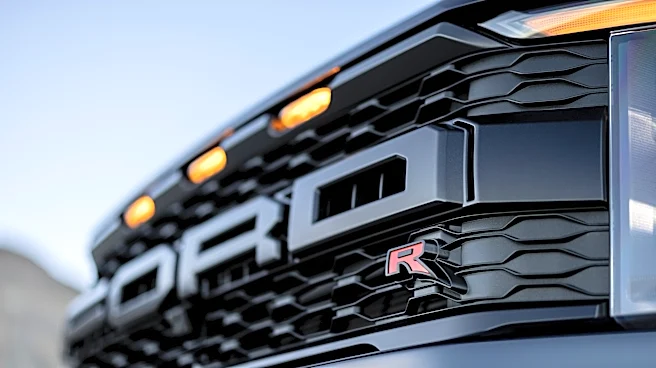
In terms of pickup trucks, Ford dominated for a fifth consecutive year, with a 66.2% loyalty rate — the highest loyalty rate in the study. Toyota ranked second in truck brand loyalty at 62.2%.
“Ford has been No. 1 in truck sales for nearly 50 years straight” with the F-Series, Jominy said. Its loyalty success lies in the range of its truck offerings and various price points.
“Ford truck is not just one model, it covers so many price points," Jominy said. "When we can compare the pricing of so many competitors to Ford, (the competitors) have one vehicle that dominates and the price point reflects that popular model. But Ford has good sellers in various areas and their price points cover all models."

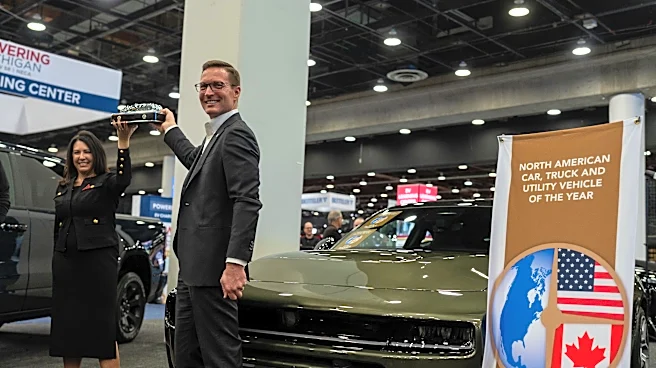
For example, a 2026 Ford Maverick starts at $28,145, but Ford's pickup prices can go well over $115,000 for some premium loaded F-150 Super Duty or Raptor trucks. The Maverick Lobo won North American Truck of the Year for 2025 and a 2026 model of it starts at $37,775.
"People can say, 'Oh everyone has a lot of trucks at different price points.' But even within each function, Ford has a number of different trims," Jominy said. "If you want a high-end F-150, there are multiple ways to get into a high-end trim. It’s a good story of market coverage.”
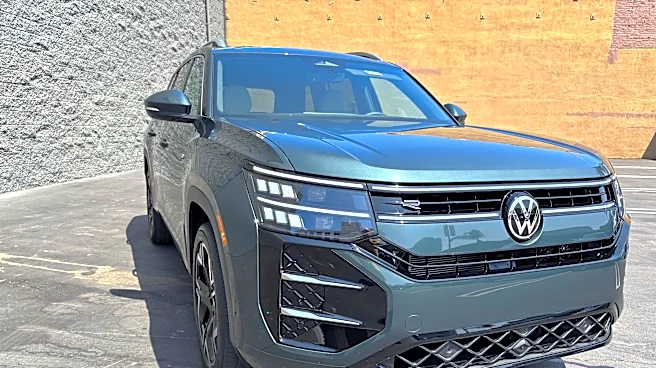
In the second place, Toyota holds the loyalty spot, which might surprise you given the popularity of the Chevrolet Silverado and Ram pickups. But Jominy credited it to the Tacoma midsize truck, which starts at $32,545.
"That has been No. 1 in its segment for so long," Jominy said. "About a decade ago, it was one of a few midsize trucks in market, so it continues to show high-levels of loyalty. They hold their values really well, too, so owners tend to return over and over again.”
Jominy said JD Power does not publicly release third or fourth place loyalty winners, so "it’s not to say Chevy doesn’t have great loyalty in truck, but we don’t report below No. 2."
Regardless, he said pickup truck owner loyalty to a brand "is everything you’ve heard. It is that strong. The winner is not a surprise. Even third or fourth place is not to say that owner loyalty in trucks is not strong."
Here are some of the other highest ranking brands per category for loyalty:
Premium car brands
- Porsche: Ranks highest among premium car brands for a fifth consecutive year, with a 61.3% loyalty rate.
- BMW (49.3%) ranks second.
Premium SUV brands
- Lexus ranks highest among premium SUV brands for a third consecutive year, with a 59.2% loyalty rate.
- BMW (56.4%) ranks second.
Mass market car brands
- Toyota ranks highest among mass market car brands for a fifth consecutive year, with a 64.8% loyalty rate.
- Honda (57.5%) ranks second.
Mass market SUV brands
- Toyota ranks highest among mass market SUV brands, with a 63.8% loyalty rate.
- Honda (63.0%) ranks second.
Toyota ranks highest across all segments for the industry. Jominy declined to to say which automaker brand came in second across the industry, wanting to keep the focus on the study's design, which is to study loyalty across vehicle segments.
But he said, "Between Subaru, Honda and Toyota, they are the only three with over a 60% loyalty ranking for the past five years and no one else touches that on a brand level."
How to win loyalty
It's a feat he admires because Jominy said even if an automaker has a vehicle model that excels in quality and design, only about a quarter of those customers will buy that model again.
Some may stay with the brand, but move to a different model that fits their evolving lifestyle needs. In other words, as a single guy you might have loved your Corvette five years ago, but after getting married and having a child, you might need to trade that in for an Equinox SUV.
So carmakers must adapt their lineup continuously and commit to years and billions of dollars of research and development to maintain strong customer loyalty, Jominy said.
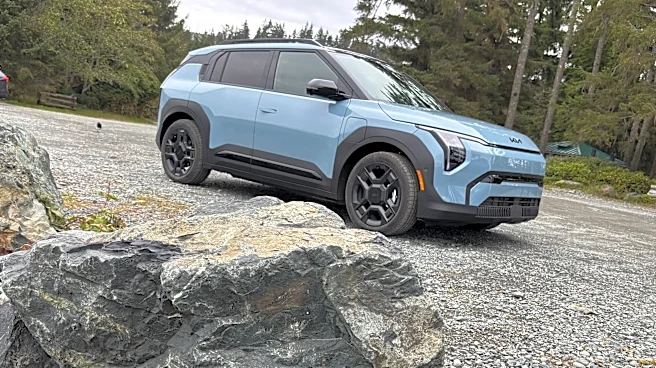
"So it’s not easy to do, but it is possible," Jominy said. "We do see brands like Kia, that in a year or two we’re going to be talking about Kia in one of these tables. It takes a lot of time and commitment to product development.”
But what it results in is customers staying even if the car payment goes up by $150 or $200 a month, he said.
"Toyota has had such little inventory over the past year, particularly for their top selling models like RAV-4," Jominy said. He noted that an industry joke is that Toyota has hours of supply of RAV-4's on the ground versus the industry standard of a 60-day supply.
"For most of the year it is a 10-day supply for the RAV-4, that’s almost as fast as it comes off the truck," Jominy said. "Despite that, their owner is so loyal that if their vehicle is not there, they are not participating in the market. They will wait rather than take a substitute brand."
The reason for that kind of loyalty, he said, is because owning a Toyota is "a painless ownership experience."
"Quality is high," Jominy said. "One thing we saw with Lexus, when those owners go to the dealership for a quality issue, it is fixed right the first time. It’s one and done."
Porsche and BMW 'warned us'
Porsche and BMW told consumers what to expect with their cars in their old slogans: Porsche with, "There is no substitute," and BMW with, "The Ultimate Driving Machine," Jominy said.
"So they warned us," Jominy said, explaining why they both have high-owner loyalty in their segments.
He noted that Porsche is a vehicle designed for the consumer, which is why so many Porsche owners love their cars and return to the brand. Plus, there’s a lot of status in owning a 911 sports car.

"In its space you really don’t have a lot of competing models … perhaps a high-end Corvette," Jominy said. "So as you own it, you’re enjoying it, the vehicles are spectacular and well designed. So it’s really hard to sample anything else or step out of the brand. Others might have higher lease payments, because the residual values are lower or they are lower quality vehicles.”
As for BMW, it is considered aspirational "even as it is attainable to many consumers," Jominy said. He noted that many MBA graduates want a BMW as their first car. BMW models also cover a lot of segments.
"Kind of like what Ford has with trucks, BMW also has a lot of scale," Jominy said. "They are in 97% of premium segments — you can get one from $40,000 up to the high $100,000s. You can cover every part of the buying price tiers. So with a brand like BMW, once you get someone in the brand and they’ve had some success in their life, you can keep them in the brand because there is some kind of car in every person."
So how does a carmaker steal a customer from a brand they are loyal to? A hot new designed product usually can do it, but it's a short game.
“You can attract consumers with a shiny new vehicle that kicks a lot of butt, but that’s different than loyalty," Jominy said. "It’s once they get in it and want to stay with you, that’s the trick. Keeping them is the delicate balancing act we’re talking about."
Jamie L. LaReau is the senior autos writer at USA TODAY Co. who covers Ford Motor Co. for the Detroit Free Press. Contact Jamie at jlareau@freepress.com. Follow her on Twitter @jlareauan. To sign up for our autos newsletter. Become a subscriber.
This article originally appeared on Detroit Free Press: When it comes to truck loyalty you'll guess the leader, but not No. 2