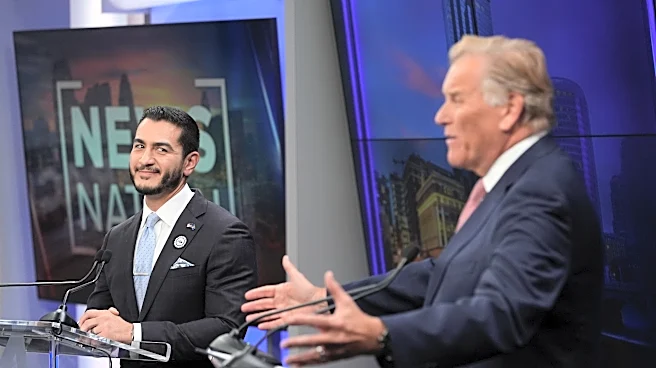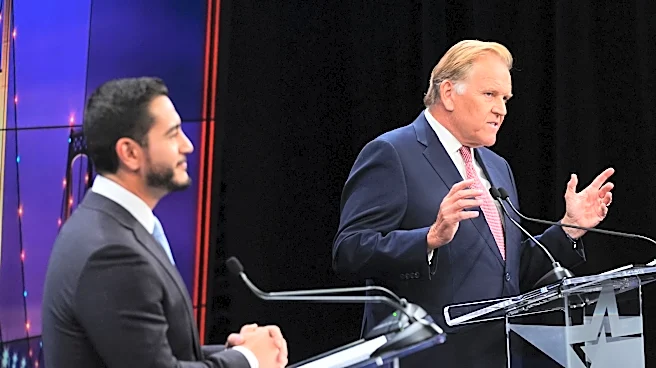

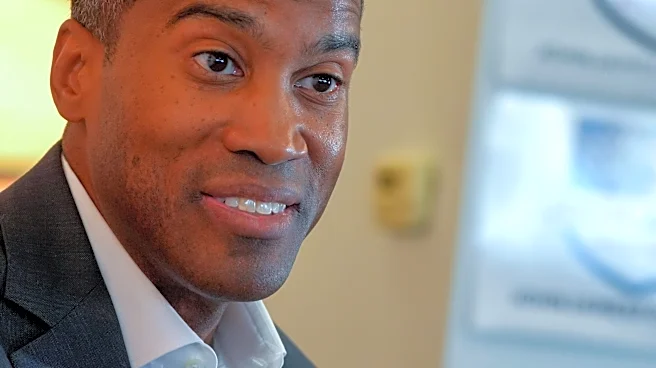

With three weeks to go until the Nov. 3 election, Democratic nominee Abdul El-Sayed continues to have a clear, if narrow, advantage in the race for Michigan's open U.S. Senate seat.
On Monday, Oct. 12,the RealClearPolling.com average of polls
had El-Sayed, the former Wayne County and Detroit health director from Ann Arbor, up 48.1%-45% over Republican former U.S. Rep. Mike Rogers of White Lake Township.As always, polling can be a snapshot of a race that can theoretically change from day to day. Or it can be wrong, even if, statistically speaking, good quality polls are expected to be reasonably accurate most of the time − though that may not necessarily predict the winner in a close poll or polling average.
That 3.1-percentage-point margin for
El-Sayed isn't necessarily decisive: It's squarely in the range of the plus or minus 3- to 5-percentage-point margin of error most political polls come with. Most of the polls released since the end of September have also hadEl-Sayed up by 1 or 2 percentage points.
So Rogers and the Republicans can legitimately argue that there's a possibility that, even if the polls are accurate, he's the one really ahead and El-Sayed might be the one close behind.
While that's a possibility, however, it appears to be an increasingly remote one with each passing week.
The RealClearPolling.com average of polls includes 12 polls done in Michigan since Sept. 15, for instance. El-Sayed has led 11 of them,one by as high as 7 percentage points; Rogers has led none, his best showing being one that had the race tied.
There also haven't been any individual pollsters who have released more than one survey in that time that might, using their own methodologies, show a clear movement for or against Rogers. And while averaging out the results of polls provides an idea about the perceived state of the race, comparing the results of one good quality poll with another done somewhat differently doesn't provide much help in determining if one or the other is more accurate (until, of course, after the actual voting takes place).
In other words, there's a lot of data pointing in one direction favoring El-Sayed, at least at this point.
As always, however, it's possible the polls could be wrong, or somehow underrepresenting Republican turnout or demographic blocs that might be more likely to favor Rogers over El-Sayed. (It's also possible, of course, that El-Sayed's support could be underrepresented and indications of disillusionment and disengagement among Republican voters could put him even further ahead.)
With three weeks to go, it's also possible that events in the campaign or on the world stage could shift the polling narrative as undecided voters get involved. But with absentee voting already underway, there are questions about how much that might change, as well.
Contact Todd Spangler: tspangler@freepress.com. Follow him on Twitter @tsspangler.
This article originally appeared on Detroit Free Press: Polls show Abdul El-Sayed with clear but narrow lead in US Senate race