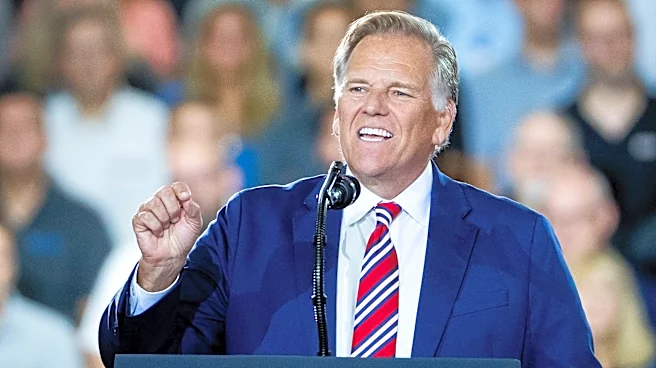

The storyline that has emerged in the last couple of weeks of national polling and in Michigan's closely watched U.S. Senate race is that, with Democrats ascendant, Republican nominee Mike Rogers' chances
of beating Abdul El-Sayed are declining, perhaps precipitously.
As with any story worth telling, though, there can always be a surprise.
Rogers, a former GOP congressman from White Lake, has cause for concern, trailing by 3 percentage points in the RealClearPolling.com average of polls with five weeks to go until the Nov. 3 election and most of the recent polls showing El-Sayed extending his lead.
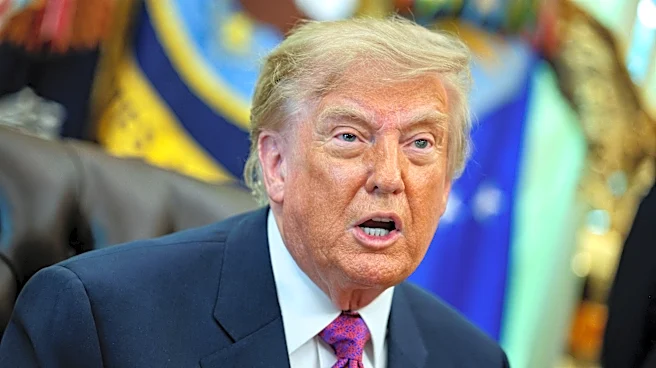
And the headwinds he and other Republicans face are clear enough: Inflation remains high. Gasoline and diesel prices are up significantly due to an unpopular war started by President Donald Trump, whose own popularity is at or near record lows. National generic ballot polls, which ask those surveyed which party they would support in Congress if the election were held now,have shown Democratic support ahead and growing.

Then there's the historical trends — the party in power, right now the Republicans, tends to lose seats in midterm elections. Michigan's not friendly ground to Republican U.S. Senate candidates anyway, having not elected one since Spencer Abraham in 1994, which was a wave year for the GOP.
But it's not a fait accompli. In Michigan at this point in the presidential race in 2016, Hillary Clinton was favored in the polling average to beat Donald Trump by 5 points and no Republican presidential nominee had won the state since George H.W. Bush in 1988. Trump won it in 2016 by two-tenths of a percentage point, shocking most observers, but not all.
"I think Michigan is competitive and will be until Election Day," said U.S. Rep. Debbie Dingell, D-Ann Arbor, who warned that Michigan was still very much in play in 2016. "I'd rather be in our position than in their position (this year).
"But Republicans are going to pour a ton of money into this race… Everyone needs to know their votes matter."
Rogers has a few things going for him that could help him win this race, which remains perhaps the GOP's best chance in the nation to flip a Democratic seat in the Senate and keep that party from potentially regaining a majority.
Two years ago, he came within a hair's breadth — or in that case, 19,006 votes, or three-tenths of a percentage point — of winning a Senate seat, losing to then-U.S. Rep. Elissa Slotkin, but also giving his campaign confidence it could do even better this time.
"Last cycle, we got more votes than any statewide Republican (Senate) candidate in Michigan history. Now, it’s just a matter of turning those voters out," Rogers told the Free Press.
But it's not just that he ran an inarguably strong effort in 2024 that could lift Rogers and change the storyline, this time. Here's a rundown of what some of those factors and opportunities are or might be.
The polls could be wrong (aka will younger voters turn out?)
This is a gimme, but it's legitimate. And we don't need to look as far back as 2016 to give it some credence. In 2024, in Michigan, the polling average in the presidential race had Democratic Vice President Kamala Harris slightly ahead of Trump, who was trying to reclaim the White House after losing to Joe Biden in 2020. Trump won by 1.5 points. (And that's not a polling error, given that most polls have a margin of error of plus or minus 3-5 percentage points.)
Perhaps more significantly, in the Aug. 4 Democratic primary, the polling average had El-Sayed ahead of U.S. Rep. Haley Stevens of Birmingham by 10 percentage points. He ended up winning by 1.
Rogers joked with the Free Press in a recent interview that polling has gotten to be so disconnected to the results that his new rule is: "If I'm winning, I believe it."

But there is a real concern about the accuracy of Michigan polls in this race regarding the makeup of the electorate, specifically as to how many younger voters — who tend to be more supportive of El-Sayed — are represented in surveys compared to previous election results, and compared to older voters.
A recent poll by Suffolk University in Boston had El-Sayed ahead of Rogers 47%-40%, the largest margin in the race anyone has projected to date. That poll, however, had 23% of those surveyed age 18-34, when that bloc hasn't reached 19% in any midterm election in Michigan in the last 20 years, per data provided by Mark Grebner at Practical Political Data in Lansing and crunched by the Free Press. That poll also appeared to underestimate the participation of voters age 65 and up, which hasn't fallen below 30% in the last three midterms (and with whom Rogers tends to do better, if not win outright).
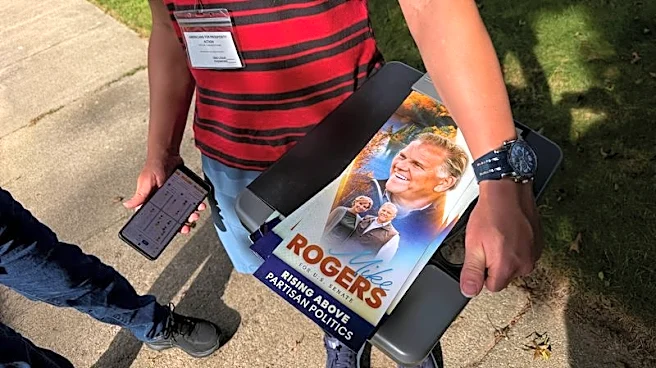
"I think that the older voters are definitely going to be the heavier influence in this election, no doubt in my mind," said Rogers, who, having not faced a competitive primary instead spent months knocking on doors and marching in parades up and down the state, hoping to add to what was already a more visible profile after his narrow loss to Slotkin two years ago. "They're gambling that they're going to have a (huge) turnout of the youth vote."
The case for the standard-issue senator with money to burn
Rogers is a staunchly conservative Republican, opposed to abortion rights, pro-business, and has a history of supporting American military intervention abroad. And he and his allies have been trying to make the case, through copious campaign appearances and political ads that he's the safer choice, claiming that El-Sayed is too close to the nation's enemies, sympathetic to terrorists, supportive of socialist policies, willing to defund the police; that El-Sayed is untested, unknown.
"His rhetoric is dangerous," Rogers said. "He's just way too extreme."
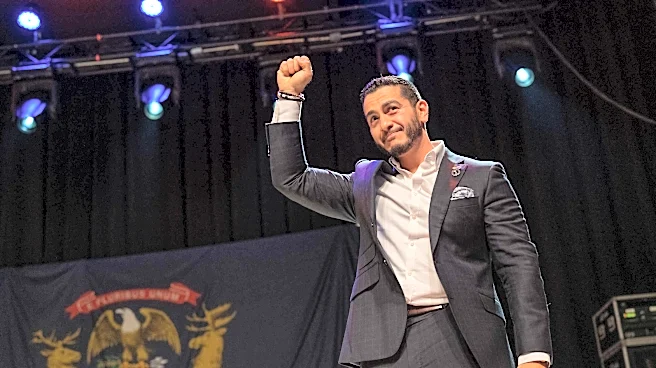
Much of this has been unpacked before: El-Sayed himself is unquestionably a progressive firebrand Democrat in the mold of Sen. Bernie Sanders of Vermont; having called for the elimination of Immigration and Custom Enforcement (with its core tasks being transferred to other agencies); supporting a single government-run health insurance plan for all Americans (meaning universal access, though other people would lose the insurance they currently have and raising questions about how it would be paid for); having questioned funding for police (though he has rescinded much of that position); and opposing military intervention in the Middle East, unrestricted funding for Israel and corporate hegemony over U.S. policy. (He rejects the socialist tag, saying he's a capitalist, but also a realist.)
El-Sayed has been a harsh critic of the Netanyahu government's practices in Israel and campaigned with Hasan Piker, an Internet influencer who himself has made controversial remarks he has since rescinded about U.S. policy leading to the 9/11 attacks (and which El-Sayed called "dumb"), as well as criticisms of Israel that some considered antisemitic (a characterization Piker denies). Some of El-Sayed's family membershave voiced sympathy to the effects of Israeli counterattacks against Hamas in Gaza, though claims leveled at him for it by Trump were misleading, lacked context or were wrong. And El-Sayed himself has denounced all political violence, military spending abroad (except in cases like that of Ukraine) and antisemitism and Islamophobia.

El-Sayed is electric, but he is not your standard-issue U.S. senator from Michigan, a group that has tended to come across as more of a mold: no-nonsense legislators, strong campaigners, passable speakers, behind-the-scenes operatives, their expertise and contacts culled in the lower chamber.
El-Sayed, a former Wayne County and Detroit health director, has never been elected to public office. Rogers, on the other hand, has most of those qualifications, though he hasn't served in the House since his 2001-2015 stint, when he became chairman of the House Select Committee on Intelligence.
Rogers also was an FBI agent and served in the state Senate. El-Sayed and Democrats can and do chide Rogers for his ties to businesses, his support for pharmaceutical companies and his having lived in Florida. But Rogers can legitimately claim he helped pass prescription drug coverage for Medicarerecipients (though he voted against letting it negotiate drug prices) and helped create Michigan's higher education savings plan.
Democrats have largely coalesced around El-Sayed (who already had the UAW in his corner) in recent weeks. But Rogers can also point to support from law enforcement and business groups, including the Michigan Chamber of Commerce and the Detroit Regional Chamber, which routinely endorses Democrats and notably did not endorse either Rogers or Slotkin two years ago.
In a state as connected to manufacturing as Michigan is, those endorsements could matter.
Appealing to Jewish Democrats, Black voters and others
So could be the question of where Jewish Democrats land. Some have made clear they'll bolt to Rogers; others continue to urge El-Sayed to voice support for Jewish self-determination in Israel while leaving their political preference in doubt. Others are backing El-Sayed, some as a partisan political issue.
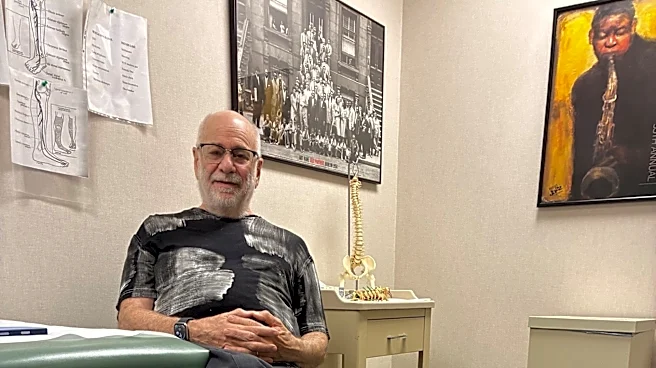
A report from Brandeis University five years ago, estimated there were about 105,000 Jewish adults in Michigan, about 60% of whom identified as Democrats. Harvey Bronstein, a retired Oakland Community College professor active in Democratic politics and in the Jewish community, guessed as many as half of Jewish Democrats might vote for Rogers.
According to Rogers' campaign, he's engaging in significant outreach with Jewish Democrats, Blacks (who split over El-Sayed's candidacy in the primary) and other constituencies that may lean more Democratic in most years, but who he says are doubtful about supporting El-Sayed.
"Abdul is really extreme," Rogers said. "I've had opportunities now to get into these communities, to have conversations in these communities I never would have had except for Abdul's extreme positions, his rhetoric... That's been a huge opportunity for us."
Then — though Rogers didn't specifically mention this as an advantage — there's El-Sayed's name, his Muslim faith and his Egyptian heritage (he was born in Michigan). As the Free Press has reported, bias is a factor in this and other political races.
Put that together with the funding advantage Rogers and his allies appear to have — Rogers trailed El-Sayed in terms of overall fundraising as of the middle of Julybut had twice as much cash on hand at the time and Republican-aligned groups were set to spend another $49 million on the race compared to about half that for Democrats as of this week — and it gives Rogers something to work with.
Though that El-Sayed is too extreme argument cuts both ways.
There has been a noted shift away from the standard-issue politicians of the past in both parties, where partisan convention has been traded for unorthodox positioning and rhetorical bombast: El-Sayed began his primary campaign asking, "Where is the fight?" And just look at Trump's success.
And Andrea Bitely, founder and principal of Bitely Communications in Lansing who worked previously for former Detroit Mayor Mike Duggan on his independent gubernatorial run and for Republican former state Attorney General Bill Schuette, thinks the negative tone is "getting to the point where it’s starting to look desperate on the part of the Rogers campaign."
"It's their only play" though, she acknowledged.
“We’re pitching a big tent that welcomes Michiganders of all backgrounds and walks of life," said Rogers. "Democrats for Mike Rogers has been such a huge success, we had to order new yard signs! Michiganders are worried about how extreme Abdul is ... They know that we’re focused on solutions, not just slogans.”
Distancing himself from President Trump
Rogers owes this second bite at the political apple in Michigan to Trump, who endorsed Rogers in 2024 against Slotkin and again in this year's race. The moves were a bit of a surprise to some politicos given that Rogers, a regular contributor on CNN, criticized Trump's efforts to overturn the results of the 2020 election.
Since then, however, Rogers has defended pretty much every suggestion Trump has made, from tariffs that as a free-trading Michigan congressman seemed incongruous to his previous positions, to delaying the opening of the Gordie Howe International Bridge (though he was among the first to announce the deal to open the bridge was reached and never cast doubt on its eventual opening). And he defended Trump's war with Iran.
Until last week.
"Michigan families are struggling with the price of everyday life," Rogers said in an ad on Sept. 21, as El-Sayed was preparing to welcome former Vice President (and former Democratic presidential nominee) Kamala Harris into Detroit to campaign with him. "Groceries cost too much. We have to bring prices down. The war with Iran needs to end and end quickly."

It was a refrain taken up by Republican candidates around the Midwest and one El-Sayed and Democrats characterized as a disingenuous flip-flop, an 11th hour attempt to save themselves, especially as El-Sayed hammers Rogers on the campaign trail over the war and its effect on prices.
To be sure, Trump has shown no inclination to scale back the war or his rhetoric. And maybe the effort by Rogers is too little, too late; voters aren't likely to let anyone off the hook for gas and diesel prices until they start to come down significantly, if then. But splitting with an unpopular president might be worth a try: just ask former Vice President Harris after her failed 2024 presidential run.
Problem is, as with Harris, it's hard to go back on positions you've already supported, especially in recent memory, and get voters to believe you. Rogers, when speaking to the Free Press, made clear that he has never been and would never be for any trade policy that hurts Michigan, but believes Trump's import levies have improved conditions for manufacturing in the state. (He points to General Motors moving some production from Mexico back into the U.S., including to Orion Assembly in Michigan, as an example.)
It also sounds as though the plan is to argue that El-Sayed supports the same Democratic initiatives that led to inflation when Biden was president (though, in fact much of that inflation was a worldwide trend after the COVID-19 shutdowns and was declining before Biden left office).
"All of the things Republicans have been doing are trying to get those prices down permanently," Rogers said.
That seems to include the war.
"The president came in, he did a lot of deregulation. He did a lot of increase in American energy (production). We've got to make sure that we are less sensitive to world events by producing American energy," Rogers said. "We haven't gotten there yet."
He said he wasn't ready, at least at this point, to offer any other break with the president. But he says the state needs someone who can walk into the Oval Office and say, "Mr. President, this isn't working for Michigan."
Rogers has a little over five weeks until the election, but less than that to change the prevailing narrative. Debates set for Oct. 8 and Oct. 21 could help, though it would help his cause if the mood and the polls begin to swing within a week or two.
Still, it's unlikely that El-Sayed will win by the 7 points he predicted last spring. Right now, Rogers is behind by about the margin of error of most polls. The percentage of voters of both parties who vote straight-ticket ballots has been up in recent years, but if that were to shift for whatever reason it could provide another opportunity for Rogers; the same is true if Blacks in Detroit don't show up as strongly as they might for El-Sayed, as happened in the primary, when Stevens beat him nearly 2-to-1, and his efforts to court that vote since fall flat. And then there's that youth vote and whether it materializes.
Of course, Rogers also has to contend with his own realities, the possibility of a disenchanted Republican base and lower-frequency conservative voters staying home because Trump isn't on the ballot.
Rogers insists his ground game is top notch, that his people have knocked on millions of doors and he's seeing unrivaled enthusiasm for him in this race — and in places where he hasn't seen it before. He expects it will show up in the final result, that the stakes are too great for it not to.
"All the fancy TikTok dancing and well-scripted, well-choreographed events (by El-Sayed), all of that, that's great," said Rogers. "But I tell you what, we've invested in the last year and a half where people weren't paying attention and talking to real people."
"We’re talking about how we’re running to fix everything that’s broken in this state, from getting kids reading at grade level again, to investing in skilled trades, and making life more affordable," he added. "The contrast is clear. We’re confident Michiganders will choose right this November.”
Contact Todd Spangler: tspangler@freepress.com. Follow him on Twitter @tsspangler.
This article originally appeared on Detroit Free Press: Mike Rogers can win this US Senate race: Here's how