




The biggest problem with Proposal 2, Mop Up Michigan, is that it doesn't – can't – go far enough. Unless the U.S. Congress passes new legislation, or a future U.S. Supreme Court overturns the 2010 precedent set in Citizens United, corporate spending will continue to dominate American politics, and states will be hard-pressed to turn the tide.
But that doesn't mean we ought not try.
Prop 2 promises to restrict the political influence of powerful business interests ‒ particularly utility companies ‒ via new campaign finance restrictions and more transparency for some types of political ads.
Last month, 71% of likely voters told Glengariff Group pollsters they plan to vote yes on Prop 2. A whopping bipartisan majority in any circumstances, it's an exceptional
forecast in this divisive political climate.
We’re not surprised.
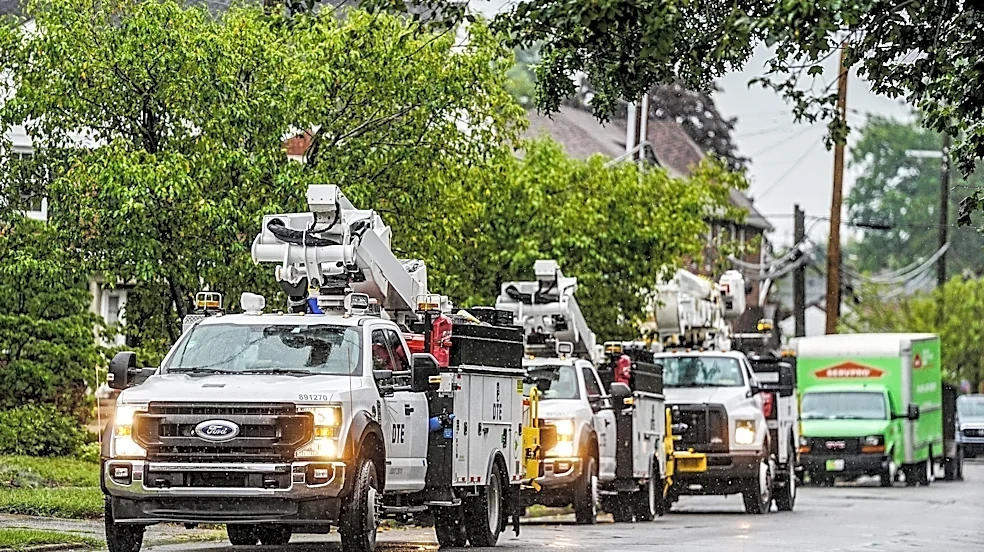
While DTE and Consumers seek annual rate increases, residential utility customers languish for days without power after even minor storms, as data centers take a Lansing-crafted fast-lane to reliable energy infrastructure. Health care costs are spiraling out of control, something even the CEO of BCBSM acknowledged in a Free Press guest column last year.
Activists and some candidates argue that the line from campaign contributions to cursory regulation, favorable legislation and high costs is obvious. In certain ideological circles, rejecting contributions from those businesses' political action committees has become a way to shorthand populist integrity.
But the companies still find plenty of willing takers.
By March 31, a Planet Detroit analysis of Federal Election Committee filings found, the BCBSM political action committee had spent over $663,000 on state and federal elections this election cycle. The Michigan League of Conservation Voters reports that DTE and Consumers spent a collective $475,000 in 2025, a year with no statewide or federal elections.
Those businesses may argue, as one Consumers lobbyist did, that money buys access, not votes.
But whatever these companies say they're buying, they've spent an awful lot on it.
As Michiganders warily eye the weather report, fearful of the next outage, it's no wonder voters are ready to revolt.
Prop 2 isn’t perfect, but the toxic status quo isn't defensible. On Nov. 3, Michigan voters should vote YES on Proposal 2.
What does Prop 2 do?
Prop 2 would close a loophole that exempts online and social media advertising from the same disclosures as print and broadcast, installing more transparency around so-called "issue" ads that don't ostensibly advocate for a candidate, but are a popular workaround for groups looking to dodge transparency laws.
But the meat of the proposal is a ban on political contributions by the principals of privately owned utility companies like DTE and Consumers ‒ including owners, executives, agents, lobbyists, members of the utilities' boards and family members ‒ or their political action committees.
The same prohibition would also apply to state and local government contractors and subcontractors with more than $250,000 in contracts in a calendar year.
The opposition, Protect MI Free Speech, says Prop 2 would quash the voices of everyday Michiganders. The Michigan Chamber of Commerce, routinely named the most effective lobbyist in Lansing, said in a statement that “This egregious proposal appears to silence the voices of job providers and limit free speech for some while giving others, like labor unions, a free pass.”
That’s not exactly true. Prop 2 would require more disclosure around issue ads that purport not to back a specific candidate – even though such ads routinely feature candidates who support or oppose the issue in question – and bar contributions only by executives and other top-tier employees at utilities or companies doing business with government.

Prop 2’s backers contend that contractors should no more influence the outcomes of elections than should utilities, which are regulated by the Michigan Public Service Commission, whose members are appointed by Gov. Gretchen Whitmer – by 2022, the recipient of $235,000 in contributions over the course of her political career from DTE alone.
We suspect few Michigan lawmakers see themselves as compromised by such contributions. But it’s nearly impossible to truly understand the web of spending, and discount its influence.
One caution
Prop 2 has a potential pitfall in the implementation of provisions around government contractors and subcontractors.
The data portal for the City of Detroit ‒ the largest municipality in the state ‒ lists more than 900 contracts worth more than $250,000. The tally won't be that high in smaller cities or townships, but those municipalities may lack Detroit's procurement infrastructure. Reviewing the potential political spending of principals and family members of hundreds or even dozens of contractors and subcontractors would be a daunting bureaucratic hurdle.
Prop 2's backers are adamant that this burden need not fall on cities, counties, townships or school districts, saying the legislation doesn't require state or local government to instate a review process. It's up to the Michigan secretary of state to issue compliance guidelines, and those rules must be designed with municipal resources ‒ or lack thereof – in mind.
We're likewise concerned about the possible impact on nonprofits with state and local government contracts. Because of the 501(c)3 tax status held by charitable nonprofits, leaders there are already barred from certain types of political speech, but Prop 2 would require board members at those organizations to abstain from campaign spending as well.
If Prop 2 becomes law, it will require a 75% majority vote of the state Legislature to modify. Should its provisions prove burdensome for cities or nonprofits, we hope the Legislature will overcome its standard inertia and act.
There’s another mechanism to redress unintended consequences: Prop 2 will certainly be tested in court. Its backers say the proposal is written to mimic legislation that’s withstood legal challenges in other states – and should a court rule against any provision of Prop 2, the rest of the act would remain intact.
Submit a letter to the editor at freep.com/letters, and we may publish it in print or online.
This article originally appeared on Detroit Free Press: Prop 2: Michigan should curb utility money's grip on Lansing | Endorsement