

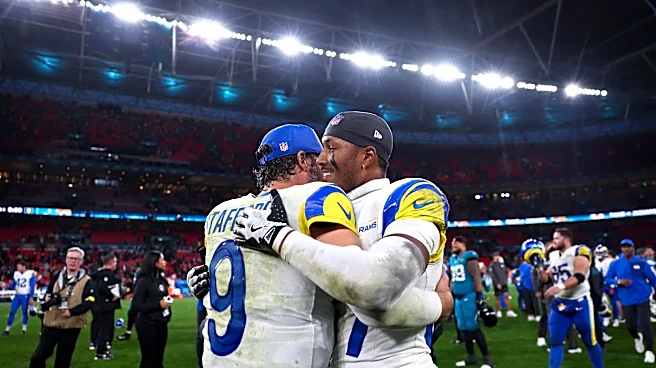
For decades, Sundays and the National Football League have gone together like ham and eggs — a scrumptious combo that has been known to appear on a menu or two at early morning tailgating events across Detroit and beyond.
The debut of ABC’s "Monday Night Football" in 1970 revealed that America’s appetite for pro football could easily extend to an additional day. Then, in 2002, the NFL began a new tradition of starting the regular season with the NFL Kickoff Game played on the Thursday following Labor Day, leading to "Thursday Night Football" becoming a fixture in the NFL's regular season schedule in 2006.
This season the NFL is serving up yet another wrinkle (encroachment?) by kicking off the regular season on a Wednesday night, Sept. 9. Interestingly,
a Wednesday night kickoff also occurred in 2012 when the NFL Kickoff Game was moved up a day to avoid a conflict with the last day of the Democratic National Convention.
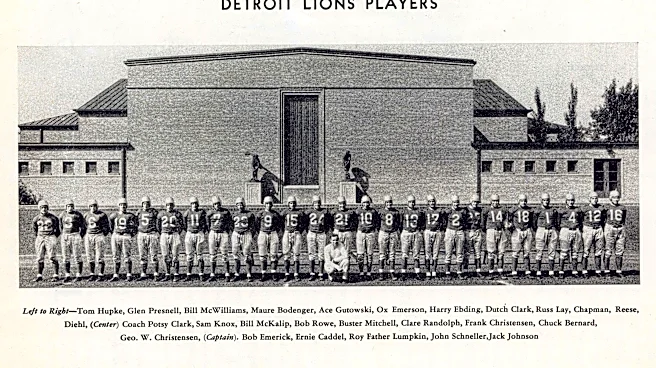
Indeed, Wednesday NFL games are a rare occurrence. But as it turns out, the game also serves as a reminder of the Detroit Lions' earliest beginnings after George Richards purchased the Portsmouth (Ohio) Spartans and moved the franchise to Detroit, where they became the Detroit Lions in 1934.

A story in the Oct. 18, 1934, Detroit Free Press following a Detroit Lions game played on a Wednesday said: "Professional football sold itself convincingly to approximately 12,000 spectators last night in the University of Detroit Stadium where a brilliant Detroit Lion eleven shutout the Redskins from Boston 24 to 0."
The victory improved the Lions' record to 5-0 en route to a 10-3 record, after winning the first 10 games of the season.
Attracting 12,000 fans for a Wednesday night game at University of Detroit Stadium — the Lions' first home field — during that time was no small accomplishment. After all, this was a period when baseball was firmly entrenched as America's pastime, leading football teams to often choose nicknames that aligned closely with Major League Baseball teams in their markets − which explains why the Lions played the New York Yankees and the Cincinnati Reds during their inaugural season when the team finished in second place in the NFL West Division.
However, the greatest opposition for professional football and the entire country was the ongoing Great Depression, which severely limited the disposable income that Americans had to spend on sports and entertainment.
"By 1934, [President Franklin Delano] Roosevelt's New Deal programs were beginning to kick in, but unemployment remained over 20% in the U.S. and closer to 50% in Detroit," said Josiah Rector, a Wayne State University-trained historian and author, who also has taught at Wayne State and is now an associate professor of history at the University of Houston.
"... Detroit had just narrowly escaped bankruptcy. And unemployment, home foreclosures and evictions, and homelessness were at record levels."

But despite the hardships and suffering that Rector described, Detroit in the 1930s was still viewed as a land of opportunity by many — including by thousands of Blacks in the South who were destined to make significant contributions to Detroit's culture on multiple levels, including the city's sports landscape.
"The 1930s would become a pivotal decade for African Americans in Detroit," said Detroit historian and author Ken Coleman, who noted that the decade was preceded by a period when Detroit's Black population grew from 5,700 in 1910 to 120,000 in 1930. "During the years that we have come to know as 'The Great Migration,' Detroit was a city where African Americans could not only own a home, but this new burgeoning Black community also wanted to take part in everything the city had to offer.
"In 1934, we have Harold Bledsoe's appointment as assistant state attorney general, making him the first African American to serve in the post, and Bledsoe and Charles Diggs Sr. played a major role in recruiting Blacks to the Democratic Party [the party of FDR]. But African Americans also clung to Detroit's sports scene. Some of the greatest seasons for the Detroit Stars [a charter member of the Negro National League, which played home games at Hamtramck Stadium and were led by some of the best baseball players of their day, including National Baseball Hall of Fame inductee Norman "Turkey" Stearnes] were in the 1930s. So baseball was huge, boxing was huge and football was huge."

Coleman says that among the individual athletes that Black Detroiters had a special interest in during the early 1930s was a history-making, Big 3 "Dream Team" with a strong Detroit connection. The shining stars included the future heavyweight boxing champion of the world, Joe Louis — the pride of Detroit's Brewster Recreation Center and the winner of two major national amateur boxing competitions in 1934 as a light heavyweight; and Eddie Tolan, a product of Detroit's Cass Technical High School and the University of Michigan who won two gold medals on the Los Angeles Coliseum track as a sprinter (100 and 200 meters) at the 1932 Olympics.
And then there was Willis Ward, a 1931 graduate of Detroit's Northwestern High School, who starred in track and field and football at the University of Michigan. But in 1934, Ward made national news when the legendary Fielding Yost, as Michigan's athletic director, made the decision to bench Ward for a Oct. 20 home game at Michigan Stadium against Georgia Tech because the opposing coach threatened that the visitors would not play the game with a Black player on the field.
It was a decision that sparked outrage among many people across the country, including the future President of the United States Gerald Ford, who was Ward's teammate and close friend at Michigan.
Ward, the three-time All American in track and field and honorable mention All-American selection in football, later found a bench to his liking when he was appointed as a Wayne County probate judge in 1973 by Governor William Milliken.
But what if times had been different in 1935 when Ward was wrapping up his storied journey as a student-athlete, which included being a major contributor on two national championship football teams at Michigan in 1932 and 1933 coached by Harry Kipke?
What if, as reported in the March 25, 1934, Detroit Free Press, the plan that Lions team management had to build up its roster in a new city with "players from the University of Detroit, Michigan and Michigan State" had included the consideration of all standout players from those colleges at the time?
What if Ward, a two-way end at Michigan, had been given a legitimate opportunity to play for his hometown Detroit Lions in the National Football League, which during that period of the league's history maintained an unwritten segregation practice that did not end until 1946?
"At the University of Michigan, Willis Ward was part of a changing culture in that Depression era and he becomes a major figure in college sports and civil rights," said Coleman, who since 1991 has used his books, articles, media appearances and extensive social media posts, including his "On This Day" historical vignettes to promote the study of "Black Life In Detroit."
Coleman continued: "Often times sports figures have a huge persona in their community that's even greater than what they accomplish on the field. And if Willis Ward had been able to play for the Lions in 1935 or around that time it certainly would have motivated and inspired members of Detroit's African American community to continue to pursue the American Dream, and then on Sunday watch somebody that looked like them play in the National Football League."

The Lions would not sign their first Black players until 1948, when the team acquired Melvin Groomes, a running back from the University of Indiana, and Bob Mann, a receiver out of the University of Michigan who like Ward would go on to become an attorney and a prominent member of Detroit's legal community.
But Coleman says the relationship between the Lions and Detroit's Black Community goes back to even before the kickoff of the Lions' first home game in 1934. And that connection can still be seen before kickoff today, regardless of the day the game is played.
“Before each Lions game this season, there will be tens of thousands of African Americans tailgating at different locations — some will have game tickets and some won’t. But they all share a deep connection to the team and our city that goes back to when African Americans began to come to Detroit for a better life.” Coleman explained. "It's a very important part of our history and the city's history."
Scott Talley is a native Detroiter, a proud product of Detroit Public Schools and a lifelong lover of Detroit culture in its diverse forms. In his second tour with the Free Press, which he grew up reading as a child, he is excited and humbled to cover the city’s neighborhoods and the many interesting people who define its various communities. Contact him at stalley@freepress.com. Read more of Scott's stories at www.freep.com/mosaic/detroit-is/. Please help us grow great community-focused journalism by becoming a subscriber.
This article originally appeared on Detroit Free Press: NFL games on Wednesday? Lions' first Detroit season included an important one on that day