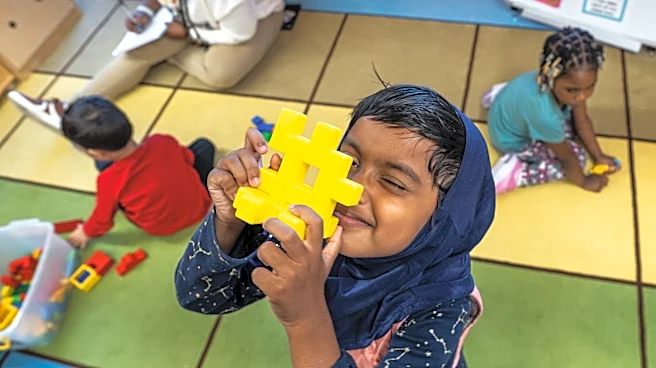








At a play kitchen stove and classroom tables covered with animal figurines, laminated labels identify the names of toys in not only English but Bengali at the Mitchell St. Head Start center in Hamtramck.
The language is spoken by nearly 90% of the 146 preschoolers enrolled at the center.
Toggling between English and the other languages spoken by the kids in the program isn't just a nice-to-have, teachers and staff say. It's necessary to helping bilingual kids feel comfortable so they can excel in the classroom.
Which is why they’re worried about how an English-only instruction mandate for Head Start, recently proposed by President Donald Trump’s administration, could dramatically change the way their program and others across the nation serving
dual language kids operate. Children speaking non-English languages at home make up one-third of enrollment nationwide in Head Start, a federal program providing free early education for low-income kids between birth and 5 years old, along with other family services. In Michigan, it's nearly 15 percent or around 4,000 kids.
The change could mean teachers will no longer be allowed to talk with preschoolers in their native language and all classroom materials would be English-only, including books. Gone would be the laminated labels at Mitchell St. and the site's decorative poster listing the word "Hello" in nearly a dozen languages. Experts warn the change would leave dual language learners worse off.
“When I read a book in English, and I see they are not paying attention, not listening, they are all over the place because they don’t understand the book? Then we do it in our language and explain to them,” said Nahida Akther, a lead teacher in a 3 to 5-year-old Head Start classroom at Mitchell St. “It’s comprehension. If they don’t understand, what’s the point of reading the book?”
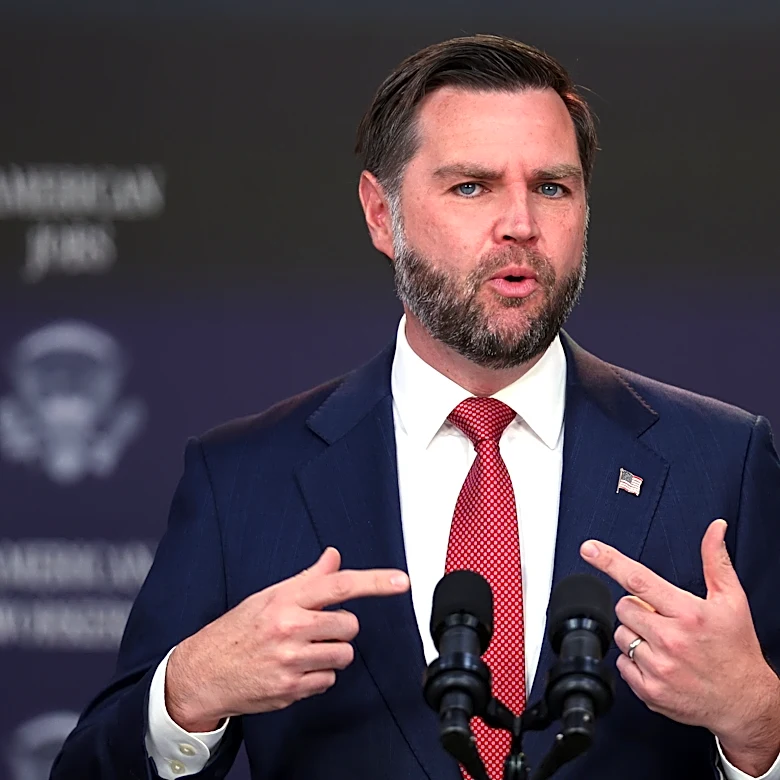
Officials with the Trump administration have said the proposed requirement’s purpose is in line with his 2025 executive order “Designating English as the Official Language of the United States.”
This would increase kids’ ability to learn and speak English, according to the proposal, in addition to other potential benefits like simplifying classroom curriculum and helping a child assimilate into their community and eventually access "longer-term educational and economic opportunities," the proposal reads.
“Head Start is a school-readiness program. The goal is to help children enter kindergarten able to participate fully in English-language classrooms and the broader community,” assistant secretary at the federal Administration for Children and Families Alex Adams told Education Next.
The proposal notes that programs could submit waivers to continue bilingual education, though there aren't specific details on what would qualify and program directors the Free Press spoke to have expressed doubt over whether the administration would approve those.
The English-only mandate is part of a broader proposal overhauling Head Start regulations that was published by the Trump administration in August. Aside from a few new requirements, the proposal looks to roll back hundreds of Head Start rules that dictate program standards, like the allowable staff-to-kid ratios in classrooms. The goals are to reduce burdensome regulations, open more seats for kids and cut program spending, officials say.
English-only instruction would make it harder for kids to learn English, teachers and experts say
A 4-year-old stands at the front of nine of her little peers, leading them in singing ‘Wheels on the Bus’. For a lot of the song, she's smiling, her confident small oval face scanning the tiny crowd following along. She’s got all the parts of the song down: the wheels on the bus, the doors on the bus, the wipers, the horn, the motor, the babies, etc.
She's been enrolled at the Mitchell St. Head Start center in Hamtramck since she was around 18 months. Around 2 years old, her teachers thought she might have a speech delay because she was mostly non-verbal in her class, said Akther, her current preschool teacher.
“Since most of the communication around her was in English, she was not responding or communicating verbally in English,” Akther wrote in an email.
When the girl arrived in Akther’s class she was tested and evaluated through the school district. It eventually became clear she didn’t have a speech delay, because she was speaking and communicating in Bengali, said Akther. She just hadn’t yet developed English language skills.
“Once she had the opportunity to speak and communicate in Bangla, it became clear that she was able to communicate well. As she gained confidence and understanding in English, she became more comfortable speaking English as well. She is incredibly chatty and confident in English now!” Akther wrote.
Kids commonly get misdiagnosed with speech delays due to language barriers, said Minuwawa Whitehead, assistant director of operations at the Mitchell St. Head Start center. This is one of the reasons she feels it’s essential to have staff in each classroom who are able to move between English and a kid’s home language. This allows kids to express themselves and engage in the classroom in their language, building confidence and acquiring English skills as they progress.

Akther speaks Bengali, the language of the majority of kids in her classroom. Zutsnara Rahman, her assistant teacher, speaks Arabic, the second most commonly spoken language at the center. The day’s instruction takes place in English – activities are carried out in English, songs are sung in English, instructions are given in English.
But as needed, Akther and Rahman are able to change to a child’s home language, since speaking and reading in their home language is often needed for a dual language child's comprehension of whatever they're in the process of learning. This comes hand-in-hand with consistent repetition of the English translation of what they're learning, which opens the door to acquiring English, said Akther. She said she's seen firsthand kids once only able to express fully themselves in Bengali, a few months later saying those very same sentences in English.
What experts say
The evidence supports what Akther observes in her students, said Acrisio Pires, a professor of linguistics and researcher at the University of Michigan who studies bilingual language development.
Pires said a number of large studies that have looked at dual language programs across the country have found that children, given the opportunity to be educated in their home language and English in the school system, have better educational outcomes.
“They not only learn the other language, the language they speak at home, but they have better outcomes in development of the English language and also other subjects as well,” like math, Pires said.

“They do better than kids just forced in an English-only system,” he continued.
Part of the need to move between English and other languages is also simply to comfort kids – many of whom are in a school setting for the first time – or to correct their behavior, which allows teachers to keep the flow of the classroom moving smoothly, said Carla Chinavare, who executive director of family services at Wayne Metropolitan Community Action Agency, the organization running the Mitchell St. Head Start center.
Without that ability, classrooms with many dual language kids would be chaos, said Whitehead.
Parents lose trust, programs lose enrollment
If the English-only mandate goes into effect, DeAija Kaigler predicts she'll have a lot of trouble getting parents to enroll their kids at the Mitchell St. Kaigler works at the site, enrolling parents and connecting them to services, including GED and English as a Second Language classes held at the center.
“If the families are not comfortable with where they’re sending their children, they’re not going to send them there," said Kaigler.
The administration’s proposal can’t require programs communicate only in English with parents, since the Head Start Act – laws which the administrative changes don't touch – include provisions requiring programs be able to communicate with parents who don't speak English.
But Kaigler still worries how English-only instruction in classrooms and the expectation their program retrain or replace bilingual staff will impact their ability to connect with and serve families in the surrounding community. Will she still have her Bengali-speaking and other dual language peers around her? Working with them to assist families she doesn’t understand or who don’t understand her is essential to being able to do her job, she said.

The proposal acknowledges the negative impact the mandate may have on programs' ability to communicate and connect with non-English families and suggests using translation technology tools to "mitigate some of these impacts."
Losing connection with parents will also hurt kids, said Whitehead.
“The thing about Head Start is we don’t only service children, we service families," Whitehead said. "The inability to connect to families is going to hinder the effectiveness of the program because research has found, when the family is okay, the child will learn better. If we want to provide them with a proper educational experience, we need to ensure the families are okay by us being able to meet them where they are, speak in their language and support them with their needs.”
What next?
The proposed changes are part of the federal rulemaking process, meaning the Trump administration can adopt them without the need to pass legislation through Congress. Currently, the federal Administration for Children and Families, the agency overseeing Head Start, is reviewing over 30,000 public comments the proposal received, many of which include pushback to the requirement.
What happens after that isn't yet known, said Chanda Hillman, executive director of the Michigan Head Start Association, a nonprofit representing Head Start grantees in the state. The ACF is required to consider comments and respond to them, but they don't have to amend the proposal because of them. A final rule change won't likely be seen until December or January, Hillman estimates.

If the proposal is adopted, Head Start centers would have to comply with its new requirements in a given timeline or face the possibility of getting their funding stripped, as is the case with all Head Start requirements.
Besides ending bilingual supports in classrooms, they’d also need to retrain or replace staff hired as a result of current Head Start regulations, which require programs to have staff that speak the non-English language spoken by the majority of their kids. Tribal Head Start locations would be exempt from the new requirement.
Putting more pressure on teachers, not less
Chinavare acknowledges that sometimes the rules programs like hers have to follow to get federal funding can be burdensome.
Take for example the Federal Child and Adult Food Program, a separate program from Head Start, but through which her Head Start centers get funding to serve kids healthy food. To keep that funding, her staff has to follow rules dictating details as small as the ways a kid is allowed to have their food served and the portions they're permitted. If teachers are found not following the rules, that funding could be stripped.
But Head Start’s current requirements to include bilingual support for dual language learners isn’t one of those rules, said Chinavare.
“There are some things that are ridiculous, but the core things, don’t touch those,” Chinavare said. “Of course we want less administrative burden, but we want to preserve the things core to family engagement and relationships, like the bilingualism support.”
And if the Trump administration’s proposal aims to lessen the regulatory burden on programs, this new requirement would actually add to it, she said.
“It puts a lot of extra pressure on the staff … It becomes a situation where staff are highly conscious of how we need to operate if there was a monitoring situation happening. Could it be a finding if we’re not following the new mandate? It’s that trickle down,” Chinavare said.
In Akther's classroom, the pressure already inherent in a teacher's job becomes quickly apparent. Kids' needs, messes and meltdowns compete for their attention.
Around 11 a.m., a few kids, one after the other, start to crash. Suddenly missing their moms and dads, their faces contort into sobs.
“You are able to say your 'Ammu, mom, is coming at snack time',” Akther said. (Ammu means mom in Bengali.)
“That sentence makes them calm."
Beki San Martin is a fellow at the Detroit Free Press who covers childcare, early childhood education and other issues that affect the lives of children ages 5 and under and their families in metro Detroit and across Michigan. Contact her at rsanmartin@freepress.com.
This fellowship was founded with support from the Bainum Family Foundation. The Free Press retains editorial control of this work.
This article originally appeared on Detroit Free Press: Head Start’s English-only push worries Hamtramck bilingual educators