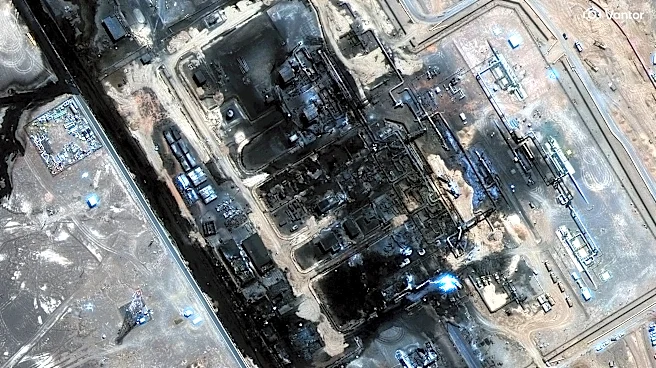

It turns out that all those extra cents a gallon you have been paying for fuel since the United States launched strikes against Iran in late February have been adding up, with Americans spending more than
$108.2 billion more than they would have had there been no war.
That works out to $826 a household, as of early Thursday, Sept. 17 — anyway.
The cost is growing by the second and it is expected to accelerate over the next few days as fuel costs continue to rise. In the past week, diesel highs have been broken almost daily and oil company executives have warn that fuel stocks and strategic crude oil reserves that have been tapped to help keep prices down are being depleted.
In short: The energy crisis not just for America, but the world, is getting worse, not better.
The higher fuel costs are not just a concern for consumers but also businesses, like Michigan's automakers, which have pulled back from electric options and will now have an even harder time convincing buyers to purchase a new vehicle, especially one that costs more to fill up.
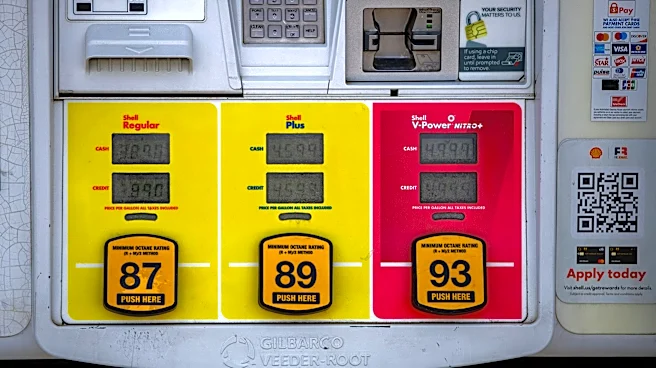
In Michigan, the price of gasoline on Thursday jumped to $4.76 a gallon, up nearly a quarter from the day before and 45 cents in a week, according to AAA. Diesel, at $6.54 a gallon, hit a new all-time state record, which is driving up the cost of nearly everything.
The overall 12-digit cost figure comes from Brown University Professor Jeff Colgan who developed the Iran War Energy Cost Tracker to show how what might seem like small increases add up. The tracker looks somewhat like the National Debt Clock, which, in real time, calculates how much the debt is growing.
Colgan's tracker, however, doesn’t include all the indirect ways the increases are cutting into paychecks. Fuel prices also are adding to the cost of groceries, back-to-school school supplies and even the synthetic motor oil that keeps engines running smoothly.
In recent days, the price of motor oil at Costco nearly doubled — from $30 to nearly $60 — with the retail chain preventing a run on engine lubricant by rationing sales to each customer. As the price of motor oil goes up, it's likely that car dealerships and repair shops also will increase what they charge for oil changes.
Iran War Energy Cost Tracker
So just how much and how fast are those pennies, nickels, dimes and quarters per gallon of fuel adding up?
"We all know the costs have gone up, but this helps make it concrete," Colgan — who was featured in the Sept. 8 edition of the Brown Alumni Magazine — said in the article about his online tracker. "Americans can see what it means for their household and for the country at large."
Colgan’s tracker compares fuel costs now to what they would have been without the war.
According to the Brown magazine article, Colgan — the university’s Richard Holbrooke Professor of Political Science and International Studies and the director of the Climate Solutions Lab — predicted shortly after the airstrikes that the outcome was "going to be a disaster."
To put the cost in context, before the magazine article was published, the professor commented on the tracker total has reached a cost of $71 billion. The professor pointed out is more than twice the entire annual budget for NASA. The cost is now nearly five times the agency's budget.
On top of all that, there's now evidence to suggest that the war hasn't one as well as the White House is suggesting with more attacks and more damage to U.S. military equipment and bases than what the American public has been led to believe.
As a result, America’s Arab allies in the Middle East — big oil producers and exporters — may be even more vulnerable.
Close to $5 a gallon gasoline
Many now predict the global energy crisis soon will get worse.
Earlier this week, a Wall Street Journal report, "Oil Executives Say the Great Fuel Crisis Is Here," quoted Chevron CEO Mike Wirth, who said at an energy conference in Austin, Texas, that "we don’t have nearly the buffers in the system that we did" when the Middle East conflict began.
The Journal noted that while it’s difficult to forecast how high oil and fuel prices will go, it seems unlikely they will fall soon. What’s more, the report pointed out energy experts are concerned that with no end in sight to the war, "the situation risks spinning out of control."
Patrick De Haan, GasBuddy's head of petroleum analysis, warned in a flurry of social media posts on Wednesday that "#GasPrices appear to be rising to $4.99/gal in #Chicago and its suburbs" and joked it "turns out the best day to buy gas this year" was January or February.
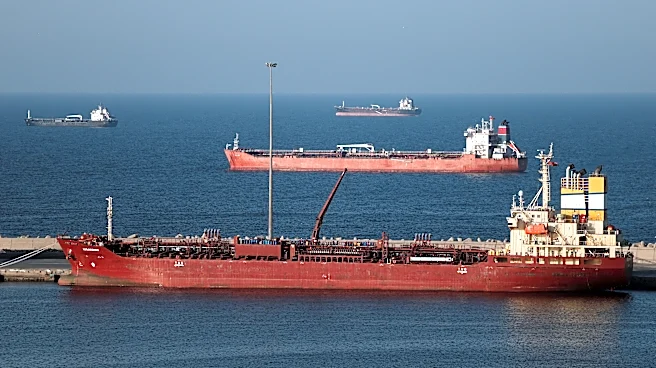
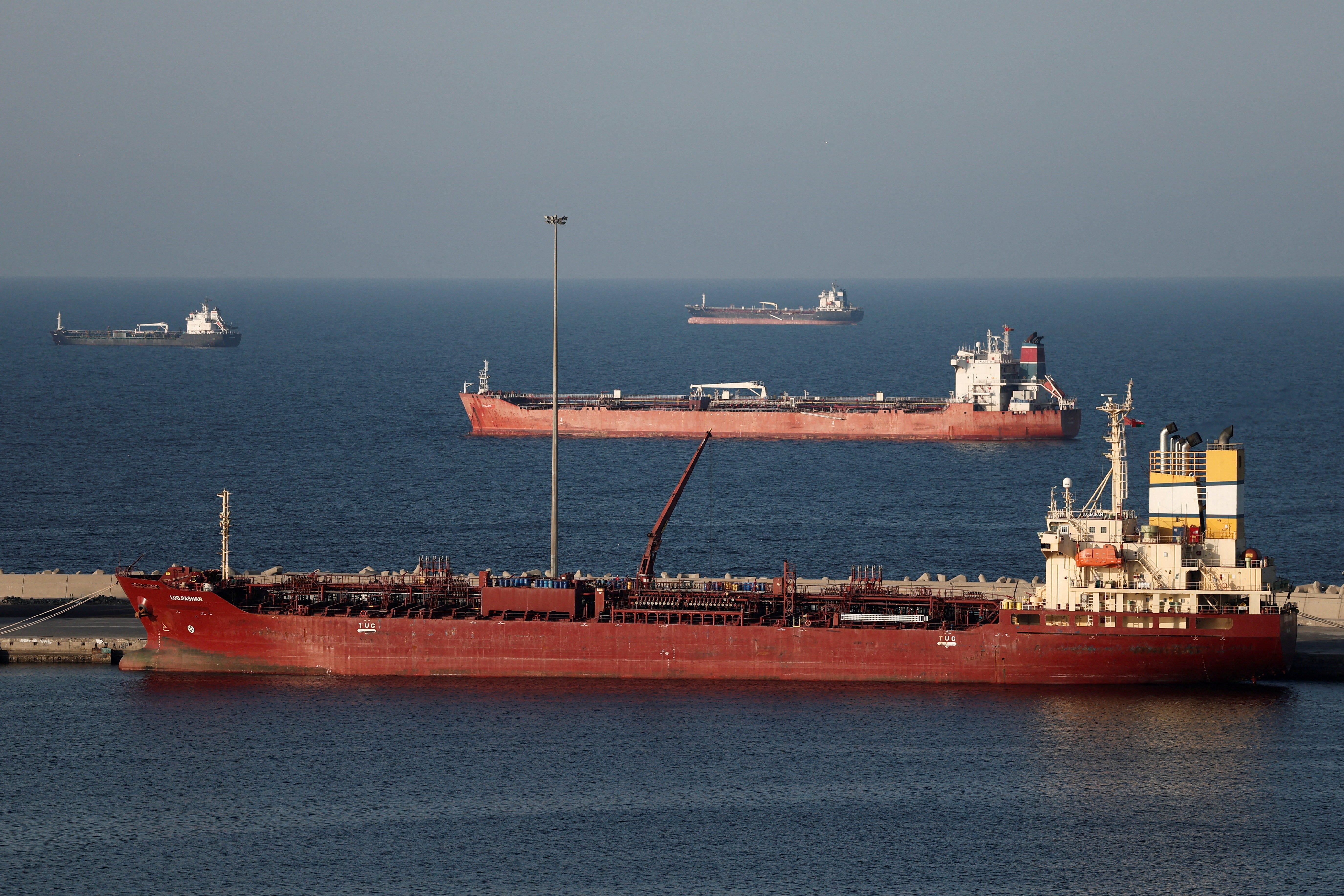
Iran is curbed shipping through the Strait of Hormuz. A fifth of the world's oil passes through it.
Iran now also appears to be choking a second Middle East waterway — the Bab al-Mandab Strait, the entrance to the Red Sea that Saudi Arabia has been using as an alternative route to export oil — through its ally, Houthi militants, in Yemen.
The Houthis took control of an island, giving them control of the strait, known as the "Gate of Tears," which the Washington Post recently speculated may turn out to be "Iran’s biggest victory yet" because it gives another way to limit the export of Middle East oil.
And China, which news reports found has been relying on its reserves of oil, also appears to be a factor as it buys more oil from suppliers, which would add to demand and continue to put upward pressure on price and take away another one of the buffers Chevron’s Wirth mentioned that have helped mitigate costs.
Diesel at all-time high
Since starting the war, President Donald Trump has mostly downplayed rising prices at the pump and his supporters have deflected concerns about prices by pointing out that in 2022 gasoline prices zoomed to more than $5 a gallon, which they add, that adjusted for inflation, the price now would be even higher.
They tend to ignore, however, that diesel prices are now at record highs.
A recent J.P. Morgan analysis explained why that matters. Diesel, the paper said, is the fuel that "moves goods, powers heavy equipment and supports key parts of the industrial economy, so price spikes can travel quickly from energy markets into business costs, inflation and, ultimately, investor portfolios."
Former U.S. Rep. Marjorie Taylor Greene of Georgia took to social media on Wednesday to complain that diesel in California was $8.49 a gallon. She blamed the high prices on the war and Trump, who she once supported. She also predicted that a "fuel crisis is only just beginning."
Trump has promised prices will go down and accused petroleum companies of price gouging. To lower fuel prices, the White House has said it plans to boost production in Venezuela and increase U.S. refining capacity. But both efforts, experts have said, would take time.
In the meantime, the United States is running low on munitions to help defend Arab allies and keep striking targets, and there are concerns about how much damage Iran has inflicted on its neighbors. The New York Times on Tuesday reported that America’s Arab allies in the Persian Gulf now have "their backs against the wall."
Moreover, the Iranian attacks, according to a 44-page report by the Department of Defense’s Office of Inspector General, have damaged hundreds of U.S. military buildings. Iran, the report also said, destroyed several military aircraft and struck four American diplomatic buildings in the region.
And in addition to what’s happening in the Mideast, the war between Russia and Ukraine also is curbing oil and fuel supplies globally. If the two nations don't stop targeting each other’s energy and oil refining infrastructure it will exacerbate the energy crisis.
When the war with Iran is over, fuel prices may fall, as the president promised; but Colgan said in the article he was featured in that consumers still will face "economic fallout." There will be, he concluded, decades-long consequences on international relations and the global economy.
Contact Frank Witsil: 313-222-5022 or fwitsil@freepress.com
This article originally appeared on Detroit Free Press: As fuel prices rise, is the worst of the energy crisis yet to come?