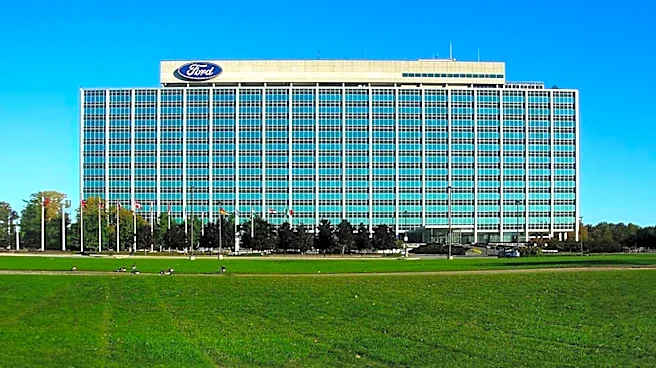




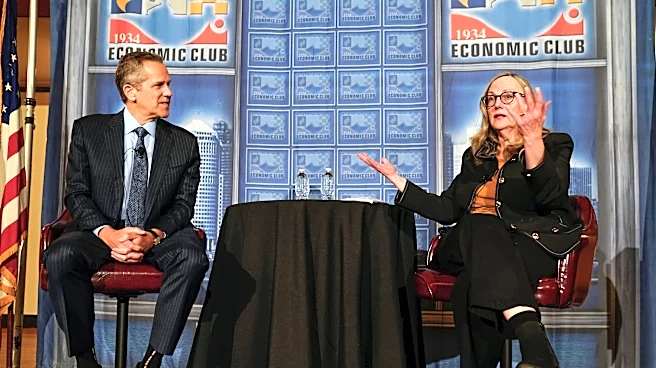
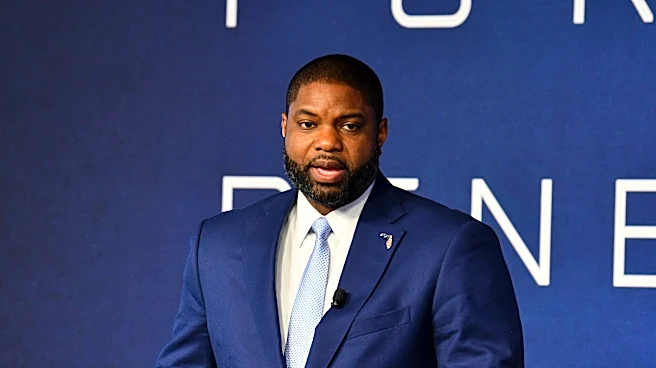
Lawrence Technological University’s reputation as a top private tech college has grown exponentially since it opened in 1932 with support from Henry and Edsel Ford as a place their workers could learn skills to move up ranks at the auto maker.
It’s global footprint has been growing recently, too, as the university in suburban Detroit has launched programs in Iraq, China and other countries.
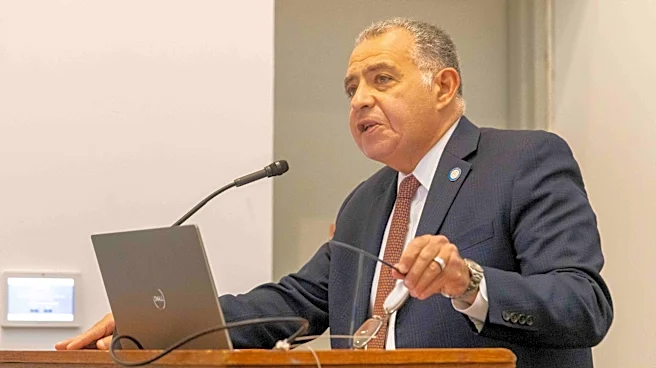
It’s part of an effort to attract more international students, which is helping southeast Michigan, launched by Lawrence Tech’s hard-charging President Tarek Sobh, the school’s eighth leader since it began and who started at the school in 2022.

Most American universities have watched international student enrollment drop, an offshoot of the pandemic that has
been amplified by the Trump administration’s crackdown on international visas impacting international students.
At the same time, colleges across the globe have become more competitive as the battle for students is waged.
“The international higher-education market has become far more volatile, competitive, and geographically distributed — and LTU has responded by bringing its distinctive education closer to students wherever they live," Sobh said.
LTU has recently established an engineering program with American University of Iraq in Baghdad where it is offering bachelor's and master's degrees.
In Kazakhstan, LTU is working with Auezov University to offer dual degrees architecture, engineering, and computing.
In China, LTU just announced a partnership with Northeast Electric Power University in Jilin City to develop dual-degree opportunities for engineering students beginning fall 2027.
“It creates two-way intellectual and economic bridges: International students gain access to world-class American technological education closer to home and pathways to Michigan," he said.
A real-world approach
LTU has stood out since it began with technology being the underpinning of its real-world academic approach.
“We are one of only 13 independent, technologically focused, comprehensive doctoral universities in the United States," said Sobh, who has an impressive resume and serves as president of the Association of Independent Technological Universities, a national organization of 13 leading private technological universities including MIT and California Institute of Technology, or Caltech.
"We now have five colleges — Architecture and Design, Arts and Sciences, Business and Information Technology, Engineering, and Health Sciences — and more than 100 academic programs," he said.
LTU’s full-time student population includes 2,000 undergraduate and 700 graduate students, in addition to another 1,600 students in their adult professional development programs, high school dual-enrollment classes and two-year degrees.
Sobh's list of accomplishments has grown as he was recently elected a fellow of the Institution of Engineering and Technology, which recognizes achievement and leadership in engineering and technology.
“That recognition is especially meaningful because although I have the privilege of serving as a university president, at my core I am still an engineer, roboticist, researcher and educator," he said.
Gov. Gretchen Whitmer appointed him in March 2026 to the Michigan Education Trust Board to represent private colleges.
LTU sits on 100 acres in Southfield in the heart of one of the most technologically and industrially consequential regions in the world, Sobh is known as saying about southeast Michigan.
"Our students are embedded in companies through internships and co-ops; they design autonomous and electric vehicles; they work on advanced infrastructure, artificial intelligence, robotics, architecture, health technologies, and manufacturing," he said.
Sobh added 95% of its graduates leave with a job while PayScale data places the school’s alums in the top 11% nationally in salary outcomes.
Here are a few questions I asked Sobh (his answers edited for length).
QUESTION: Tell me about LTU’s approach to teaching students?
ANSWER: "LTU was founded around a very simple but powerful principle —theory and practice — and that continues to distinguish our graduates. Long before they graduate they have designed things, build things, test things, present to companies, work in internships or co-ops, conduct research, compete on engineering teams, or worked with industry-sponsored projects."
Q: Talk about your alums, well known or otherwise?
A: "John DeLorean carried his LTU engineering education into one of the most celebrated and unconventional careers in automotive history, while retail developer and philanthropist A. Alfred Taubman was an architecture student who did amazing things in business, the community and supported LTU. Our impact is also seen in the thousands of engineers, architects, designers, executives, entrepreneurs, technologists, scientists and other professionals who have become leaders inside organizations across Michigan and the world. It’s worth noting that 52% of licensed architects in the state of Michigan are LTU alums."
Q: Steve Ballmer, who became CEO of Microsoft, is another with LTU ties as he started a trend by taking college classes at LTU while a high school student. It resonated, right?
A: "The Steve Ballmer story is a powerful historical metaphor for what LTU has now institutionalized at scale: giving academically ambitious high-school students access to university-level learning before conventional college age.
"LTU has dual-enrollment relationships with 45 high schools and educational partners, including schools in Detroit, Southfield, Bloomfield Hills, Troy, Rochester, West Bloomfield, Grosse Pointe, Oxford, New Haven, Redford and other communities. LTU also operates a Dual Enrollment Virtual Academy so qualified juniors and seniors can earn real university credit in structured pathways that include civil engineering, nursing, sports management and advanced concrete materials."
Q: Like other CEOs and academic leaders, you are focused on trying to keep young people who graduate in Michigan. Talk about that.
A: "Human capital is our future. We can invest in buildings, infrastructure, technology and economic-development programs, but if our most talented young people conclude that their best opportunities are somewhere else, we have lost the most important ingredient.
"The way to keep talent is to give them reasons to stay. They need to see challenging work, innovative companies, affordable pathways into high-value professions, a vibrant community and a future in which their ideas matter.
"And there is a beautiful connection between our global strategy and talent retention: The more globally relevant Michigan becomes, the less a talented graduate has to choose between staying here and participating in the world. We want them to do both."
Contact Carol Cain at clcain@cbs.com. She is senior producer/host of "Michigan Matters," which airs at 5:30 a.m. Sundays on CBS Detroit and at 9:30 a.m. Sundays on CW Detroit 50. See LTU President Tarek Sobh, and Donald Rudick, Debbie Michelson Fuger and Stuart Raider of the Michigan Jewish Sports Foundation on this Sunday’s show. You can watch it simultaneously on the two stations' listings on Fubu, Pluto TV, YouTube TV and Apple TV.
This article originally appeared on Detroit Free Press: Tarek Sobh explains why he's growing Lawrence Tech's global footprint