


Jahmyr Gibbs is on pace for 493 carries one game into the 2026 NFL season, but that’s not going to happen – the record of 416 was set by Larry Johnson two decades ago – and the more I dive into Gibbs’ heavy usage in the Detroit Lions’ Week 1 overtime win against the New Orleans Saints and the recent history of running backs with massive workloads, the less concerned I am about it in general.
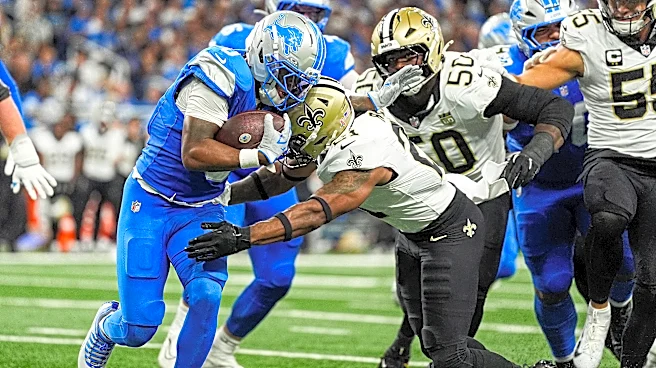
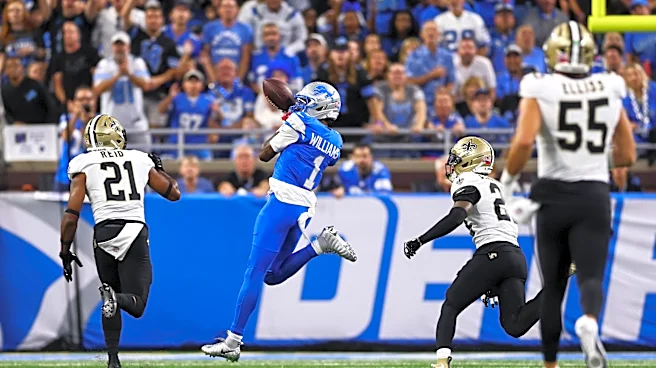
Gibbs had a career-high 29 carries for 156 yards and two touchdowns against the Saints, plus five catches for 30 yards and another four touches that were negated by penalty.
That’s a lot of hits for anyone to take, and that doesn’t include the blocks he absorbed or chips he delivered in pass protection.

The Lions were conscious enough of Gibbs’ workload to
spell him on some passing downs with Sione Vaki as their blocking back and line him up as a receiver with Vaki in the backfield on others.
Gibbs played slightly less than 75% of the Lions’ offensive snaps (57 of 77) and said his body felt fine after the game.
“I mean, I’m good, I feel fine,” he said. “I could have took 40 [carries] today.”
Backs don’t get 40 carries in games anymore in today’s NFL or 400 carries in a season.
DeMarco Murray is the only back to top 380 carries in a season since Johnson’s record-setting year in 2006, and Derrick Henry is the only other back to reach 350 carries in the past 15 years.
At 5 feet 9 and 202 pounds, Gibbs isn’t built like the hulking Henry, and that’s part of the concern that a heavy workload now and throughout the early part of the season will take its toll on him by the end of the year.
History, though, shows backs can handle heavy usage in one season and even thrive under those conditions in the playoffs. And if Sunday’s game is any indication, the Lions will need to lean heavily on Gibbs this fall.
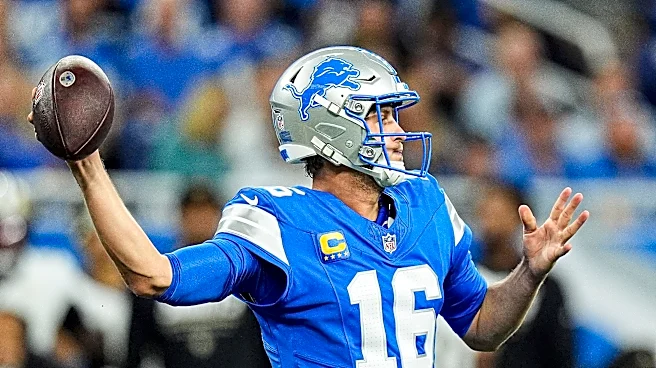
The Lions got mostly good play from their offensive line against the Saints. Jared Goff played turnover-free football (thanks to a quirky NFL rule), and Amon-Ra St. Brown caught 10 passes for 67 yards and two touchdowns.
But they still struggled to sustain drives when Gibbs wasn’t heavily involved because of dropped passes, mental errors and their own mistakes.
“You know what I like?” started Lions coach Dan Campbell when asked about Gibbs’ workload in his postgame news conference. “Winning a game, man, and we were going to win this game. And that guy's our hot hand, and ultimately, do I want to set records with how many carries? No, that's not something I want to do. ... But we did what we had to do today.”
[ NEW SHOW: Make the "Freep Sports Show" your go-to Detroit/Michigan sports podcast, available anywhere you listen to podcasts (Apple, Spotify). Join us live on our YouTube stream after every Lions game. ]
Since 2020, 11 backs have topped 300 carries in a season a total of 17 times, with Henry, a 252-pound wrecking ball (four times), Jonathan Taylor (three) and Josh Jacobs (two) posting multiple seasons with that many rushes.
Just three backs missed time due to injury in their 300-carry seasons – Henry missed one game with a minor hip strain while logging 349 carries in 2022, and Taylor and Dalvin Cook also missed games with injuries; Cook, Saquon Barkley and Kyren Williams also missed games for personal reasons and/or were held out of games with playoff berths secured late in the year. And while only eight of the 17 teams with 300-carry backs went on to make the playoffs − which is maybe the biggest reason the Lions need to find more balance on offense − one did win the Super Bowl (Barkley’s Philadelphia Eagles in 2024).

Historically, there is a drop-off for backs the year after they reach 300 carries.
Excluding the four players who topped that number in 2025 – Taylor (323), Christian McCaffrey (311), James Cook (309) and Henry (307) – backs missed games due to injury in seven of the 13 seasons after they hit 300 carries and saw their yards per carry drop in nine of those years by an average of .4 yards per rush.
For backs who reached 317 carries – the number Gibbs will hit if he averages 17 carries per game the rest of the season – the decline was even more pronounced.
All six times a back carried more than 317 times in 2020-24, he saw his workload decrease and his average per carry drop the next the season by sometimes substantial amounts. Barkley went from 5.8 yards per carry on 345 rushes in 2024 to 4.1 yards per carry on 280 attempts last year. Jacobs averaged 4.9 yards on a career-high 340 carries in 2022, then missed four games and averaged 3.5 yards per rush the next year. Even the durable Henry missed nine games and saw his yards per attempt drop from 5.4 to 4.3 the first time he obliterated the 300-carry mark with 378 carries in 2020.
But while some handwringing is understandable over the idea of running Gibbs into the ground well before his newly inked contract expires in 2030, the reality is he, the Lions and everyone else should be playing for this year and worry about the consequences later when and if they come.
If my main critique of Brad Holmes is that he hasn’t done enough outside of the draft to maximize this Super Bowl window the Lions are in as teams around them have traded for difference-makers like Micah Parsons and Myles Garrett and invested more in free agency to patch holes, I can’t criticize Campbell for leaning on his best player to win a game the Lions might ultimately need for homefield advantage in the playoffs.
It's still possible Gibbs tops 350 carries – he’ll reach 349 if he averages 20 rushes a game from here on out – or even 400 touches this season. McCaffrey, who had 413 touches last year and 403 in 2019, is the only back with at least 400 touches in a season since Le’Veon Bell in 2017.
The Lions need to be more efficient on offense going forward so they don’t put too much on Gibbs’ plate.
But if that’s what it takes to win games this year, the Lions should let their bell cow feast until he can’t feast anymore.
Dave Birkett covers the Lions for the Detroit Free Press. Contact him at dbirkett@freepress.com. Follow him on Bluesky, X and Instagram at @davebirkett.
Players with more than 310 rushing attempts in a season since 2020 (*indicates team made playoffs)
*Derrick Henry, Tennessee Titans, 2020: 378 carries, 2,027 yards (5.4 ypc) in 16 games. Next season: 219 carries, 937 yards (4.3 ypc) in 8 games.
Derrick Henry, Tennessee Titans, 2022: 349 carries, 1,538 yards (4.4 ypc) 16 games. Next season: 280 carries, 1,167 yards (4.2 ypc) in 17 games.
*Saquon Barkley, Philadelphia Eagles, 2024: 345 carries, 2,005 yards (5.8 ypc) in 16 games. Next season: 280 carries, 1,140 yards (4.1 ypc) in 16 games.
Josh Jacobs, Las Vegas Raiders, 2022: 340 carries, 1,653 yards (4.9 ypc) in 17 games. Next season: 233 carries, 805 yards (3.5 ypc) in 13 games.
Jonathan Taylor, Indianapolis Colts, 2021: 332 carries, 1,811 yards (5.5 ypc) in 17 games. Next season: 192 carries, 861 yards (4.5 ypc) in 11 games.
*Derrick Henry, Baltimore Ravens, 2024 – 325 carries, 1,921 yards (5.9 ypc) in 17 games. Next season: 307 carries, 1,595 yards (5.2 ypc) in 17 games.
Jonathan Taylor, Indianapolis Colts, 2025 – 323 carries, 1,585 yards (4.9 ypc) in 17 games. Next season: TBD.
*Kyren Williams, Los Angeles Rams, 2024 – 316 carries, 1,299 yards (4.1 ypc) in 16 games. Next season: 259 carries, 1,252 yards (4.8 ypc) in 17 games.
Dalvin Cook, Minnesota Vikings, 2020: 312 carries, 1,557 yards (5.0 ypc) in 14 games. Next season: 249 carries, 1,159 yards (4.7 ypc) in 13 games.
*Christian McCaffrey, San Francisco 49ers, 2025 – 311 carries, 1,202 yards (3.9 ypc) in 17 games). Next season: TBD.
This article originally appeared on Detroit Free Press: The truth behind Jahmyr Gibbs' big workload: Lions right to feed him the ball