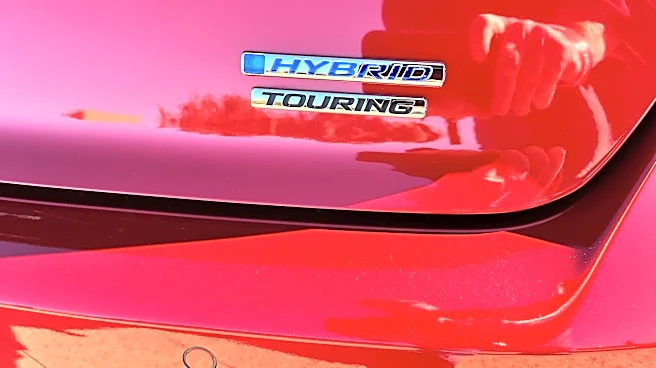

Vehicles with a hybrid powertrain are having a moment and Asian automakers are benefitting.
According to the CarGurus Third-Quarter Intelligence Report, hybrids are the only mainstream powertrain seeing
new vehicle sales growth this year, to the point that demand for them is outpacing supply and when the vehicles are available, they are commanding a premium that could range from $1,300 to $2,400 — a price many car buyers are willing to pay, the report said.
It's all because of the price for regular gasoline, which reached $4.48 per gallon in late September, the highest national average ever recorded for this time of year, according to AAA. As of Oct. 9, the AAA national average price for a gallon of regular gas was $4.37, compared with $3.11 this time last year.

"Hybrids already had seen really good growth in 2025, and it continued into 2026," CarGurus’ Director of Economic and Market Intelligence Kevin Roberts told the Detroit Free Press. "I think that would have continued without gas prices. Gas prices were just an accelerating factor towards additional demand out there because, as gas prices go up, consumer interest in the more fuel efficient vehicles follows."
The result is demand outpacing supply. The average days' supply of new hybrid vehicles in stock at dealerships in the United States on March 1 was about 60 days, Roberts said. At the end of September, the average day supply of new hybrids dropped to 38 days, he said.
The average day supply of new cars in electric and gasoline powertrains is also lower at the end of September compared with March 1, but not as dramatically. The average day supply of new EVs on March 1 was 135.8 and supply of new gas vehicles was 87.7 days. On Sept. 30, the average day supply of new EVs was 68.9 days and gasoline cars was 80.7 days.
Win for Asian automakers
A traditional hybrid vehicle combines a gasoline engine with an electric motor and self-charging battery pack to move the car. So unlike plug-in hybrids or EVs, a traditional hybrid never needs to be plugged into a power outlet. It recharges its battery using energy from the gasoline engine and regenerative braking. These are the hybrids, Roberts said, that are in the most demand. An example of one would be the Toyota RAV4 hybrid or the Ford Maverick hybrid.
A typical hybrid can get 40 to 60 miles per gallon of fuel economy. Most modern gasoline powered vehicles get 25 to 30 miles per gallon, according to Mercury Insurance.
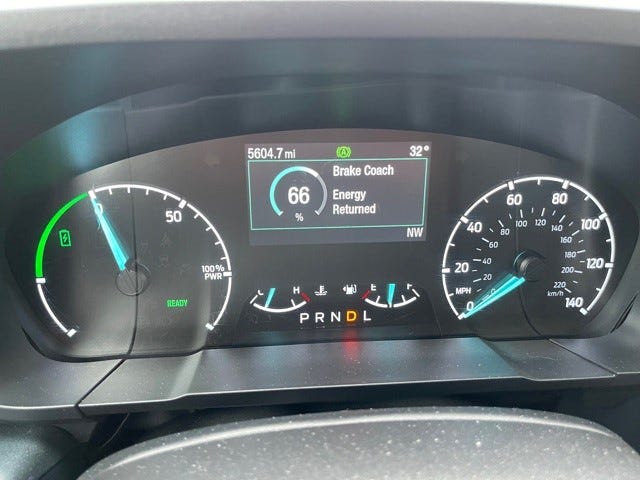
With that in mind and considering the rising gas prices, CarGurus' report shows that sales of new cars with hybrid powertrains are up 24% through the end of the quarter compared to the same period a year earlier. Even the sales of used cars with hybrid powertrains are up nearly 33%.
Meanwhile, sales of gasoline-powered cars are down 2% and sales of all-electric vehicles are down 48%.
Roberts said CarGurus considered the fact that some big sellers, such as Toyota's RAV4, are only offered in a hybrid powertrain, so he conducted the study to focus on models where there is a higher demand rate for hybrid powertrains over the gasoline powertrain option.
"To kind of show that it's not just a factor of, like Toyota got rid of the (gasoline) option on the RAV4, it's only hybrid now. So, big volume vehicles, obviously, that's gonna help propel sales growth," Roberts said. "But you are seeing that consumers are starting to pick hybrids more over (gasoline) options on some models as well."
Roberts wrote in the report that across several vehicle models, sales of new hybrids now outsell their gas counterparts. For example, the Toyota Highlander hybrid version accounts for 65.7% of the vehicle's sales, the Toyota Grand Highlander hybrid accounts for 61.5%, and the Ford Maverick hybrid at 59.9%.
The trend is a win for the Asian automakers, which dominate the market in hybrid offerings, whereas Detroit-based automakers chose to focus on gasoline and electric vehicles, with few hybrid powertrains to offer.
"Most automakers went pretty much on the EV path," Roberts said, noting that Detroit carmakers formed their business plans several years ago when government policy was pointing towards EVs as the future. "Toyota and Honda, and then now Hyundai, are kind of more on the different path of having more hybrid options out there. So they're obviously benefiting right now on that front."
Hybrid offerings in North America
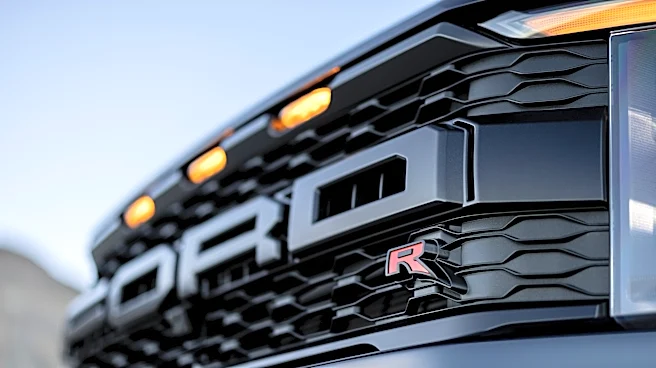
In North America, here are the hybrid options sold by the Detroit Three: Stellantis sells the 2026 Jeep Cherokee 4xe, but it is offered only as a plug-in hybrid engine; Ford Motor sells the Maverick midsize pickup and F-150 full-size pickup in traditional hybrid offerings, and General Motors sells the Chevrolet Corvette E-Ray, a traditional hybrid.
Meanwhile, Toyota offers the largest hybrid lineup in the United States, including models where hybrid is the standard or primary offering, such as the Toyota Camry Hybrid, Toyota RAV4 Hybrid, Toyota Corolla Hybrid, Toyota Crown and Toyota Grand Highlander Hybrid.
Honda offers the Honda Accord Hybrid and Honda CR-V Hybrid. Hyundai sells the Hyundai Elantra Hybrid, Hyundai Sonata Hybrid, and Hyundai Tucson Hybrid. Kia offers Kia Niro Hybrid and Kia Sorento Hybrid. Mazda has the CX-50 Hybrid.
GM 'not tone deaf' to customer demand
But just because foreign carmakers dominate hybrid offerings, doesn't mean the Detroit Three should be counted out.
Erich Merkle, Ford's head of U.S. sales analysis, told reporters during a third-quarter sales callon Oct. 2 that Ford gasoline powertrain trucks remain in high-demand because people who buy them often need them for work purposes. But, Ford is noticing a growing demand for hybrid powertrains of the trucks.
"The Maverick hybrid is in demand ... we’ve sold over 70,000 of them this year," Merkle said. He added that there is also increased demand for the hybrid powertrain in the F-150.
Also, GM plans to introduce hybrid models into its U.S. lineup. Mike Anderson, GM’s vice president of propulsion engineering, reconfirmed the automaker’s hybrid plans to CNBC on Oct. 5. He declined to discuss timing for the vehicles, which had been expected to come as early as next year.
“It’s fair to say that (hybrids are) part of the plan,” Anderson told CNBC during an interview. “We’re not tone deaf to our customers. We know what they want and we want to give that to them as quickly as we can.”
Hybrids are still 'relatively' affordable
Roberts said CarGurus data showed that, on its website, consumer views of new cars with hybrid powertrains are up by 23% as of Sept. 30 compared with March 1. Consumer views of EVs is up 21%. But consumer views of gasoline powered cars is down 4%.
The rising demand for hybrids and the dwindling supply of them means for top-selling 2026 models, which are offered in gasoline and hybrid powertrains, with similar trims, the average hybrid premium is $1,300 — $2,400 above the price, Roberts said.

Still, the shift in interest to hybrids, is more than people just wanting better fuel efficiency.
"The top-selling new hybrids also sit in a relatively accessible range: the Ford Maverick averages $34,200, the Toyota Camry $35,900, the Honda CR-V Hybrid $40,800, and the Toyota RAV4 $41,300," Roberts wrote in the CarGurus report. "Toyota accounts for 47.2% of new hybrid sales and holds four of the top five spots among the top-selling new hybrids. Its most popular models barely touch the lot: the RAV4 turns in 15.6 days, the Grand Highlander Hybrid in 16 days, the Sienna in 17.3 days, and the Camry in 21.7 days."
Still, Roberts said when looking at overall sales of new hybrid vehicles as a percentage of total new vehicle sales, hybrids remain "a minority number" with gasoline being the dominate powertrain option in the United States. But hybrid powertrain options give automakers an opportunity for new vehicle sales growth, he said.
"Particularly as more hybrid options come out in popular vehicles that are already (gasoline) options, if the premium is not significant, I think there's definitely opportunity for those automakers to increase their hybrid share when they come to market," Roberts told the Detroit Free Press. "In this environment, I would rather have 20, 30 extra miles per gallon right now. So, I totally get it."
Jamie L. LaReau is the senior autos writer at USA TODAY Co. who covers Ford Motor Co. for the Detroit Free Press. Contact Jamie at jlareau@freepress.com. Follow her on Twitter @jlareauan. To sign up for our autos newsletter. Become a subscriber.
This article originally appeared on Detroit Free Press: Who is demand for hybrids benefiting? Not the Detroit 3 automakers