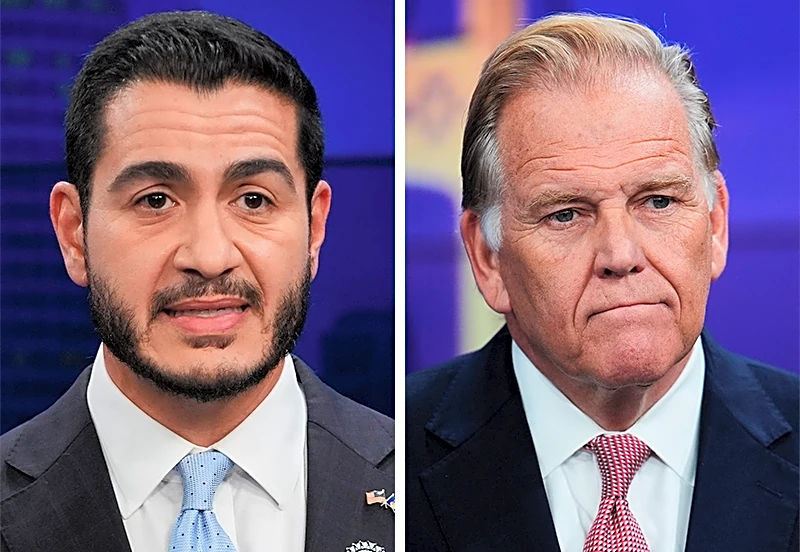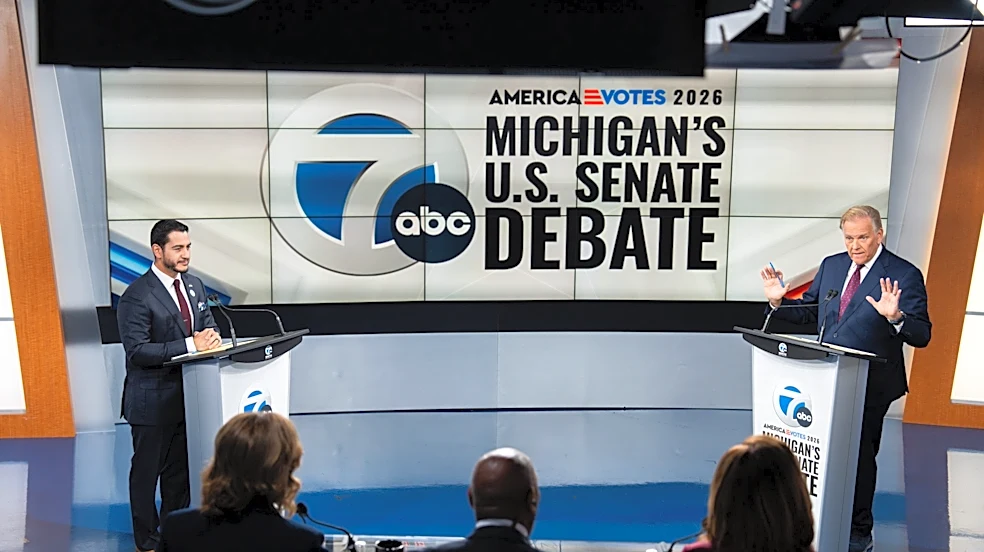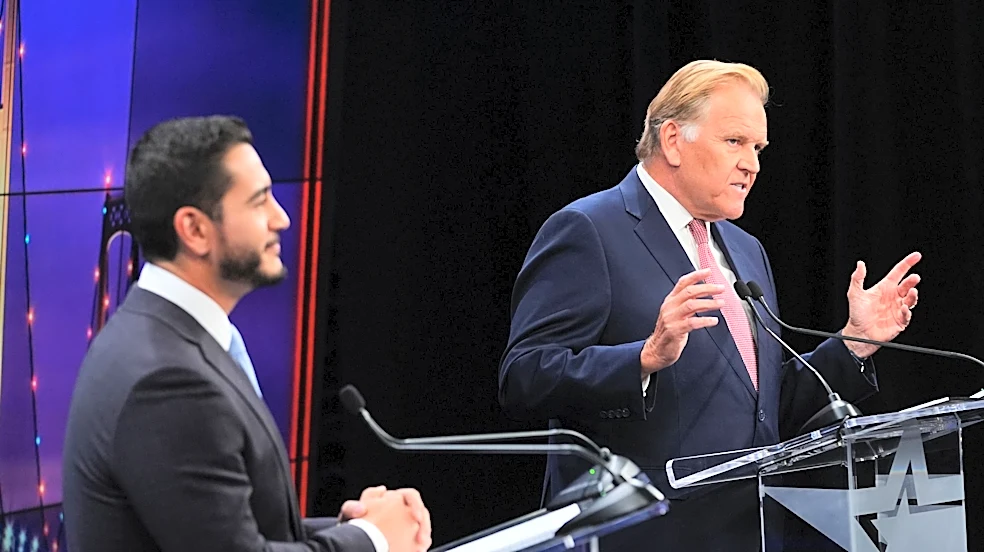


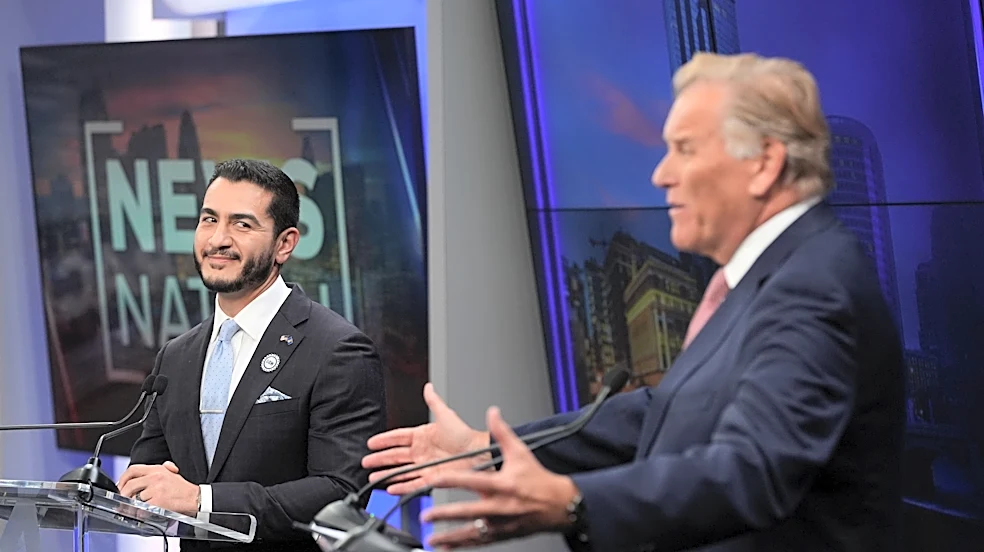

If you tuned in to the final debate between the candidates for Michigan's coveted U.S. Senate seat hoping to hear something that would help you make up your mind as the race enters its final two weeks, you probably wish you had that hour of your life back.
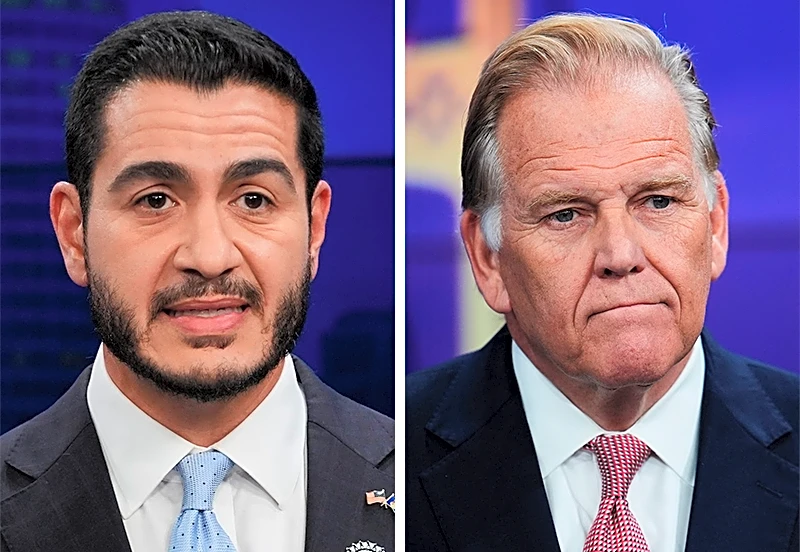
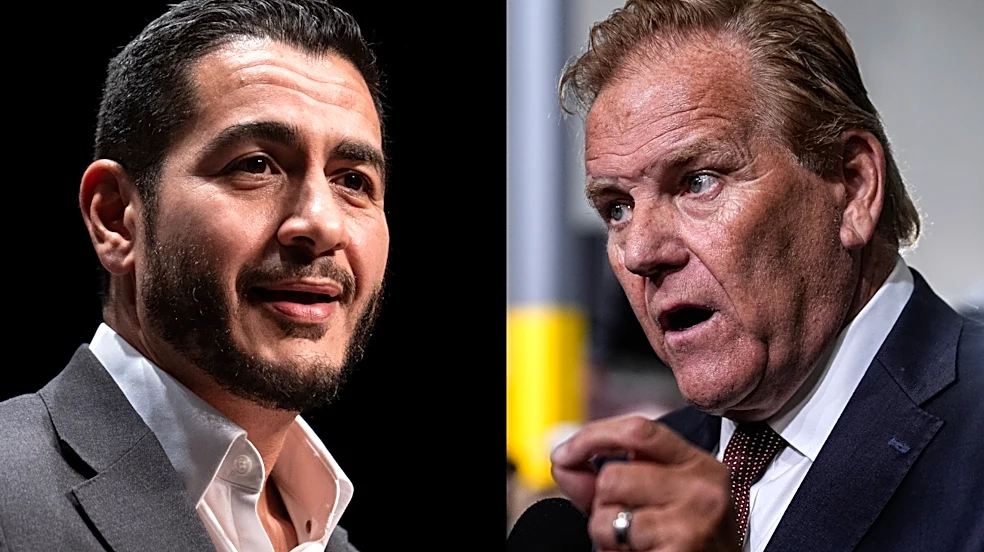
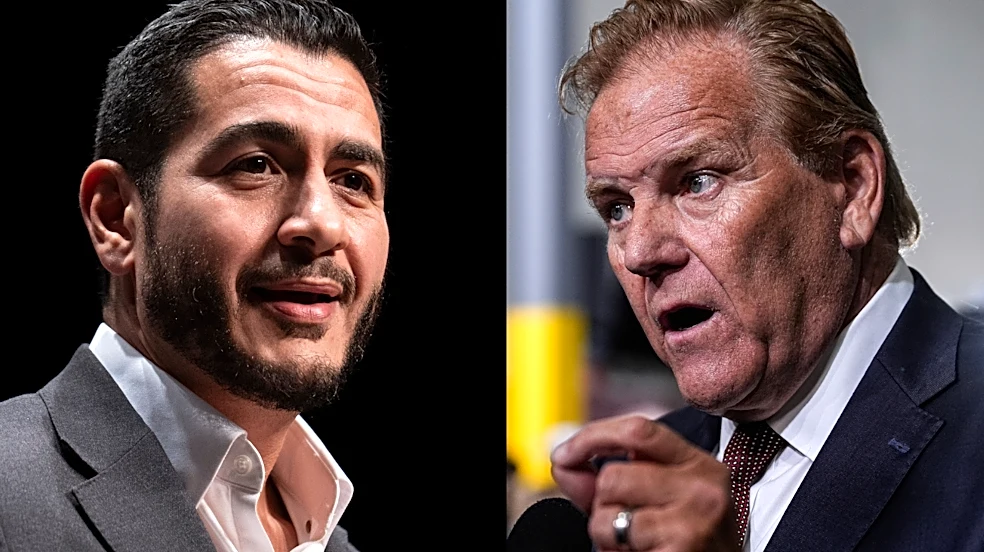
Mike Rogers, the Republican from White Lake Township, repeatedly accused Abdul El-Sayed of being a tool of the DSA — the Democratic Socialists of America.
Again.
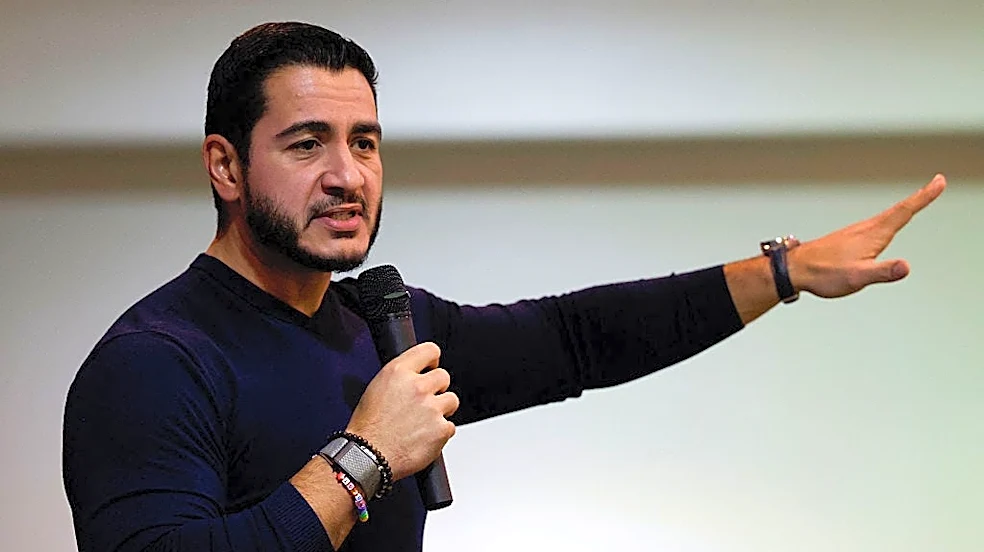
El-Sayed, the Democrat from Ann Arbor, repeatedly accused Rogers of being a tool of DJT — President Donald J. Trump.
Again.
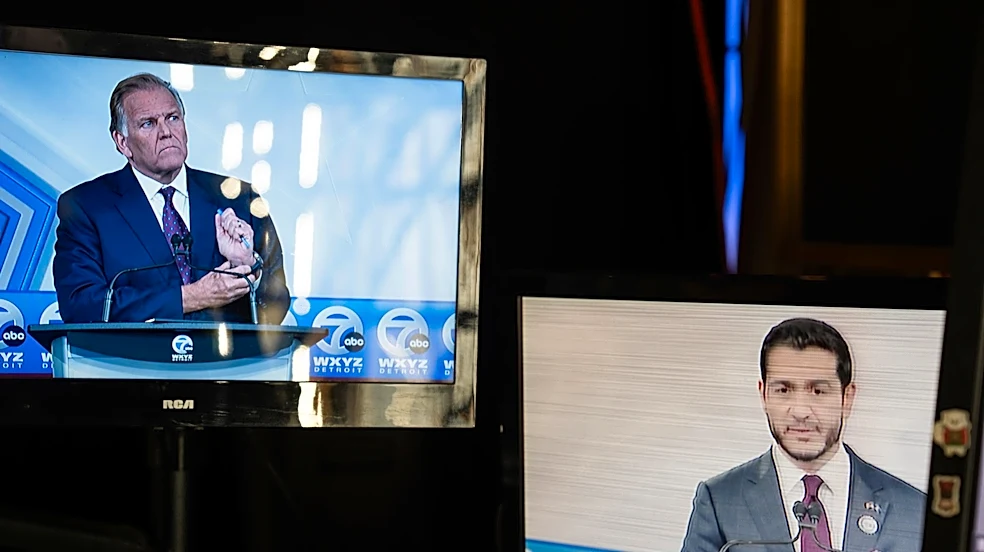
The debate held Wednesday, Oct. 21 at WXYZ-TV (Channel 7) was among the top stories discussed on cable news networks because the race to replace retiring U.S. Sen. Gary Peters may decide which political party controls
the Senate.
Pundits, like many of our fellow Americans, soaked up the spectacle and graded the candidates on who scored the most rhetorical points.
Which is fine for them, because they don't have to choose between the two.
Rogers and El-Sayed minded their manners better than they did during their first televised debate on Oct. 8 at WOOD-TV in Grand Rapids — where moderator Rick Albin valiantly labored to keep them on track, at one point saying in exasperation, "Let's please try to keep this orderly!" — but they continued to accuse each other of being a liar so many times that the one-time damning epithet lost its power.
El-Sayed again accused Rogers of being a minion of Trump, though Rogers recently began distancing himself from some of Trump's policies as the president's approval ratings have reached record lows.
Rogers again all-but accused El-Sayed of being a terrorist, though he again failed to present much evidence beyond innuendo.
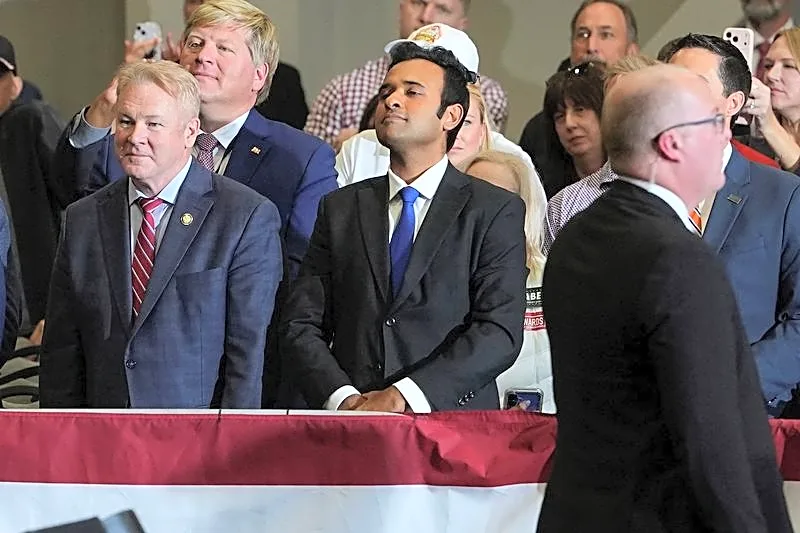
At least this time Rogers didn't drag El-Sayed's mother into the debate, a wise move 24 hours after even Republican stalwarts said Ohio GOP gubernatorial candidate Vivek Ramaswamy may have doomed his campaign by running a negative ad featuring his opponent's mother.

Even though one CNN gasbag summed up the debate as "more name-calling, more mud-slinging," we did hear a few things that didn't come up in the first debate.
El-Sayed acknowledged he supports increasing the number of U.S. Supreme Court justices, if it's done "fairly."
Rogers kinda acknowledged he supports universal background checks for gun purchases, but it "depends" on how they would be done.
Most polls show El-Sayed with a slight lead over Rogers that is within the margin of error.
Rogers sought to boost his chances by appealing to Detroiters, supporters of El-Sayed's opponent in the Democratic primary, and Jewish voters.
El-Sayed sought to boost his chances by blaming Rogers for the war in Iran, the high cost of living and restricting access to health care.
After the debate I asked El-Sayed to address an issue that, in a close race, could help decide the outcome.
I'll tell you what he said in a minute, and you can decide whether his answer is an indication that he's a poor politician or the rare candidate unwilling to change his position even if it might cost him the election.
They approve these messages
Rogers, a former congressman, made it clear he doesn't like any of El-Sayed's policies, which he said will result in more government, less choice in health care and higher taxes.
But Rogers sure seems to like El-Sayed's punchlines.
About four minutes into their first debate, rebutting Rogers' assertion that El-Sayed doesn't deserve to call himself a doctor because he only has a medical degree, El-Sayed said: "My opponent here is going to make this about him and about me. But, really, in the end, this is about you."
Nearly two weeks later, during their second debate, Rogers said in his opening statement: "My opponent's going to try to make this about me versus him, but I'm going to tell you this is about you and Michigan's future."
If you had each candidate making a bingo reference on your bingo card, collect your prize!
El-Sayed said during his opening statement in the second debate: "You're going to hear a form of MAGA bingo, because the thing about MAGA is whenever they're talking, they are trying to distract you. They're going to use buzz words. And I'm hoping that you all can play at home. Every time you hear one of those buzz words, just remember, when they're distracting you, they're trying to pick your pocket."
(If you haven't been paying attention to U.S. politics for the past decade, or have never worn a red hat, MAGA is shorthand for Trump's motto "Make America Great Again." Bingo is a game where players have cards with squares they can fill in whenever someone calls out something that corresponds to a square on their card.)
On multiple occasions during the debate, such as when Rogers criticized El-Sayed for previously saying he wanted to defund the police, El-Sayed dismissed the charges as more "MAGA bingo."
After El-Sayed accused Rogers of being unwilling to stand up for Michigan if the president's policies hurt the state, Rogers said: "He wants to make this about Donald Trump. The bingo game ought to be about how many times can he put the name Trump in any answer, any answer that he has given in ... the last 30 minutes."
Common ground
Besides a couple punch lines and knowledge of bingo, Rogers and El-Sayed agreed that not all tariffs are bad.
Both criticized Trump's tariff war with Canada, though Rogers called Trump's tariffs "a mixed bag" and conceded "maybe these Canadian tariffs were not well-thought through."
Rogers described his tariff policy as: "If it's good for Michigan, I'm going to be for it. If it's bad for Michigan, I'm going to be against it."
El-Sayed accused Rogers of being a cheerleader for Trump's tariffs, criticized the North American Free Trade Agreement — which he said Rogers supported, even though the federal policy was passed several years before Rogers was first elected to Congress — and said tariffs should only be used "around how we can protect certain automotive opportunities, the opportunities for growth and jobs that we actually need, rather than this haphazard approach."
Both called for an end to war in Iran, though El-Sayed opposed it from the beginning and Rogers had called it a "win-win-win" on May 31, continued to support Trump's position in July, and didn't call for an end to the war until last month.
And each acknowledged that the other side had at least one idea they supported.
Rogers said he liked some housing policies Democrats supported, though he noted he would need to work with Democrats to fix them.
El-Sayed said he agreed with Trump that corporate speculators shouldn't be allowed to buy up large numbers of houses as investments, which can drive up prices and reduce homeownership by converting homes to rental properties.
Standing firm
El-Sayed has taken heat since the Oct. 8 debate for his answer to a question about whether Israel or Iran was a greater threat to the United States.
"Both of them have proven dangerous in their own way," he said, after moderator Rick Albin pressed him. "One, at risk of attacking us. One, getting us into wars we have no business fighting."
It was an answer that is more nuanced than El-Sayed has gotten credit for, but it's also not an answer that instilled confidence in some otherwise diehard-Democratic Jewish and pro-Israel voters desperately seeking a reason to vote for El-Sayed.
El-Sayed has been critical of Israel, and his comments that he loves his "Jewish sisters and brothers" as he loves his "Palestinian sisters and brothers," have not allayed the concern of some Jewish voters that he will abandon the United States' long-time ally.
El-Sayed will almost certainly win the vast majority of votes cast by Arab Americans, who traditionally support Republicans. But candidates in a race this close typically don't want to risk alienating any potential supporter.
So when both candidates fielded questions from reporters after the debate, I asked El-Sayed whether he thought Iran or Israel has been a bigger threat over the past 50 years — a period that includes the 1979 Iranian hostage crisis, when Iranian militants held 52 Americans in the U.S. embassy in Tehran for 444 days.
El-Sayed did not budge from his response in the Oct. 8 debate, deeming each nation equally dangerous.
Given the stakes, it may have been a principled answer — but it is also one that could tip the balance for voters in the homestretch looking for something to help them make up their minds.
M.L. Elrick is a Pulitzer Prize- and Emmy Award-winning investigative reporter, director of student investigative reporting program Eye On Michigan, and host of the ML's Soul of Detroit podcast. Contact him at mlelrick@freepress.com or follow him on Facebook at ML Elrick and Instagram at ml_elrick
This article originally appeared on Detroit Free Press: Rogers and El-Sayed didn't do much to help voters make up their mind